
Buying Guide
The Best High-Conductivity Thermal Paste
From the Frost X45 to the TFX: three thermal pastes ranked on tube size and amount, with who should skip each one.
By Alex Morgan, PC Hardware Editor
11 min read3 products evaluated
Thermal conductivity differences are small, and application matters as much. Every pick lists 12 W/mK or more, ordered by conductivity.
We sorted these picks by amount, conductivity and electrically non-conductive, working from the makers' own data; nothing here was tested in-house, and if a maker skips electrically non-conductive, the guide says so.
Quick Picks
Which of the 3 picks to look at first. Tap a name for the full analysis.

Also Consider
ID-COOLING Frost X55 Core (4g)A metal-free formula.
Best for: Buyers who want metal-free formula.
Check price for ID-COOLING Frost X55 Core (4g) on Amazon (opens in a new tab)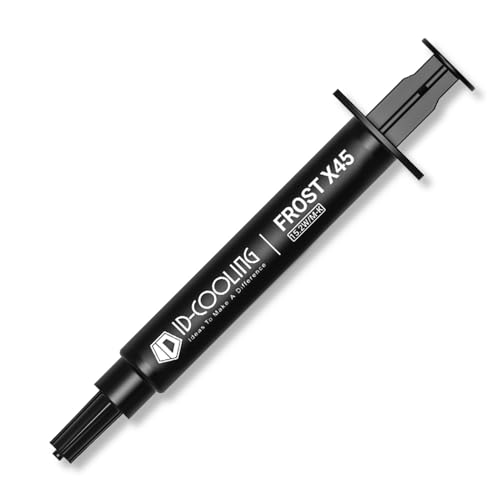
Lowest Price Here
ID-COOLING Frost X45 (4g)The lowest price among these thermal pastes at the time of writing.
Best for: Keeping the cost under $50.
Check price for ID-COOLING Frost X45 (4g) on Amazon (opens in a new tab)
Premium Pick
Thermalright TFX (2g)A thick consistency the maker acknowledges at the highest price in the group.
Best for: Buyers for whom price is not the deciding factor, since the Frost X45 costs less.
Check price for Thermalright TFX (2g) on Amazon (opens in a new tab)
| Pick | Why it stands out | Best for | Check price |
|---|---|---|---|
| A metal-free formula. | Buyers who want metal-free formula. | Check price for ID-COOLING Frost X55 Core (4g) on Amazon (opens in a new tab) |
| The lowest price among these thermal pastes at the time of writing. | Keeping the cost under $50. | Check price for ID-COOLING Frost X45 (4g) on Amazon (opens in a new tab) |
| A thick consistency the maker acknowledges at the highest price in the group. | Buyers for whom price is not the deciding factor, since the Frost X45 costs less. | Check price for Thermalright TFX (2g) on Amazon (opens in a new tab) |
Our Picks
Also Consider1 of 3
ID-COOLING Frost X55 Core (4g)
Frost X55 Core is ID-COOLING's higher-rated paste at 16.2 W/mK, with the same metal-free, non-conductive formula approach as the X45.
Best for
- Buyers who want metal-free formula.
Skip if
- If budget leads, the Frost X45 was cheaper at our last price check.
Why we like it
It is a low-cost way to get the highest conductivity figure in this group. It is metal-free and non-conductive, so a spill onto the board does not short anything. It matches the Frost X45 on tube size (4g).
It also offers resistance to drying, cracking and separation. Clean off old paste with isopropyl alcohol first, then apply a pea-sized dot or a thin line on the heatspreader; on large Intel chips an X or a line covers the longer die better. Another plus: 4g is enough for several applications. Its price falls between the Frost X45 and the TFX, based on our last check.
Key specs
- Amount
- 4g
- Conductivity
- 16.2 W/mK (maker's figure)
- Electrically non-conductive
- Yes
Pros
- 4g is enough for several applications
- Maker-rated 16.2 W/mK conductivity
- Electrically non-conductive, so spills are harmless
- Metal-free formula
Cons
- Costs more than the Frost X45 at the time of writing
Lowest Price Here2 of 3
ID-COOLING Frost X45 (4g)
Frost X45 is a metal-free, non-conductive paste rated at 15.2 W/mK by ID-COOLING.
Best for
- Keeping the cost under $50.
Skip if
- Look at the other picks if you need a feature not covered above.
Why we like it
The 4g tube costs little and the maker says it resists drying, cracking and separation. It is metal-free and non-conductive, so overflow onto nearby parts is harmless. The 4g tube covers several builds.
On tube size it ties with the Frost X55 Core at 4g. Clean off old paste with isopropyl alcohol first, then apply a pea-sized dot or a thin line on the heatspreader; on large Intel chips an X or a line covers the longer die better. It cost the least of the 3 picks at the time of writing, with the Frost X55 Core the next step up.
Key specs
- Amount
- 4g
- Conductivity
- 15.2 W/mK (maker's figure)
- Electrically non-conductive
- Yes
Pros
- 4g is enough for several applications
- Maker-rated 15.2 W/mK conductivity
- Electrically non-conductive, so spills are harmless
- Metal-free formula
Premium Pick3 of 3
Thermalright TFX (2g)
TFX carries Thermalright's highest conductivity figure, 14.3 W/mK, and a very wide rated temperature range.
Best for
- Buyers for whom price is not the deciding factor, since the Frost X45 costs less.
Skip if
- Skip it if tube size matters most to you; the Frost X55 Core offers 4g.
Why we like it
The maker admits it is thick and dry, so it takes more effort to apply than most. It lists up to 14.3W/mK conductivity and comes in a syringe, and the maker says it is a little dry to spread. On tube size it trails the group at 2g, while the Frost X55 Core comes in at 4g.
It also comes with a low-volatility grease built for long service. Clean off old paste with isopropyl alcohol first, then apply a pea-sized dot or a thin line on the heatspreader; on large Intel chips an X or a line covers the longer die better. At our last price check it topped the group, with the Frost X55 Core the nearest cheaper option.
Key specs
- Amount
- 2g
- Top rated temperature
- 300°C
- Conductivity
- 14.3 W/mK (maker's figure)
Pros
- Maker-rated 14.3 W/mK conductivity
- Thick consistency the maker acknowledges
- Low-volatility grease built for long service
- A thick consistency the maker acknowledges at the highest price in the group
Cons
- Tube size trails the Frost X55 Core (4g)
- Costs more than the Frost X45 at the time of writing
The catch
Tube size is its weakest area, and the Frost X55 Core covers it better at 4g.
How We Chose
Alex Morgan compared the manufacturer specifications, connectivity, warranty terms and compatibility of every pick. Figures come from the makers unless a third-party source is named; we did not test these products ourselves.

- How these picks were ranked
- We compared three pastes on tube size, conductivity and electrically non-conductive, using each maker's published specs. These are research figures, not bench results: 1 of 3 picks leave out electrically non-conductive.
- The shared baseline
- All 3, from the Frost X55 Core to the TFX, state tube size and conductivity.
- Where the specs have gaps
- The TFX gives no electrically non-conductive.
- Price range
- From the Frost X45 to the TFX, all sat in the under $50 tier when we checked.
What to Look for in a High-Conductivity Thermal Paste
Key buying criteria so you get the right fit the first time.
How much tube size you need
Across these 3 picks tube size spans 2g (the TFX) to 4g (the Frost X55 Core). For less, the Frost X45 is the runner-up at 4g.
Electrically non-conductive
The Frost X55 Core and the Frost X45 have it. Sort out electrically non-conductive before price: it splits 2 stated picks into groups of 2.
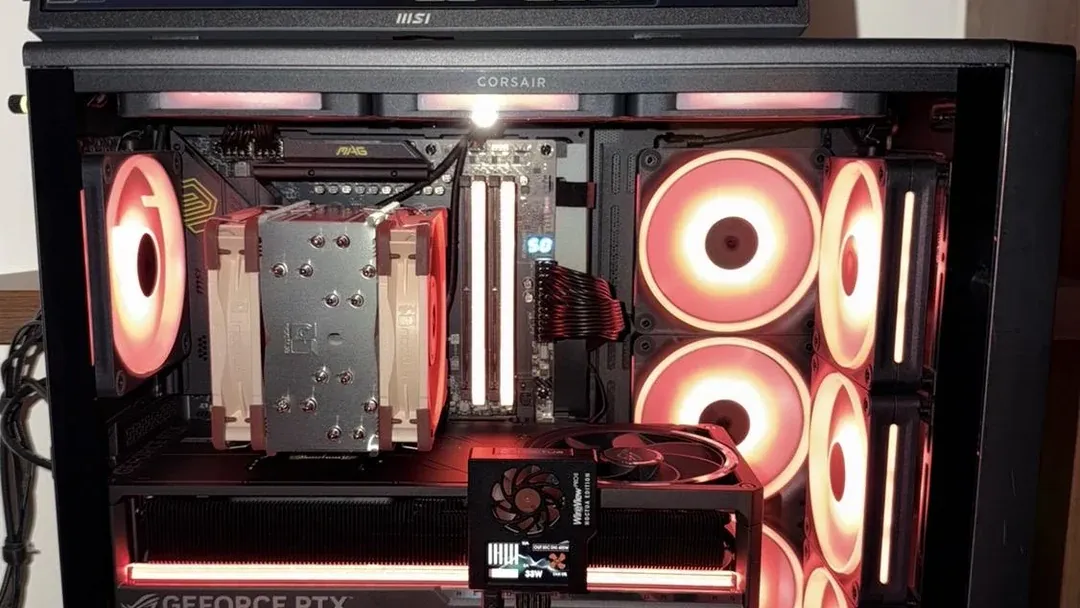
A case with purple-lit front fans and the motherboard area behind them Features beyond the spec table
The Frost X55 Core: resistance to drying, cracking and separation. The TFX: a low-volatility grease built for long service.
Where your budget lands
Price does little to separate these 3: the Frost X45 through the TFX all landed in the under $50 tier, which leaves tube size to decide it.
A tower air cooler with brown fans installed in a PC Match the pick to your priority
Keeping the cost under $50: the Frost X45. Buyers for whom price is not the deciding factor, since the Frost X45 costs less: the TFX.
How to Choose a High-Conductivity Thermal Paste
By priority
| Priority | Consider | Why |
|---|---|---|
| Buyers who want metal-free formula | Frost X55 Core | A metal-free formula |
| Keeping the cost under $50 | Frost X45 | The lowest price among these thermal pastes at the time of writing |
| Buyers for whom price is not the deciding factor, since the Frost X45 costs less | TFX | A thick consistency the maker acknowledges at the highest price in the group |
Scroll sideways to see every column.
Key specs side by side
The Frost X55 Core leads on tube size at 4g, ahead of the Frost X45 at 4g. "Not listed" marks electrically non-conductive where the TFX leaves the figure out.
| Paste | Amount | Conductivity | Electrically non-conductive |
|---|---|---|---|
| Frost X55 Core | 4g | 16.2 W/mK (maker's figure) | Yes |
| Frost X45 | 4g | 15.2 W/mK (maker's figure) | Yes |
| TFX | 2g | 14.3 W/mK (maker's figure) | Not listed |
Scroll sideways to see every column.
Frequently Asked Questions
Is the TFX worth paying more than the Frost X45?
The TFX matches or trails the Frost X45 on tube size. The Frost X45 leads on tube size (4g). Both sat in the under $50 tier when we checked, so choose on the features you need.
What makes the Frost X45 the Lowest Price Here?
It carries the badge for the lowest price among these thermal pastes at the time of writing. It is aimed at keeping the cost under $50.
Do the Frost X55 Core and the Frost X45 differ on conductivity?
The Frost X55 Core uses 16.2 W/mK (maker's figure); the Frost X45 uses 15.2 W/mK (maker's figure); the TFX uses 14.3 W/mK (maker's figure).
Beyond the specs, what sets the Frost X55 Core and the Frost X45 apart?
The Frost X55 Core: a metal-free formula. The Frost X45: a metal-free formula. The TFX: a thick consistency the maker acknowledges.
Who should choose the TFX?
The TFX carries our Premium Pick label for a thick consistency the maker acknowledges at the highest price in the group. It ranks third of 3 here and sat in the under $50 tier at our last price check; it suits buyers for whom price is not the deciding factor, since the Frost X45 costs less.
Bottom Line
Our first pick is the Frost X55 Core, chosen for a metal-free formula. Look at the Frost X45 for the lowest price among these thermal pastes at the time of writing and the TFX for a thick consistency the maker acknowledges at the highest price in the group if those matter more to you.
Apply a pea-sized dot; too much paste makes temperatures worse.
Related Guides
- Related guideThe Best Thermal Pastes for CPUs and GPUs
- Related guideThe Best CPU Air Coolers
- Related guideThe Best Air Coolers
- Lower budgetThe Best Thermal Paste Under $10
- Similar guideThe Best Thermal Paste Kits
- ExplainerPC Airflow Explained
- ExplainerHow Many Case Fans Do You Need?
- Check compatibility: processorsHow to Choose a CPU for Your PC
- Similar guideThe Best ARCTIC Thermal Paste
- Topic hubAll cpu coolers and cooling guides
About the author
PC Hardware Editor
Alex covers PC hardware, monitors, components, upgrades and peripherals for The PC Journal, with a focus on helping readers understand specifications, compatibility and meaningful product trade-offs.
Covers: Monitors, Graphics cards, Processors, PC components, Peripherals, Upgrades and compatibility
View all articles