
Buying Guide
The Best Studio Monitors Under $100
Three speakers ranked on woofer size and form, where the 305P MkII has the largest woofer size, and it also costs the least.
By Alex Morgan, PC Hardware Editor
11 min read3 products evaluated
Under $100, the trade-offs are sharper, so it helps to know which spec you can give up. Every monitor pair here cost $100 or less when we checked and is a studio monitor, ordered from the lowest price.
We ranked these speakers on form, woofer size and extras using manufacturer specifications; where a maker leaves out extras, we say so rather than guess, since we have not benched them.
Quick Picks
Which of the 3 picks to look at first. Tap a name for the full analysis.

Largest Woofer Size
JBL 305P MkII Studio Monitor (single)The largest woofer size here (5-inch).
Best for: Buyers who put woofer size first.
Check price for JBL 305P MkII Studio Monitor (single) on Amazon (opens in a new tab)
Also Consider
PreSonus Eris 3.5 Studio Monitors (pair)50 watts of built-in amplification.
Best for: Buyers who want 50 watts of built-in amplification.
Check price for PreSonus Eris 3.5 Studio Monitors (pair) on Amazon (opens in a new tab)
Strong Alternative
Mackie CR3.5 Studio Monitors (pair)A tone knob on the front.
Best for: Buyers who want tone knob on the front.
Check price for Mackie CR3.5 Studio Monitors (pair) on Amazon (opens in a new tab)
| Pick | Why it stands out | Best for | Check price |
|---|---|---|---|
| The largest woofer size here (5-inch). | Buyers who put woofer size first. | Check price for JBL 305P MkII Studio Monitor (single) on Amazon (opens in a new tab) |
| 50 watts of built-in amplification. | Buyers who want 50 watts of built-in amplification. | Check price for PreSonus Eris 3.5 Studio Monitors (pair) on Amazon (opens in a new tab) |
| A tone knob on the front. | Buyers who want tone knob on the front. | Check price for Mackie CR3.5 Studio Monitors (pair) on Amazon (opens in a new tab) |
Our Picks
Largest Woofer Size1 of 3
JBL 305P MkII Studio Monitor (single)
The 305P MkII is a single 5-inch monitor with a boundary EQ that corrects bass when it sits on a desk or near a wall.
Best for
- Buyers who put woofer size first.
Skip if
- Look at the other picks if you need a feature not covered above.
Why we like it
JBL runs each unit through a 100-hour full-power test. It is sold as a single speaker, so budget for two. Its Slip Stream port extends bass at low listening volumes.
Its updated transducers aim for lower distortion and a tighter transient response. It suits a nearfield desk setup. It is known for a neutral voicing at this price.
It has XLR and TRS inputs with a +4dBu/-10dBV switch, and its Class-D amps deliver 82 watts. On woofer size it leads this guide at 5-inch, ahead of the Eris 3.5 (3.5-inch). It undercut the Eris 3.5 and every other pick on price at the time of writing.
Key specs
- Form
- Single studio monitor
- Woofer size
- 5-inch
Pros
- Boundary EQ that corrects bass near walls or on a desk
- Slip Stream bass port
- 100-hour full-power test on each unit
- Largest woofer size of the picks (5-inch)
Also Consider2 of 3
PreSonus Eris 3.5 Studio Monitors (pair)
The Eris 3.5 is a compact studio monitor pair with 50 watts of amplification and acoustic tuning controls.
Best for
- Buyers who want 50 watts of built-in amplification.
Skip if
- If budget leads, the 305P MkII was cheaper at our last price check.
Why we like it
It suits a small desk, though 3.5-inch woofers limit how low it can reach. Its tuning controls help in untreated rooms. Its 80Hz to 20kHz range covers vocals and most instruments at desk distance.
Its 1-inch silk-dome tweeters smooth out harsh highs. Its compact cabinets fit beside a monitor on a small desk, and the pair includes the cables to connect them. It has balanced TRS, RCA and a front aux input plus a headphone jack.
Its 3.5-inch woven-composite woofers give tighter bass than typical desk speakers of this size. Its price falls between the 305P MkII and the CR3.5, based on our last check.
Key specs
- Form
- Studio monitor pair
- Woofer size
- 3.5-inch
- Extras
- High and low acoustic tuning controls
Pros
- 50 watts of built-in amplification
- 1-inch silk-dome tweeters
- 80Hz to 20kHz frequency range
Cons
- Costs more than the 305P MkII at the time of writing
Strong Alternative3 of 3
Mackie CR3.5 Studio Monitors (pair)
The CR3.5 pair is sized for desks, with a front tone knob and a location switch that corrects bass near a wall.
Best for
- Buyers who want tone knob on the front.
Skip if
- Skip it if woofer size matters most to you; the 305P MkII offers 5-inch.
Why we like it
Isolation pads and cables come in the box. It comes as a pair with isolation pads and cables, so nothing else is needed to start. The tone knob sits on the front, so voicing changes don't need menus.
Its 3.5-inch woofers and compact cabinets fit a small desk, and the tone knob changes voicing without software. It suits streaming and casual mixing. It is voiced to be accurate rather than flattering, which helps mixes translate.
On woofer size it ties with the Eris 3.5 at 3.5-inch. It also offers a size aimed at desks and small studios.
Key specs
- Form
- Studio monitor pair
- Woofer size
- 3.5-inch
- Extras
- Isolation pads and cables
Pros
- Tone knob on the front
- Location switch that corrects bass near a wall
- Size aimed at desks and small studios
Cons
- Woofer size trails the 305P MkII (5-inch)
- Costs more than the 305P MkII at the time of writing
The catch
It gives ground on woofer size, where the 305P MkII comes in at 5-inch.
How We Chose These Studio Monitors Under $100
Alex Morgan compared the manufacturer specifications, connectivity, warranty terms and compatibility of every pick. Figures come from the makers unless a third-party source is named; we did not test these products ourselves.
- The figures behind the order
- We set side by side three speakers on form, woofer size and extras, using each maker's published specs. We did not test them in-house, and extras is missing for at least one pick.
- What every pick has in common
- All 3, from the 305P MkII to the CR3.5, state form and woofer size.
- Where the specs have gaps
- The 305P MkII gives no extras.
- Price range
- From the 305P MkII to the CR3.5, all sat in the $50 to $100 tier when we checked.
What to Look for in a Studio Monitor Under $100
Key buying criteria so you get the right fit the first time.
Woofer size across these picks
Here woofer size runs from 3.5-inch on the CR3.5 to 5-inch on the 305P MkII, a 43% spread. Start with the 305P MkII if woofer size decides it.
Extras that separate them
The 305P MkII: a Slip Stream bass port. The Eris 3.5: 1-inch silk-dome tweeters. The CR3.5: a location switch that corrects bass near a wall.
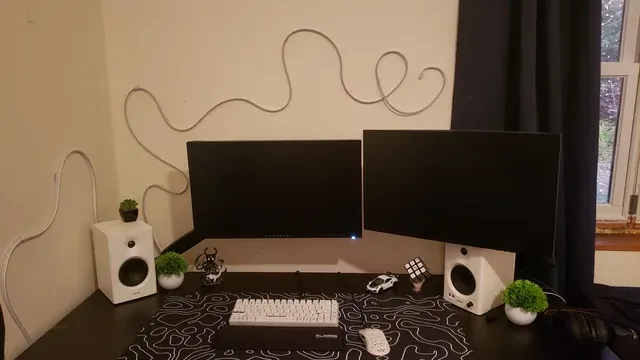
White bookshelf speakers either side of a monitor Budget
All 3 sat in the $50 to $100 tier when we checked, from the 305P MkII at the low end to the CR3.5 at the top, so decide on features first.
Soundbar or stereo pair
A soundbar sits under a monitor and saves desk width. A stereo pair spreads the sound wider and usually fills a room better at the same price.
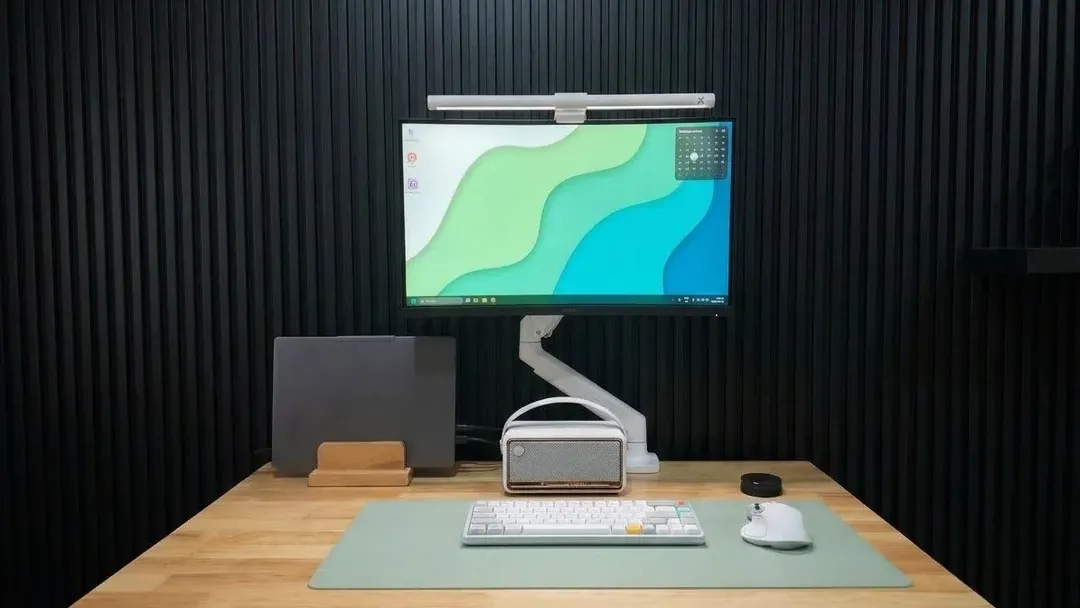
A wooden desk with a monitor on an arm and small speakers Controls within reach
A front volume knob or a wired control pod saves reaching behind the PC. Some sets rely on software or a remote.
How to Choose a Studio Monitor Under $100
By priority
| Priority | Consider | Why |
|---|---|---|
| Buyers who put woofer size first | 305P MkII | The largest woofer size here (5-inch) |
| Buyers who want 50 watts of built-in amplification | Eris 3.5 | 50 watts of built-in amplification |
| Buyers who want tone knob on the front | CR3.5 | A tone knob on the front |
Scroll sideways to see every column.

Key specs side by side
The 305P MkII leads on woofer size at 5-inch, ahead of the Eris 3.5 at 3.5-inch. "Not listed" marks extras where the 305P MkII leaves the figure out.
| Speaker | Form | Woofer size | Extras |
|---|---|---|---|
| 305P MkII | Single studio monitor | 5-inch | Not listed |
| Eris 3.5 | Studio monitor pair | 3.5-inch | High and low acoustic tuning controls |
| CR3.5 | Studio monitor pair | 3.5-inch | Isolation pads and cables |
Scroll sideways to see every column.
Frequently Asked Questions
Which has the largest woofer size: the 305P MkII or the Eris 3.5?
The 305P MkII tops woofer size at 5-inch; the Eris 3.5 follows at 3.5-inch, 43% apart.
What does the CR3.5 add over the 305P MkII?
The CR3.5 matches or trails the 305P MkII on woofer size. The 305P MkII leads on woofer size (5-inch). Both sat in the $50 to $100 tier when we checked, so choose on the features you need.
Why is the 305P MkII our Largest Woofer Size pick?
The label rests on the largest woofer size here (5-inch). On woofer size it leads the Eris 3.5, 5-inch against 3.5-inch, a 43% margin. It makes sense for anyone who puts woofer size first.
What extras do the 305P MkII and the Eris 3.5 include?
The 305P MkII: a boundary EQ that corrects bass near walls or on a desk. The Eris 3.5: 50 watts of built-in amplification. The CR3.5: a tone knob on the front.
Should I pick the 305P MkII or the CR3.5?
The 305P MkII suits buyers who put woofer size first; the CR3.5 suits buyers who want tone knob on the front.
Bottom Line
Our first pick is the 305P MkII, chosen for the largest woofer size here (5-inch). Look at the Eris 3.5 for 50 watts of built-in amplification and the CR3.5 for a tone knob on the front if those matter more to you.
Keep them a few inches off the wall to tame bass build-up.
Related Guides
- Related guideThe Best PC Speakers for Your Desk
- Related guideThe Best Speakers for a Gaming PC
- Related guideThe Best Gaming Speaker Bars for a PC Desk
- Lower budgetThe Best PC Speakers Under $75
- Higher budgetThe Best PC Speakers Under $120
- ExplainerHow to Choose Desktop Speakers for a PC
- ExplainerPC speaker connections compared: 3.5 mm, USB, optical and Bluetooth
- Also see: headsets and headphonesPC Headset Features Explained: What Is Worth Paying For?
- Similar guideThe Best Studio Monitors Under $150
- Topic hubAll pc speakers guides
About the author
PC Hardware Editor
Alex covers PC hardware, monitors, components, upgrades and peripherals for The PC Journal, with a focus on helping readers understand specifications, compatibility and meaningful product trade-offs.
Covers: Monitors, Graphics cards, Processors, PC components, Peripherals, Upgrades and compatibility
View all articles