
Buying Guide
The Best Computer Speakers
Five speakers compared, from the GS560 to the Pebble Pro, with the trade-offs of each named.
By The PC Journal editorial team
12 min read5 products evaluated
Computer speakers range from USB-powered pairs to bookshelf sets and 2.1 systems with a subwoofer. These are ordered from the lowest price.
Our comparison rests on published figures for form, peak power and inputs; where a maker leaves out peak power, we say so, and no figure here comes from our own testing.
Quick Picks
Our 5 recommendations at a glance. Tap a pick for the full verdict.
Lowest Price Here
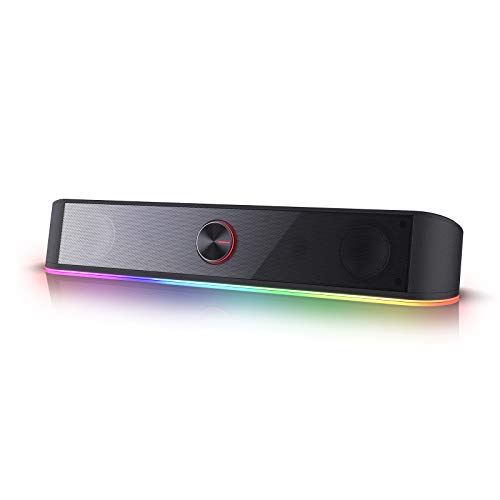
Redragon GS560 PC Soundbar
The cheapest way into this group, below the GS520.
Best for: Spending as little as possible.
Our take Check price for Redragon GS560 PC Soundbar (opens in a new tab)
Also Consider
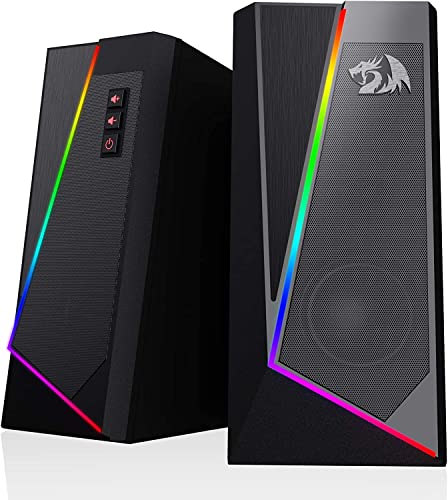
Redragon GS520 PC Speakers
Six touch-controlled RGB modes.
Best for: Buyers who want six touch-controlled RGB modes.
Our take Check price for Redragon GS520 PC Speakers (opens in a new tab)
Strong Alternative
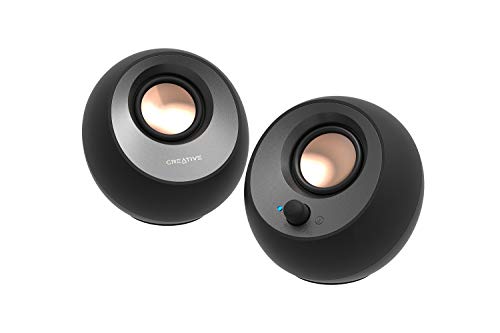
Creative Pebble V3 USB-C Desktop Speakers
2.25in full-range drivers angled up at 45 degrees.
Best for: Buyers who want 2.25in full-range drivers angled up at 45 degrees.
Our take Check price for Creative Pebble V3 USB-C Desktop Speakers (opens in a new tab)

Worth a Look
Creative Sound Blaster GS3 Soundbar
A headphone output.
Best for: Buyers who want headphone output.
Our take Check price for Creative Sound Blaster GS3 Soundbar (opens in a new tab)

Premium Pick
Creative Pebble Pro USB-C Desktop Speakers
Up to 10W RMS and 20W peak with a suitable USB-C power source at the highest price in the group.
Best for: Buyers for whom price is not the deciding factor.
Our take Check price for Creative Pebble Pro USB-C Desktop Speakers (opens in a new tab)
Our Picks
Lowest Price Here1 of 5
Redragon GS560 PC Soundbar on Amazon (opens in a new tab)
Redragon's GS560 is a roughly 16in USB-powered bar with a front volume knob and four lighting modes.
Best for
- Spending as little as possible.
Skip if
- Choose another pick if you can't accept this: no subwoofer, so deep bass comes only from the main drivers.
Why we like it
Audio arrives over 3.5mm. At about 16 inches wide it fits under most monitors, and its RGB lighting can sync to the music. It suits a gaming desk where space for two speakers is tight.
A volume knob with a built-in power switch sits on the bar, and it runs on USB power with a 3.5mm audio cable. It works with PCs, TVs and consoles. USB supplies power only; sound arrives over the 3.5mm cable.
It was the cheapest of the group when we checked; the GS520 was the next step up. Buyers who need a confirmed peak power should compare it with the GS3, which offers 24W.
Key dimensions & specs
- Form: Desktop soundbar
- Inputs: USB power, 3.5mm audio
- Subwoofer: None
- Extras: 4 lighting modes, volume knob
Pros
- Roughly 16in body that fits under most monitors
- Front volume knob
- Four lighting modes
- The cheapest way into this group, below the GS520
Cons
- No subwoofer, so deep bass comes only from the main drivers
Also Consider2 of 5
Redragon GS520 PC Speakers on Amazon (opens in a new tab)
Redragon's GS520 is a USB-powered stereo pair with six touch-controlled RGB modes.
Best for
- Buyers who want six touch-controlled RGB modes.
Skip if
- Worth skipping when no subwoofer, so deep bass comes only from the main driver is a problem.
Why we like it
Sound comes over 3.5mm. Volume sits on the speaker itself, so you don't need to reach for the keyboard. Separate volume buttons give precise control, and it runs on USB power with 3.5mm audio and mic cables.
The brushed finish suits a minimalist desk. Its full-range 2.0 stereo drivers suit a small desk without a subwoofer. It is the only pick here with 6 touch RGB modes extras; the GS3 has headphone output extras instead.
It also offers a low price tier. USB supplies power only; sound arrives over the 3.5mm cable. It was priced above the GS560 and below the Pebble V3 at the time of writing. There is no published peak power figure, whereas the GS3 offers 24W.
Key dimensions & specs
- Form: Stereo pair
- Inputs: USB power, 3.5mm audio
- Subwoofer: None
- Extras: 6 touch RGB modes
Pros
- Six touch-controlled RGB modes
- USB power
- Low price tier
Cons
- No subwoofer, so deep bass comes only from the main drivers
- Costs more than the GS560 at the time of writing
Strong Alternative3 of 5
Creative Pebble V3 USB-C Desktop Speakers on Amazon (opens in a new tab)
Creative's Pebble V3 runs on a single USB-C cable for power and sound, with Bluetooth 5.0 and a 3.5mm input as alternatives.
Best for
- Buyers who want 2.25in full-range drivers angled up at 45 degrees.
Skip if
- Worth skipping when no subwoofer, so deep bass comes only from the main driver is a problem.
Why we like it
Its 2.25in drivers angle up at 45 degrees toward the listener, and a gain switch adds volume. Its 2.25-inch drivers are 50% louder than the previous Pebble, and Clear Dialog processing helps speech in calls and films. It also connects over Bluetooth 5.0 or a 3.5mm input, and its drivers angle up 45 degrees toward your ears.
Its 2.25-inch drivers are 50% louder than the previous Pebble, and one USB-C cable carries power and audio. Bluetooth adds some delay, so use a wired input for games. It was priced above the GS520 and below the GS3 at the time of writing. There is no published peak power figure, whereas the GS3 offers 24W.
Key dimensions & specs
- Form: Stereo pair
- Inputs: USB-C (power and audio), Bluetooth 5.0, 3.5mm
- Subwoofer: None
Pros
- 2.25in full-range drivers angled up at 45 degrees
- Clear Dialog processing for speech
- Gain switch for extra volume
Cons
- No subwoofer, so deep bass comes only from the main drivers
- Costs more than the GS560 at the time of writing
Worth a Look4 of 5
Creative Sound Blaster GS3 Soundbar on Amazon (opens in a new tab)
Creative's Sound Blaster GS3 takes USB-C, AUX and Bluetooth 5.4, and has a headphone output.
Best for
- Buyers who want headphone output.
Skip if
- Look at the others if this bothers you: no subwoofer, so deep bass comes only from the main drivers.
Why we like it
It has 24W peak. Its racetrack drivers and port tube reach 24W peak, and SuperWide processing widens the stereo image. RGB presets include a peak meter that follows the audio.
Its RGB presets include a peak meter that follows the sound, and SuperWide processing widens the stereo image. No other pick in this guide offers headphone output extras; compare the GS520, which has 6 touch RGB modes extras. It also offers three inputs in a compact bar.
Bluetooth adds some delay, so use a wired input for games. When we checked, only the Pebble V3 and cheaper picks cost less, and the Pebble Pro cost more.
Key dimensions & specs
- Form: Desktop soundbar
- Peak power: 24W
- Inputs: USB-C, AUX, Bluetooth 5.4
- Subwoofer: None
- Extras: Headphone output
Pros
- Headphone output
- Bluetooth 5.4
- Three inputs in a compact bar
- Highest peak power of the picks (24W)
Cons
- No subwoofer, so deep bass comes only from the main drivers
- Costs more than the GS560 at the time of writing
Premium Pick5 of 5
Creative Pebble Pro USB-C Desktop Speakers on Amazon (opens in a new tab)
Creative's Pebble Pro keeps the Pebble shape and adds BassFlex tuning, Bluetooth 5.3 and RGB lighting.
Best for
- Buyers for whom price is not the deciding factor.
Skip if
- Choose another pick if you can't accept this: no subwoofer, so deep bass comes only from the main drivers.
Why we like it
Creative offers up to 10W RMS and 20W peak when powered from a suitable USB-C source. Built-in amps with audio processing drive noticeably more output than earlier Pebbles, and RGB lighting has three effects. It runs from USB-C.
BassFlex tuning extends the low end, and the drivers angle 45 degrees toward you. One USB cable carries power and audio. Bluetooth adds some delay, so use a wired input for games.
Before buying, weigh one limit: costs more than the GS560 at the time of writing. At our last price check it topped the group, with the GS3 the nearest cheaper option.
Key dimensions & specs
- Form: Stereo pair
- Peak power: 20W
- Inputs: USB (power and audio), Bluetooth 5.3, 3.5mm
- Subwoofer: None, BassFlex tuning
- Extras: RGB lighting, 3 effects
Pros
- Up to 10W RMS and 20W peak with a suitable USB-C power source
- BassFlex tuning for extended bass
- RGB lighting with three effects
- Up to 10W RMS and 20W peak with a suitable USB-C power source at the highest price in the group
Cons
- No subwoofer, so deep bass comes only from the main drivers
- Costs more than the GS560 at the time of writing
How We Chose These Computer Speakers
Each pick was assessed across 4 criteria weighted for real-world use.
- Inputs
- We checked USB, 3.5mm, Bluetooth, optical and HDMI support.
- Extras
- We checked subwoofers, lighting, remotes and headphone outputs.
- Form and size
- We recorded whether each is a soundbar, a stereo pair or a 2.1 set.
- Power figures
- We noted peak and RMS figures, without comparing unlike figures.
What to Look for in Computer Speakers
Key buying criteria so you get the right fit the first time.
Soundbar or stereo pair
A soundbar sits under a monitor and saves desk width. A stereo pair spreads the sound wider and usually fills a room better at the same price.
Do you need a subwoofer
A separate or down-firing subwoofer adds low bass for films and games. In a flat or shared room, a 2.0 set may be the better neighbor.
Measure the desk
Check the width of a soundbar against the monitor stand, and the depth of stereo speakers against the desk edge.
Inputs your PC has
USB speakers need no sound card; 3.5mm works with any PC; Bluetooth frees cables but adds delay; HDMI and optical suit TVs more than desktops.
Read wattage carefully
Peak figures are much higher than RMS (continuous) figures, and brands mix them. Compare like with like, and treat wattage as a rough guide rather than a measure of quality.
Controls within reach
A front volume knob or a wired control pod saves reaching behind the PC. Some sets rely on software or a remote.
How to Choose Computer Speakers
By priority
| Priority | Consider | Why |
|---|---|---|
| Spending as little as possible | GS560 | The cheapest way into this group, below the GS520 |
| Buyers who want six touch-controlled RGB modes | GS520 | Six touch-controlled RGB modes |
| Buyers who want 2.25in full-range drivers angled up at 45 degrees | Pebble V3 | 2.25in full-range drivers angled up at 45 degrees |
| Buyers who want headphone output | GS3 | A headphone output |
| Buyers for whom price is not the deciding factor | Pebble Pro | Up to 10W RMS and 20W peak with a suitable USB-C power source at the highest price in the group |
Scroll sideways to see every column.
Key specs side by side
Figures as each maker states them.
| Speaker | Form | Peak power | Inputs | Subwoofer |
|---|---|---|---|---|
| GS560 | Desktop soundbar | Not listed | USB power, 3.5mm audio | None |
| GS520 | Stereo pair | Not listed | USB power, 3.5mm audio | None |
| Pebble V3 | Stereo pair | Not listed | USB-C (power and audio), Bluetooth 5.0, 3.5mm | None |
| GS3 | Desktop soundbar | 24W | USB-C, AUX, Bluetooth 5.4 | None |
| Pebble Pro | Stereo pair | 20W | USB (power and audio), Bluetooth 5.3, 3.5mm | None, BassFlex tuning |
Scroll sideways to see every column.
By price at the time of writing
Prices change often; these tiers reflect Amazon prices when this guide was updated.
| Price tier | Speakers |
|---|---|
| Under $50 | GS560, GS520, Pebble V3 |
| About $50 to $100 | GS3, Pebble Pro |
Frequently Asked Questions
What is the least I can spend on one of these speakers?
That was the GS560 at our last check; if you can stretch, the GS520 is the next step up and the Pebble Pro the priciest.
Is Bluetooth fine for games?
For casual play it is usable, but it adds delay. A wired input avoids that.
Can I plug headphones into the speakers?
Only if the maker specifies a headphone output. Otherwise, use the PC's own jack.
Can I use a TV soundbar with a PC?
Yes, over Bluetooth, optical or HDMI where the PC supports it. A desktop soundbar with USB or 3.5mm input is simpler at a desk.
Where should desk speakers go?
Place stereo speakers either side of the monitor at ear height, angled toward you. Keep a soundbar centered below the screen.
Bottom Line
Our first pick is the GS560, chosen for the cheapest way into this group, below the GS520. Look at the GS520 for six touch-controlled RGB modes, the Pebble V3 for 2.25in full-range drivers angled up at 45 degrees and the GS3 for a headphone output if those matter more to you.
USB-powered speakers need no wall socket but play quieter than powered bookshelf pairs.