
Buying Guide
The Best Wireless Gaming Mice for Every Grip and Budget
Six wireless gaming mice, from a 56g esports shape to a thumb-rest mouse that runs for months on one AA battery.
By The PC Journal editorial team
12 min read6 products evaluated
A 2.4GHz wireless gaming mouse is no longer a compromise for most players; the practical differences are weight, shape, battery life and whether it charges or takes a replaceable cell. These six cover rechargeable esports mice, a long-life ambidextrous shape and two battery-powered options that go months between swaps.
We researched each mouse from its Amazon listing and the maker's stated specifications. We did not test them, and where a listing leaves out a figure, such as weight, we say so rather than estimate it.
Quick Picks
Our 6 recommendations at a glance. Tap a pick for the full verdict.

Best for Click Feel
Logitech G PRO X2 Superstrike Wireless
Haptic click feedback with 8kHz wireless polling.
Best for: Competitive players who want to tune how a click feels.
Our take Check price for Logitech G PRO X2 Superstrike Wireless (opens in a new tab)

Lightest Mouse
Razer DeathAdder V4 Pro Wireless
The lightest weight here (56g).
Best for: Players who lift the mouse often at low sensitivity.
Our take Check price for Razer DeathAdder V4 Pro Wireless (opens in a new tab)
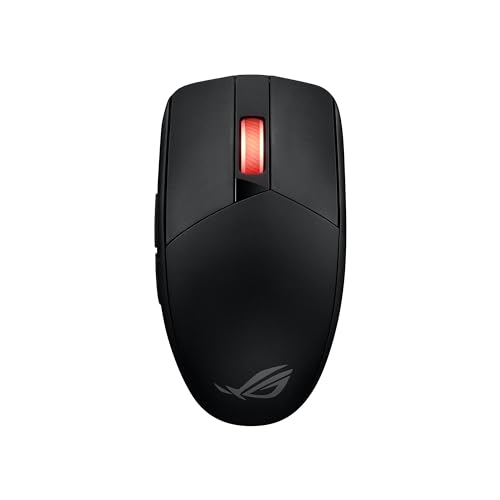
Best Ambidextrous Pick
ASUS ROG Strix Impact III Wireless
A 57g ambidextrous shape with replaceable switches and up to 618 hours of listed battery life.
Best for: Left-handed players and anyone who swaps hands.
Our take Check price for ASUS ROG Strix Impact III Wireless (opens in a new tab)

Best for Palm Grip
Razer Basilisk V3 X HyperSpeed
A right-handed shape with a built-in thumb rest and 9 programmable buttons.
Best for: Palm-grip players in MMOs and single-player games.
Our take Check price for Razer Basilisk V3 X HyperSpeed (opens in a new tab)

Best for PC and Laptop
SteelSeries Rival 3 Wireless Gen 2
2.4GHz for games and Bluetooth for a second device on one AAA battery.
Best for: Players who move one mouse between a desktop and a laptop.
Our take Check price for SteelSeries Rival 3 Wireless Gen 2 (opens in a new tab)

Best for Travel
Razer Orochi V2 Wireless
A compact shape under 60g with up to 950 hours on Bluetooth.
Best for: Laptop gaming away from the desk.
Our take Check price for Razer Orochi V2 Wireless (opens in a new tab)
Our Picks
Best for Click Feel1 of 6
Logitech G PRO X2 Superstrike Wireless on Amazon (opens in a new tab)
Logitech's PRO X2 Superstrike adds haptic click feedback to the PRO shape, so the click feel is set in software rather than fixed by the switch.
Best for
- Competitive players who want to tune how a click feels.
Skip if
- The maker gives no battery life, so look elsewhere if that figure decides it for you.
Why we like it
It pairs that with a Hero 2 sensor and 8kHz polling over Lightspeed. No other pick in this guide offers a lightspeed 2.4GHz connection; compare the DeathAdder V4 Pro, which has a HyperSpeed 2.4GHz connection. The PRO X2 Superstrike's dongle works best on a front USB port or an extender near the mouse.
Polling above 1,000Hz shortens battery life and needs a CPU with headroom. It was the most expensive pick when we checked, so weigh what it adds over the DeathAdder V4 Pro. Buyers who need a confirmed weight should compare it with the DeathAdder V4 Pro, which weighs 56g.
Key dimensions & specs
- Max DPI: 44,000
- Polling rate: 8,000Hz
- Connection: Lightspeed 2.4GHz
Pros
- 8,000Hz polling
- Haptic click feedback
- Hero 2 sensor
- 8kHz wireless polling
Cons
- No published battery life
- Costs more than the Orochi V2 at the time of writing
Lightest Mouse2 of 6
Razer DeathAdder V4 Pro Wireless on Amazon (opens in a new tab)
Razer's DeathAdder V4 Pro keeps the long right-handed DeathAdder shape at 56g, with 8000Hz wireless polling.
Best for
- Players who lift the mouse often at low sensitivity.
Skip if
- Skip it if battery life matters most to you; the Strix Impact III Wireless offers 618 hours.
Why we like it
Its Gen-4 optical switches are rated for 100 million clicks and the scroll wheel is optical too. On battery life it trails the group at 150 hours, while the Strix Impact III Wireless runs for 618 hours. No other pick in this guide offers a HyperSpeed 2.4GHz connection; compare the PRO X2 Superstrike, which has a lightspeed 2.4GHz connection.
You get a right-handed ergonomic shape here, which sets it apart from the Strix Impact III Wireless and its an ambidextrous shape. The DeathAdder V4 Pro's dongle works best on a front USB port or an extender near the mouse. Polling above 1,000Hz shortens battery life and needs a CPU with headroom. Its price falls between the Basilisk V3 X HyperSpeed and the PRO X2 Superstrike, based on our last check.
Key dimensions & specs
- Weight: 56g
- Battery life: 150 hours
- Polling rate: 8,000Hz
- Connection: HyperSpeed 2.4GHz
- Shape: Right-handed ergonomic
Pros
- Light 56g body
- Up to 150 hours per charge
- 8,000Hz polling
- 8000Hz wireless polling
Cons
- Battery life trails the Strix Impact III Wireless (618 hours)
- Costs more than the Orochi V2 at the time of writing
Best Ambidextrous Pick3 of 6
ASUS ROG Strix Impact III Wireless on Amazon (opens in a new tab)
ASUS's ROG Strix Impact III Wireless is a 57g ambidextrous shape with a 36K sensor and switches you can replace.
Best for
- Left-handed players and anyone who swaps hands.
Skip if
- Skip it if price comes first: the Orochi V2 cost less when we checked.
Why we like it
ASUS offers up to 618 hours of battery life, and it pairs over Bluetooth with up to three devices. It weighs 57g without the battery, and the ROG Omni Receiver connects several devices through one dongle. On battery life it leads this guide at 618 hours, ahead of the Orochi V2 (425 hours).
An ambidextrous shape is unique to it among these picks, while the DeathAdder V4 Pro uses a right-handed ergonomic shape. Keep the Strix Impact III Wireless on its dongle for games; Bluetooth is for a laptop. On price it sat third of 6, between the cheaper Rival 3 Wireless Gen 2 and the pricier Basilisk V3 X HyperSpeed, at the time of writing. The maker doesn't give its polling rate; if that figure matters, the PRO X2 Superstrike offers 8,000Hz.
Key dimensions & specs
- Weight: 57g
- Max DPI: 36,000
- Battery life: 618 hours
- Connection: 2.4GHz, Bluetooth
- Shape: Ambidextrous
Pros
- Light 57g body
- Up to 618 hours per charge
- Dongle plus Bluetooth
- Ambidextrous shape
Cons
- Costs more than the Orochi V2 at the time of writing
Best for Palm Grip4 of 6
Razer Basilisk V3 X HyperSpeed on Amazon (opens in a new tab)
Razer's Basilisk V3 X HyperSpeed is a right-handed mouse with a built-in thumb rest and nine programmable buttons.
Best for
- Palm-grip players in MMOs and single-player games.
Skip if
- If budget leads, the Orochi V2 was cheaper at our last price check.
Why we like it
It runs on one AA battery, which Razer rates at up to 535 hours over Bluetooth. Chroma RGB reacts to hundreds of integrated games, and Synapse tunes performance. On battery life it sits mid-pack at 285 hours: the Strix Impact III Wireless runs for 618 hours, and the DeathAdder V4 Pro comes in at 150 hours.
Keep the Basilisk V3 X HyperSpeed on its dongle for games; Bluetooth is for a laptop. Its price falls between the Strix Impact III Wireless and the DeathAdder V4 Pro, based on our last check. Buyers who need a confirmed weight should compare it with the DeathAdder V4 Pro, which weighs 56g.
Key dimensions & specs
- Programmable buttons: 9
- Max DPI: 18,000
- Battery life: 285 hours
- Connection: HyperSpeed 2.4GHz, Bluetooth
- Shape: Right-handed ergonomic with thumb rest
Pros
- Up to 285 hours per charge
- Dongle plus Bluetooth
- Up to 535 hours on Bluetooth
- Runs on a single AA battery
Cons
- Costs more than the Orochi V2 at the time of writing
Best for PC and Laptop5 of 6
SteelSeries Rival 3 Wireless Gen 2 on Amazon (opens in a new tab)
SteelSeries's Rival 3 Wireless Gen 2 connects over 2.4GHz for games and Bluetooth for a laptop, powered by a single AAA battery.
Best for
- Players who move one mouse between a desktop and a laptop.
Skip if
- Price-first buyers should look at the Orochi V2, which cost less when we checked.
Why we like it
Its switches are rated for 60 million clicks. Its TrueMove Air sensor reaches 18,000 DPI, and click latency is rated at 1.9ms wireless. Its 1.9ms click latency over wireless is quick for a budget mouse.
Its 200 hours battery life ranks fourth of 5 here, behind the Strix Impact III Wireless (618 hours) and ahead of the DeathAdder V4 Pro (150 hours). When we checked, only the Orochi V2 cost less, and the Strix Impact III Wireless cost more. If you want a confirmed weight, look to the DeathAdder V4 Pro instead: it weighs 56g, while this one gives no figure.
Key dimensions & specs
- Max DPI: 18,000
- Battery life: 200 hours
- Connection: 2.4GHz, Bluetooth
Pros
- Up to 200 hours per charge
- Dongle plus Bluetooth
- Up to 450 hours on Bluetooth
- Runs on a single AAA battery
Cons
- Costs more than the Orochi V2 at the time of writing
Best for Travel6 of 6
Razer Orochi V2 Wireless on Amazon (opens in a new tab)
Razer's Orochi V2 is a compact mobile mouse under 60g that takes either one AA or one AAA battery.
Best for
- Laptop gaming away from the desk.
Skip if
- Worth skipping when battery life of 425 hours, behind the Strix Impact III Wireless (618 hours is a problem.
Why we like it
Razer offers up to 950 hours on Bluetooth, and it was the lowest-priced mouse here at the time of writing. It runs up to 950 hours on one battery, weighs under 60g without it, and its mechanical switches are rated for 60 million clicks. Its 425 hours battery life ranks second of 5 here, behind the Strix Impact III Wireless (618 hours) and ahead of the DeathAdder V4 Pro (150 hours).
Keep the Orochi V2 on its dongle for games; Bluetooth is for a laptop. No other pick here cost less at our last price check, and the Rival 3 Wireless Gen 2 was closest. If you want a confirmed weight, look to the DeathAdder V4 Pro instead: it weighs 56g, while this one gives no figure.
Key dimensions & specs
- Max DPI: 18,000
- Battery life: 425 hours
- Connection: HyperSpeed 2.4GHz, Bluetooth
Pros
- Up to 425 hours per charge
- Dongle plus Bluetooth
- Up to 950 hours on Bluetooth
- Hybrid slot for one AA or AAA battery
Cons
- Battery life of 425 hours, behind the Strix Impact III Wireless (618 hours)
How We Chose These Wireless Gaming Mice
Each pick was assessed across 4 criteria weighted for real-world use.
- Weight and shape
- We recorded listed weights and whether the shape is right-handed or ambidextrous.
- Buttons
- We counted programmable buttons where the listing states them.
- Sensor figures
- We noted maximum DPI and polling rate, while treating them as secondary.
- Connection and battery
- We checked dongle, Bluetooth and wired modes and the rated battery life.
What to Look for in a Wireless Gaming Mouse
Key buying criteria so you get the right fit the first time.
Wireless is no longer a handicap
A 2.4GHz dongle matches a cable for games. Check battery life with lighting on and whether the mouse charges while in use.
Shape and grip come first
Palm grips suit longer, higher-backed mice; claw and fingertip grips suit shorter, lighter shells. Ambidextrous shapes fit either hand but often have fewer side buttons.
Weight changes how aim feels
Mice around 60g are easy to flick and lift. Heavier mice feel steadier for tracking. A difference of 10g is noticeable over a long session.
DPI figures past 20,000 do not matter much
Most players use 400 to 3,200 DPI. Very high maximums are marketing; sensor consistency matters more.
High polling rates cost battery
4,000Hz and 8,000Hz modes cut reporting delay slightly but drain wireless batteries faster and use more CPU time.
Count the buttons you will use
MMO mice put 12 or more buttons under the thumb for hotbars. Shooters rarely need more than two side buttons.
How to Choose a Wireless Gaming Mouse
By priority
| Priority | Consider | Why |
|---|---|---|
| Competitive players who want to tune how a click feels | PRO X2 Superstrike | Haptic click feedback with 8kHz wireless polling |
| Players who lift the mouse often at low sensitivity | DeathAdder V4 Pro | The lightest weight here (56g) |
| Left-handed players and anyone who swaps hands | Strix Impact III Wireless | A 57g ambidextrous shape with replaceable switches and up to 618 hours of listed battery life |
| Palm-grip players in MMOs and single-player games | Basilisk V3 X HyperSpeed | A right-handed shape with a built-in thumb rest and 9 programmable buttons |
| Players who move one mouse between a desktop and a laptop | Rival 3 Wireless Gen 2 | 2.4GHz for games and Bluetooth for a second device on one AAA battery |
| Laptop gaming away from the desk | Orochi V2 | A compact shape under 60g with up to 950 hours on Bluetooth |
Scroll sideways to see every column.
Key specs side by side
Figures as each maker states them.
| Mice | Weight | Max DPI | Battery life | Polling rate |
|---|---|---|---|---|
| PRO X2 Superstrike | Not listed | 44,000 | Not listed | 8,000Hz |
| DeathAdder V4 Pro | 56g | Not listed | 150 hours | 8,000Hz |
| Strix Impact III Wireless | 57g | 36,000 | 618 hours | Not listed |
| Basilisk V3 X HyperSpeed | Not listed | 18,000 | 285 hours | Not listed |
| Rival 3 Wireless Gen 2 | Not listed | 18,000 | 200 hours | Not listed |
| Orochi V2 | Not listed | 18,000 | 425 hours | Not listed |
Scroll sideways to see every column.
By price at the time of writing
Prices change often; these tiers reflect Amazon prices when this guide was updated.
| Price tier | Mice |
|---|---|
| Under $50 | Orochi V2 |
| About $50 to $100 | Rival 3 Wireless Gen 2, Strix Impact III Wireless, Basilisk V3 X HyperSpeed |
| About $150 to $250 | DeathAdder V4 Pro, PRO X2 Superstrike |
Frequently Asked Questions
Do I need 8,000Hz polling?
No. It is a small gain on top of 1,000Hz, and it costs battery life and CPU time.
What DPI should I use?
Start at 800 or 1,600 DPI and set in-game sensitivity from there. Higher DPI does not improve aim by itself.
Is a lighter mouse always better?
For flick aiming it helps; for slow tracking some players prefer more weight. Grip and shape matter more.
Is a wireless mouse slower?
Not over a 2.4GHz dongle. Bluetooth adds latency and suits office work.
Can an MMO mouse work for shooters?
It can, but the extra side buttons add weight and make it easy to press the wrong key.
Do gaming mice need software?
They work without it, but button mapping, DPI steps and lighting usually need the maker's app.
Bottom Line
The Logitech PRO X2 Superstrike and Razer DeathAdder V4 Pro are the two for competitive play, with 8kHz wireless polling; pick the DeathAdder for a right-handed shape and the lower listed weight, and the Logitech for adjustable haptic clicks. The ASUS ROG Strix Impact III Wireless is the ambidextrous choice, with replaceable switches and a 618-hour battery rating.
If you would rather not charge at all, the Razer Basilisk V3 X HyperSpeed suits palm grip on one AA battery, the SteelSeries Rival 3 Wireless Gen 2 covers a PC and a laptop on one AAA, and the Razer Orochi V2 is the compact travel pick at the lowest price here.