
Buying Guide
The Best Monitors for Photo Editing
We weighed five monitors on screen size and resolution; the PA329CRV has the largest screen size, and the ProArt PA278CGRV costs the least.
By The PC Journal editorial team
12 min read5 products evaluated
Photo editing needs a panel that covers the colour space you work in and is calibrated before it reaches you. Every monitor here lists a colour gamut figure and factory calibration or a Delta E accuracy figure.
The order reflects resolution, size and panel from maker specifications; we did not test these monitors ourselves, and a missing HDR is flagged, not filled in.
Quick Picks
Our 5 recommendations at a glance. Tap a pick for the full verdict.
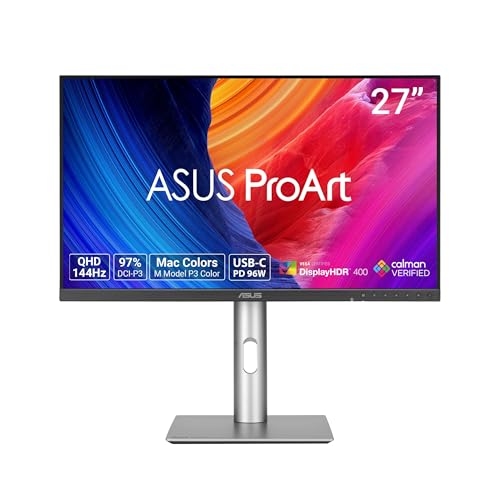
Lowest Price Here
ASUS ProArt PA278CGRV
Undercutting the ProArt PA279CRV on price when we checked.
Best for: Keeping the cost under $500.
Our take Check price for ASUS ProArt PA278CGRV (opens in a new tab)

Also Consider
ASUS ProArt PA279CRV
99% Adobe RGB coverage.
Best for: Buyers who want 99% Adobe RGB coverage.
Our take Check price for ASUS ProArt PA279CRV (opens in a new tab)

Strong Alternative
BenQ PD2706U
Factory calibration with a Delta E of 3 or under.
Best for: Buyers who want factory calibration with a Delta E of 3 or under.

Worth a Look
ASUS ProArt 27-inch 4K (Calman Verified)
Calman verified with factory pre-calibration to a Delta E under 2.
Best for: Buyers who want Calman verified with factory pre-calibration to a Delta E under 2.
Our take Check price for ASUS ProArt 27-inch 4K (Calman Verified) (opens in a new tab)

Largest Screen Size
ASUS ProArt PA329CRV
The largest screen size here (31.5 inches).
Best for: Buyers who put screen size first.
Our take Check price for ASUS ProArt PA329CRV (opens in a new tab)
| Pick | Why it’s here | Best for | Price |
|---|---|---|---|
| Undercutting the ProArt PA279CRV on price when we checked. | Keeping the cost under $500. | Check price for ASUS ProArt PA278CGRV (opens in a new tab) |
| 99% Adobe RGB coverage. | Buyers who want 99% Adobe RGB coverage. | Check price for ASUS ProArt PA279CRV (opens in a new tab) |
| Factory calibration with a Delta E of 3 or under. | Buyers who want factory calibration with a Delta E of 3 or under. | Check price for BenQ PD2706U (opens in a new tab) |
| Calman verified with factory pre-calibration to a Delta E under 2. | Buyers who want Calman verified with factory pre-calibration to a Delta E under 2. | Check price for ASUS ProArt 27-inch 4K (Calman Verified) (opens in a new tab) |
| The largest screen size here (31.5 inches). | Buyers who put screen size first. | Check price for ASUS ProArt PA329CRV (opens in a new tab) |
Our Picks
Lowest Price Here1 of 5
ASUS ProArt PA278CGRV on Amazon (opens in a new tab)
What the ProArt PA278CGRV brings to the table is factory calibration to Delta E under 2, plus a 144Hz variable refresh rate.
Best for
- Keeping the cost under $500.
Skip if
- Worth skipping when screen size of 27 inches, behind the PA329CRV (31.5 inches) is a problem.
Why we like it
It also offers a 144Hz refresh rate and offers a 27 inches screen size. On screen size it ties with the ProArt PA279CRV, the BenQ PD2706U and the ASUS ProArt 27 4K at 27 inches. It is the only pick here with a 2560x1440 (1440p) resolution; the ProArt PA279CRV has a 3840x2160 (4K) resolution instead.
It is the only pick here with a 97% DCI-P3 color gamut; the ProArt PA279CRV has a 99% DCI-P3 color gamut instead. It was the cheapest of the group when we checked; the ProArt PA279CRV was the next step up. The main gap: screen size of 27 inches, behind the PA329CRV (31.5 inches). If that matters, the PA329CRV comes in at 31.5 inches.
Key dimensions & specs
- Refresh rate: 144Hz
- Resolution: 2560x1440 (1440p)
- Size: 27 inches
- Panel: IPS
- Color gamut: 97% DCI-P3
- USB-C: Yes
Pros
- 144Hz for smoother motion than a 60Hz office screen
- 1440p resolution, sharper than 1080p at 27 inches
- an IPS panel with wide viewing angles
- 97% DCI-P3 colour coverage
Cons
- Screen size of 27 inches, behind the PA329CRV (31.5 inches)
Also Consider2 of 5
ASUS ProArt PA279CRV on Amazon (opens in a new tab)
The ProArt PA279CRV stands out for 99% Adobe RGB coverage, and it adds factory calibration to Delta E under 2.
Best for
- Buyers who want 99% Adobe RGB coverage.
Skip if
- Skip it if price comes first: the ProArt PA278CGRV cost less when we checked.
Why we like it
It also offers a 27 inches screen size. It matches the ProArt PA278CGRV, the BenQ PD2706U and the ASUS ProArt 27 4K on screen size (27 inches). It shares a 99% DCI-P3 color gamut with the ASUS ProArt 27 4K; the ProArt PA278CGRV goes with a 97% DCI-P3 color gamut.
At 4K, check that your graphics card and cable support 4K at the refresh rate you want before you buy. You also get this: an IPS panel with wide viewing angles. Worth noting: a USB-C input for laptops. It was priced above the ProArt PA278CGRV and below the BenQ PD2706U at the time of writing.
Key dimensions & specs
- Resolution: 3840x2160 (4K)
- Size: 27 inches
- Panel: IPS
- Color gamut: 99% DCI-P3
- USB-C: Yes
Pros
- 4K resolution for sharp text and detail
- an IPS panel with wide viewing angles
- 99% DCI-P3 colour coverage
- a USB-C input for laptops
Cons
- Costs more than the ProArt PA278CGRV at the time of writing
Strong Alternative3 of 5
BenQ PD2706U on Amazon (opens in a new tab)
The BenQ PD2706U is built around factory calibration with a Delta E of 3 or under, with Pantone, Pantone SkinTone and Calman validation on top.
Best for
- Buyers who want factory calibration with a Delta E of 3 or under.
Skip if
- Price-first buyers should look at the ProArt PA278CGRV, which cost less when we checked.
Why we like it
On the spec sheet, it offers a 27 inches screen size. It matches the ProArt PA278CGRV, the ProArt PA279CRV and the ASUS ProArt 27 4K on screen size (27 inches). It shares a DisplayHDR 400 with the PA329CRV; the ASUS ProArt 27 4K goes with an HDR.
A 99% sRGB and 95% P3 color gamut is unique to it among these picks, while the ProArt PA279CRV uses a 99% DCI-P3 color gamut. You also get 90W USB-C with a built-in KVM switch and a hotkey puck and flicker-free, anti-glare and low blue light eye care. At 4K, check that your graphics card and cable support 4K at the refresh rate you want before you buy. When we checked, only the ProArt PA279CRV and cheaper picks cost less, and the ASUS ProArt 27 4K cost more.
Key dimensions & specs
- Resolution: 3840x2160 (4K)
- Size: 27 inches
- Panel: IPS
- HDR: DisplayHDR 400
- Color gamut: 99% sRGB and 95% P3
- USB-C: Yes
Pros
- 4K resolution for sharp text and detail
- an IPS panel with wide viewing angles
- 99% sRGB and 95% P3 colour coverage
- a USB-C input for laptops
Cons
- Costs more than the ProArt PA278CGRV at the time of writing
Worth a Look4 of 5
ASUS ProArt 27-inch 4K (Calman Verified) on Amazon (opens in a new tab)
What the ASUS ProArt 27 4K brings to the table is Calman verified with factory pre-calibration to a Delta E under 2, plus USB-C with 96W power delivery.
Best for
- Buyers who want Calman verified with factory pre-calibration to a Delta E under 2.
Skip if
- Skip it if screen size matters most to you; the PA329CRV offers 31.5 inches.
Why we like it
It also offers a 27 inches screen size. On screen size it ties with the ProArt PA278CGRV, the ProArt PA279CRV and the BenQ PD2706U at 27 inches. Like the ProArt PA279CRV, it has a 99% DCI-P3 color gamut, while the PA329CRV uses a 98% DCI-P3 color gamut.
You also get daisy chain support and 10-bit colour with 1.07 billion colours. At 4K, check that your graphics card and cable support 4K at the refresh rate you want before you buy. On price it sat fourth of 5, between the cheaper BenQ PD2706U and the pricier PA329CRV, at the time of writing. The trade-off is screen size; for more, the PA329CRV comes in at 31.5 inches.
Key dimensions & specs
- Resolution: 3840x2160 (4K)
- Size: 27 inches
- Panel: IPS
- HDR: HDR
- Color gamut: 99% DCI-P3
- Stand: height, tilt, swivel and pivot
- USB-C: Yes
Pros
- 4K resolution for sharp text and detail
- an IPS panel with wide viewing angles
- 99% DCI-P3 colour coverage
- a stand with height, tilt, swivel and pivot
Cons
- Screen size trails the PA329CRV (31.5 inches)
- Costs more than the ProArt PA278CGRV at the time of writing
Largest Screen Size5 of 5
ASUS ProArt PA329CRV on Amazon (opens in a new tab)
ASUS's ProArt PA329CRV is a 31.5-inch 4K IPS screen listing 98% DCI-P3 and DisplayHDR 400.
Best for
- Buyers who put screen size first.
Skip if
- If budget leads, the ProArt PA278CGRV was cheaper at our last price check.
Why we like it
Its 96W USB-C port can power a larger laptop over one cable. On screen size it leads this guide at 31.5 inches, ahead of the ProArt PA278CGRV (27 inches). Like the BenQ PD2706U, it has a DisplayHDR 400, while the ASUS ProArt 27 4K uses an HDR.
It is the only pick here with a 98% DCI-P3 color gamut; the ProArt PA278CGRV has a 97% DCI-P3 color gamut instead. It also comes with Calman Verified with Delta E below 2 and DisplayPort MST output for a second screen. At 4K, check that your graphics card and cable support 4K at the refresh rate you want before you buy. It was the most expensive pick when we checked, so weigh what it adds over the ASUS ProArt 27 4K.
Key dimensions & specs
- Resolution: 3840x2160 (4K)
- Size: 31.5 inches
- Panel: IPS
- HDR: DisplayHDR 400
- Color gamut: 98% DCI-P3
- USB-C: Yes
- Warranty: 3-year
Pros
- 4K resolution for sharp text and detail
- an IPS panel with wide viewing angles
- 98% DCI-P3 colour coverage
- a USB-C input for laptops
Cons
- Costs more than the ProArt PA278CGRV at the time of writing
How We Chose These Monitors for Photo Editing
Each pick was assessed across 4 criteria weighted for real-world use.
- How these picks were ranked
- We compared five monitors on resolution, screen size, panel and HDR as the makers state them. These are research figures, not bench results: 2 of 5 picks leave out HDR.
- What every pick has in common
- All 5, from the ProArt PA278CGRV to the PA329CRV, state resolution, screen size and panel and share IPS panel and USB-C.
- Where the specs have gaps
- The ProArt PA278CGRV and the ProArt PA279CRV give no HDR.
- Price range
- At our last check the picks ran from the ProArt PA278CGRV ($250 to $500) to the PA329CRV ($500 to $1000).
What to Look for in a Monitor for Photo Editing
Key buying criteria so you get the right fit the first time.
Screen size across these picks
Across these 5 picks screen size spans 27 inches (the ASUS ProArt 27 4K) to 31.5 inches (the PA329CRV). If screen size is your first filter, the PA329CRV sets the ceiling at 31.5 inches.
Color gamut
The ProArt PA278CGRV lists 97% DCI-P3; the ProArt PA279CRV and the ASUS ProArt 27 4K list 99% DCI-P3; the BenQ PD2706U lists 99% sRGB and 95% P3; the PA329CRV lists 98% DCI-P3. Sort out color gamut before price: it splits 5 stated picks into groups of 2, 1, 1 and 1.
Extras that separate them
The BenQ PD2706U: Pantone, Pantone SkinTone and Calman validation. The ASUS ProArt 27 4K: USB-C with 96W power delivery. The PA329CRV: Calman Verified with Delta E below 2.
Where your budget lands
$250 to $500 buys the ProArt PA278CGRV, the ProArt PA279CRV and the BenQ PD2706U; $500 to $1000 buys the ASUS ProArt 27 4K and the PA329CRV at our last check.
Start from what matters most
Keeping the cost under $500: the ProArt PA278CGRV. Buyers who put screen size first: the PA329CRV.
How to Choose a Monitor for Photo Editing
By priority
| Priority | Consider | Why |
|---|---|---|
| Keeping the cost under $500 | ProArt PA278CGRV | Undercutting the ProArt PA279CRV on price when we checked |
| Buyers who want 99% Adobe RGB coverage | ProArt PA279CRV | 99% Adobe RGB coverage |
| Buyers who want factory calibration with a Delta E of 3 or under | BenQ PD2706U | Factory calibration with a Delta E of 3 or under |
| Buyers who want Calman verified with factory pre-calibration to a Delta E under 2 | ASUS ProArt 27 4K | Calman verified with factory pre-calibration to a Delta E under 2 |
| Buyers who put screen size first | PA329CRV | The largest screen size here (31.5 inches) |
Scroll sideways to see every column.
Key specs side by side
The PA329CRV leads on screen size at 31.5 inches, ahead of the ProArt PA278CGRV at 27 inches. "Not listed" marks HDR where the ProArt PA278CGRV and the ProArt PA279CRV leave the figure out.
| Monitor | Resolution | Size | Panel | HDR |
|---|---|---|---|---|
| ProArt PA278CGRV | 2560x1440 (1440p) | 27 inches | IPS | Not listed |
| ProArt PA279CRV | 3840x2160 (4K) | 27 inches | IPS | Not listed |
| BenQ PD2706U | 3840x2160 (4K) | 27 inches | IPS | DisplayHDR 400 |
| ASUS ProArt 27 4K | 3840x2160 (4K) | 27 inches | IPS | HDR |
| PA329CRV | 3840x2160 (4K) | 31.5 inches | IPS | DisplayHDR 400 |
Scroll sideways to see every column.
By price at the time of writing
The ProArt PA278CGRV was the lowest-priced pick ($250 to $500) and the PA329CRV the highest ($500 to $1000) when we checked; tiers move with Amazon pricing.
| Price tier | Monitors |
|---|---|
| About $250 to $500 | ProArt PA278CGRV, ProArt PA279CRV, BenQ PD2706U |
| About $500 to $1000 | ASUS ProArt 27 4K, PA329CRV |
Frequently Asked Questions
How does the ProArt PA278CGRV compare with the PA329CRV on screen size?
The PA329CRV leads at 31.5 inches, with the ProArt PA278CGRV at 27 inches.
What does the PA329CRV add over the ProArt PA278CGRV?
The spec sheets show screen size (31.5 inches against 27 inches) in its favour. On our last price check the ProArt PA278CGRV was in the $250 to $500 tier and the PA329CRV in the $500 to $1000 tier, with 3 other picks between them; pay the difference only if screen size decides your purchase.
Why is the PA329CRV our Largest Screen Size pick?
It earns the label for the largest screen size here (31.5 inches). On screen size it leads the ProArt PA278CGRV, 31.5 inches against 27 inches, a 17% margin. The ProArt PA278CGRV, the cheapest pick, sat in the $250 to $500 tier against $500 to $1000 here, without out-ranking it on any listed spec. It suits anyone who puts screen size first.
Do the ProArt PA278CGRV and the ProArt PA279CRV differ on resolution?
The ProArt PA278CGRV uses 2560x1440 (1440p); the ProArt PA279CRV, the BenQ PD2706U, the ASUS ProArt 27 4K and the PA329CRV use 3840x2160 (4K).
What extras do the ProArt PA278CGRV and the ProArt PA279CRV include?
The ProArt PA278CGRV: factory calibration to Delta E under 2. The ProArt PA279CRV: 99% Adobe RGB coverage. The BenQ PD2706U: factory calibration with a Delta E of 3 or under.
Bottom Line
Our first pick is the ProArt PA278CGRV, chosen for undercutting the ProArt PA279CRV on price when we checked. Look at the ProArt PA279CRV for 99% Adobe RGB coverage, the BenQ PD2706U for factory calibration with a Delta E of 3 or under and the ASUS ProArt 27 4K for Calman verified with factory pre-calibration to a Delta E under 2 if those matter more to you.
A factory report does not replace a calibration tool; if prints matter, calibrate the screen with a colorimeter.