
Buying Guide
The Best Gaming Headphones: Our Research Picks
Five headphones and headsets chosen from listing research, not forum polls.
By The PC Journal editorial team
12 min read5 products evaluated
This is our own research roundup, not a tally of forum opinions. The five picks cover open-back listening, wired and wireless headsets.
We compared drivers, battery and mic from each listing.
Quick Picks
Our 5 recommendations at a glance. Tap a pick for the full verdict.
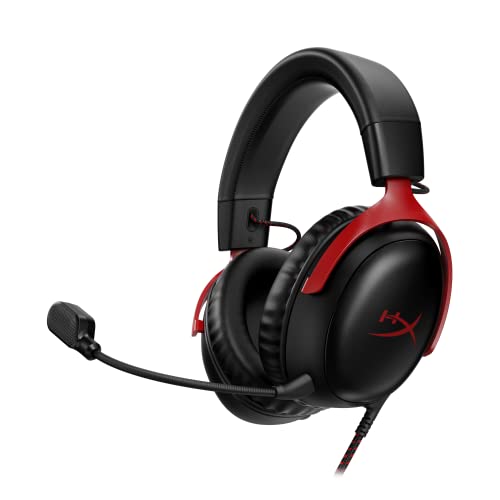
Largest Drivers
HyperX Cloud III Wired
The largest driver size here (53mm).
Best for: Listeners who want the biggest drivers here.
Our take Check price for HyperX Cloud III Wired (opens in a new tab)
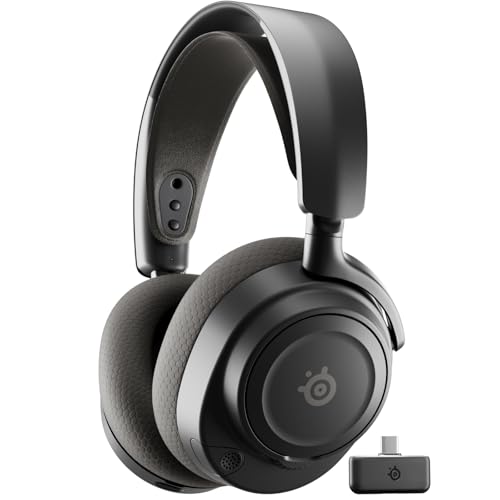
Best Wireless Headset
SteelSeries Arctis Nova 7 Wireless Gen 2
Simultaneous 2.4GHz and Bluetooth.
Best for: PC plus phone.
Our take Check price for SteelSeries Arctis Nova 7 Wireless Gen 2 (opens in a new tab)

Best Open-Back
Philips SHP9500 Open-Back Headphones
50mm drivers in an open design.
Best for: Quiet rooms.
Our take Check price for Philips SHP9500 Open-Back Headphones (opens in a new tab)

Longest Battery Life
HyperX Cloud Alpha Wireless
The longest battery life here (300 hours).
Best for: Long sessions away from a charging cable.
Our take Check price for HyperX Cloud Alpha Wireless (opens in a new tab)

Best Razer Pick
Razer BlackShark V3 Wireless Gaming Headset
70 hours with 50mm drivers and Bluetooth.
Best for: Esports and mobile.
Our take Check price for Razer BlackShark V3 Wireless Gaming Headset (opens in a new tab)
| Pick | Why it’s here | Best for | Price |
|---|---|---|---|
| The largest driver size here (53mm). | Listeners who want the biggest drivers here. | Check price for HyperX Cloud III Wired (opens in a new tab) |
| Simultaneous 2.4GHz and Bluetooth. | PC plus phone. | Check price for SteelSeries Arctis Nova 7 Wireless Gen 2 (opens in a new tab) |
| 50mm drivers in an open design. | Quiet rooms. | Check price for Philips SHP9500 Open-Back Headphones (opens in a new tab) |
| The longest battery life here (300 hours). | Long sessions away from a charging cable. | Check price for HyperX Cloud Alpha Wireless (opens in a new tab) |
| 70 hours with 50mm drivers and Bluetooth. | Esports and mobile. | Check price for Razer BlackShark V3 Wireless Gaming Headset (opens in a new tab) |
Our Picks
Largest Drivers1 of 5
HyperX Cloud III Wired on Amazon (opens in a new tab)
The Cloud III is the easiest recommendation: angled 53mm drivers, an upgraded microphone and both USB and 3.5mm connections, so it moves between a PC and a controller.
Best for
- Listeners who want the biggest drivers here.
Skip if
- Look at the other picks if you need a feature not covered above.
Why we like it
HyperX offers support for PC, PS5 and Xbox Series X|S. Its aluminium frame is flexible and resists knocks. The wired connection needs no charging and works with PC, consoles and phones through a 3.5mm or USB cable.
Its comfort-first design targets long matches, with memory-foam cushions and a padded headband. Nothing else here matches its 53mm driver size; the SHP9500 comes closest at 50mm. It is the only pick here with a wired (USB and 3.5mm) connection; the Cloud Alpha Wireless has a 2.4GHz wireless connection instead.
You get a upgraded microphone here, which sets it apart from the BlackShark V3 and its a detachable microphone. USB and 3.5mm options let it move between a PC and a controller. It undercut the SHP9500 and every other pick on price at the time of writing. The maker doesn't give its battery life; if that figure matters, the Cloud Alpha Wireless runs for 300 hours.
Key dimensions & specs
- Driver size: 53mm
- Connection: Wired (USB and 3.5mm)
- Microphone: Upgraded
Pros
- 53mm drivers
- No charging or pairing needed
- Angled 53mm drivers
- Upgraded microphone
Best Wireless Headset2 of 5
SteelSeries Arctis Nova 7 Wireless Gen 2 on Amazon (opens in a new tab)
The Arctis Nova 7 Gen 2 is the pick if your phone stays in your ears during a game: it plays 2.4GHz and Bluetooth audio at the same time, so a call or music mixes with game sound.
Best for
- PC plus phone.
Skip if
- Skip it if battery life matters most to you; the Cloud Alpha Wireless offers 300 hours.
Why we like it
Its noise-rejecting mic suits noisy rooms. Its ClearCast Gen 2 mic cuts background noise by up to 25dB, and battery lasts over 50 hours with USB-C fast charge. A steel frame and memory foam balance weight and comfort.
Its 50 hours battery life is the shortest in this group; the Cloud Alpha Wireless leads at 300 hours. It is the only pick here with a noise-rejecting microphone; the BlackShark V3 has a detachable microphone instead. It also offers 360-degree spatial audio support.
On a PC, use the 2.4GHz dongle for games and keep Bluetooth for a phone, since Bluetooth adds latency. At our last price check it topped the group, with the BlackShark V3 the nearest cheaper option.
Key dimensions & specs
- Battery life: 50 hours
- Connection: 2.4GHz and Bluetooth simultaneously
- Microphone: Noise-rejecting
Pros
- Up to 50 hours of battery life
- Dual wireless: dongle plus Bluetooth
- Simultaneous 2.4GHz and Bluetooth audio
- 360-degree spatial audio support
Cons
- Battery life trails the Cloud Alpha Wireless (300 hours)
- No published driver size
- Costs more than the Cloud III at the time of writing
Best Open-Back3 of 5
Philips SHP9500 Open-Back Headphones on Amazon (opens in a new tab)
The SHP9500 is a hi-fi headphone rather than a headset: open-back 50mm drivers and a breathable headband give a wide, natural sound.
Best for
- Quiet rooms.
Skip if
- Look at the others if this bothers you: open-back leaks sound both ways.
Why we like it
There is no microphone, so pair it with a desk or clip-on mic. On driver size it ties with the BlackShark V3 at 50mm. You also get a double-layered, breathable headband cushion.
A 3.5mm plug means it works with a controller or front-panel jack; on PC, a separate mic and headphone jack may need a splitter. Because it is open-back, other people in the room will hear it, and it will not block outside noise. It was priced above the Cloud III and below the Cloud Alpha Wireless at the time of writing. There is no published battery life figure, whereas the Cloud Alpha Wireless runs for 300 hours.
Key dimensions & specs
- Driver size: 50mm
- Connection: Wired 3.5mm, 1.5m cable
- Design: Open-back
- Microphone: None
Pros
- 50mm drivers
- No charging or pairing needed
- Open-back for a wider soundstage
- Double-layered, breathable headband cushion
Cons
- Open-back leaks sound both ways
- No built-in microphone
- Costs more than the Cloud III at the time of writing
Longest Battery Life4 of 5
HyperX Cloud Alpha Wireless on Amazon (opens in a new tab)
The Cloud Alpha Wireless stands apart on battery: HyperX offers up to 300 hours, several times any other claim here.
Best for
- Long sessions away from a charging cable.
Skip if
- Pass if a published driver size matters; this one has none.
Why we like it
It pairs that with DTS Headphone:X spatial audio and dual-chamber drivers in an aluminum frame. Nothing else here matches its 300 hours battery life; the BlackShark V3 comes closest at 70 hours. You get a 2.4GHz wireless connection here, which sets it apart from the Cloud III and its a wired (USB and 3.5mm) connection.
No other pick in this guide offers an included microphone; compare the BlackShark V3, which has a detachable microphone. It connects through a USB wireless dongle, so keep a free USB port near your desk for the best range. It was priced above the SHP9500 and below the BlackShark V3 at the time of writing. There is no published driver size figure, whereas the Cloud III comes in at 53mm.
Key dimensions & specs
- Battery life: 300 hours
- Connection: 2.4GHz wireless
- Microphone: Included
Pros
- Up to 300 hours of battery life
- DTS Headphone:X spatial audio
- Dual-chamber drivers in a durable aluminum frame
- 2.4GHz wireless connection, the only one here
Cons
- No published driver size
- Costs more than the Cloud III at the time of writing
Best Razer Pick5 of 5
Razer BlackShark V3 Wireless Gaming Headset on Amazon (opens in a new tab)
The BlackShark V3 balances the list: 50mm drivers, a 70-hour battery, a detachable mic and both dongle and Bluetooth modes.
Best for
- Esports and mobile.
Skip if
- Skip it if driver size matters most to you; the Cloud III offers 53mm.
Why we like it
Esports-tuned EQ profiles and THX Spatial Audio 7.1.4 add positional cues, and the detachable HyperClear mic captures super-wideband voice. Its 70 hours battery life ranks second of 3 here, behind the Cloud Alpha Wireless (300 hours) and ahead of the Arctis Nova 7 Gen 2 (50 hours). On driver size it ties with the SHP9500 at 50mm.
It is the only pick here with a detachable microphone; the Cloud III has a upgraded microphone instead. On a PC, use the 2.4GHz dongle for games and keep Bluetooth for a phone, since Bluetooth adds latency. Driver size is its weakest area, and the Cloud III covers it better at 53mm.
Key dimensions & specs
- Battery life: 70 hours
- Driver size: 50mm
- Connection: HyperSpeed 2.4GHz, Bluetooth
- Microphone: Detachable
Pros
- Up to 70 hours of battery life
- 50mm drivers
- Dual wireless: dongle plus Bluetooth
- Detachable microphone, the only one here
Cons
- Driver size trails the Cloud III (53mm)
- Costs more than the Cloud III at the time of writing
How We Chose
Each pick was assessed across 4 criteria weighted for real-world use.
- Microphone
- We checked whether a microphone is included, detachable or noise-rejecting.
- Connection options
- We recorded each headset's connections, since they decide which systems it works with and how much latency to expect.
- Platform support
- We checked which consoles and PCs each maker names, and flagged Xbox-specific connections.
- Battery and weight
- We compared rated battery life and weight where makers state them, noting where lighting affects the battery claim.
What to Look for in a Gaming Headphones: Our Research
Key buying criteria so you get the right fit the first time.
Open-back or closed-back
Open-back headphones sound more spacious and feel cooler, but they leak sound and block little outside noise. Closed-back models isolate better in shared rooms.
Choose open-back only if you play in a quiet room on your own.
Pick the connection first
A 2.4GHz dongle gives the lowest latency for games; Bluetooth is convenient for phones but lags for shooters. Wired headsets have no latency or battery concerns.
If you play on a console as well as a PC, check which connections each platform supports before buying.
Battery life claims vary with lighting
Makers quote battery life under their own conditions, often with RGB lighting off. A 50-hour claim can drop noticeably with lighting on.
Compare figures at similar settings, and look for fast charging if you forget to plug in.
Check the microphone type
Detachable microphones let the headset double as everyday headphones. Some audiophile headphones have no microphone at all, so you would need a separate one.
If you stream or join calls, a cardioid or noise-rejecting mic is worth prioritising.
Console versions are not always interchangeable
Some wireless headsets come in PC, PlayStation and Xbox versions with different dongles. An Xbox-specific model may not connect wirelessly to a PlayStation.
Buy the version that matches every system you plan to use.
Virtual surround is software
7.1 and spatial audio labels usually describe software processing, not extra drivers. They can help locate sounds in some games and hurt music in others.
Make sure you can switch it off in the headset's software.
How to Choose a Gaming Headphones: Our Research
By priority
| Priority | Consider | Why |
|---|---|---|
| Listeners who want the biggest drivers here | Cloud III | The largest driver size here (53mm) |
| PC plus phone | Arctis Nova 7 Gen 2 | Simultaneous 2.4GHz and Bluetooth |
| Quiet rooms | SHP9500 | 50mm drivers in an open design |
| Long sessions away from a charging cable | Cloud Alpha Wireless | The longest battery life here (300 hours) |
| Esports and mobile | BlackShark V3 | 70 hours with 50mm drivers and Bluetooth |
Scroll sideways to see every column.
Key specs side by side
Figures as each maker states them.
| Headset | Battery life | Driver size | Connection | Microphone |
|---|---|---|---|---|
| Cloud III | Not listed | 53mm | Wired (USB and 3.5mm) | Upgraded |
| Arctis Nova 7 Gen 2 | 50 hours | Not listed | 2.4GHz and Bluetooth simultaneously | Noise-rejecting |
| SHP9500 | Not listed | 50mm | Wired 3.5mm, 1.5m cable | None |
| Cloud Alpha Wireless | 300 hours | Not listed | 2.4GHz wireless | Included |
| BlackShark V3 | 70 hours | 50mm | HyperSpeed 2.4GHz, Bluetooth | Detachable |
Scroll sideways to see every column.
By price at the time of writing
Prices change often; these tiers reflect Amazon prices when this guide was updated.
| Price tier | Headsets |
|---|---|
| About $50 to $100 | Cloud III, SHP9500 |
| About $100 to $150 | Cloud Alpha Wireless, BlackShark V3 |
| About $150 to $250 | Arctis Nova 7 Gen 2 |
Frequently Asked Questions
Can I use one headset on PC and console?
Many can, but check the connection for each system. Xbox-specific wireless headsets often need a matching adapter or Bluetooth on PC.
Are gaming headsets comfortable with glasses?
Softer memory foam pads and lighter clamp help. Look for listings that mention glasses support if it matters to you.
Do I need a separate microphone?
Only if your headphones do not include one or you stream. Most gaming headsets include a usable microphone.
Are open-back headphones good for gaming?
They give a wide, natural soundstage but leak sound and block little noise. They suit quiet rooms, not shared spaces.
Should I turn on virtual surround?
Try it in each game. It can help with positioning in some titles and make others sound hollow.
Is Bluetooth good enough for gaming?
For casual games it is fine, but 2.4GHz dongles have noticeably lower latency. Use the dongle for competitive play.
Bottom Line
HyperX's Cloud III is the wired all-rounder. SteelSeries's Nova 7 Gen 2 is the wireless pick, and Philips's SHP9500 is the open-back choice for quiet rooms.