
Buying Guide
The Best $3000 Extreme Mini-ITX Gaming PC Build
Eight parts for a extreme Mini-ITX gaming PC, each checked against the others for socket, memory, power and case fit.
By The PC Journal editorial team
13 min read8 products evaluated
An extreme Mini-ITX build needs every millimetre accounted for, and the ASUS Prime RTX 5070 Ti lists a 306mm length, a 2.5-slot cooler and a 750W recommendation, so this guide can check each of them. Every part is on AM5 with DDR5, and the 240mm Thermalright Frozen Notte liquid cooler mounts in a case that lists radiators up to 360mm.
This is a research build, not a lab build: the parts were picked from the makers' figures and then checked against each other, beginning with CPU socket, memory type and memory kit. The total fell between $2,950 and $3,000 when we checked.
Quick Picks
Our 8 recommendations at a glance. Tap a pick for the full verdict.

Processor
AMD Ryzen 7 7800X3D
First-generation AM5 3D V-Cache.
Best for: Buyers assembling a extreme Mini-ITX gaming PC who care about first-generation AM5 3D V-Cache.
Our take Check price for AMD Ryzen 7 7800X3D (opens in a new tab)

Graphics Card
ASUS Prime GeForce RTX 5070 Ti OC
Dual BIOS switch between quiet and performance modes.
Best for: Buyers assembling a extreme Mini-ITX gaming PC who care about dual BIOS switch between quiet and performance modes.
Our take Check price for ASUS Prime GeForce RTX 5070 Ti OC (opens in a new tab)

Motherboard
MSI MPG B850I Edge TI WiFi
PCIe 5.0 graphics slot.
Best for: Buyers assembling a extreme Mini-ITX gaming PC who care about PCIe 5.0 graphics slot.
Our take Check price for MSI MPG B850I Edge TI WiFi (opens in a new tab)

Memory
G.SKILL Trident Z5 RGB White 32GB (2x16GB) DDR5-6000 CL36
Matte white heatspreader.
Best for: Buyers assembling a extreme Mini-ITX gaming PC who care about matte white heatspreader.
Our take Check price for G.SKILL Trident Z5 RGB White 32GB (2x16GB) DDR5-6000 CL36 (opens in a new tab)
Storage
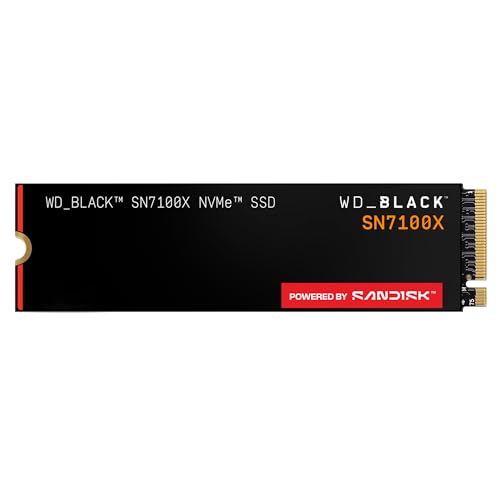
WD_Black SN7100X 2TB
Drive built for the ROG Xbox Ally and PCs.
Best for: Buyers assembling a extreme Mini-ITX gaming PC who care about drive built for the ROG Xbox Ally and PCs.
Our take Check price for WD_Black SN7100X 2TB (opens in a new tab)

Power Supply
NZXT C1000 Gold Core (ATX 3.1)
Cybenetics noise certification listed by NZXT.
Best for: Buyers assembling a extreme Mini-ITX gaming PC who care about cybenetics noise certification listed by NZXT.
Our take Check price for NZXT C1000 Gold Core (ATX 3.1) (opens in a new tab)

Case
Lian Li A3-mATX (Wood)
Front or side PSU mounting.
Best for: Buyers assembling a extreme Mini-ITX gaming PC who care about front or side PSU mounting.
Our take Check price for Lian Li A3-mATX (Wood) (opens in a new tab)

CPU Cooler
Thermalright Frozen Notte 240 V2
Pump rated for 40,000 hours.
Best for: Buyers assembling a extreme Mini-ITX gaming PC who care about pump rated for 40,000 hours.
Our take Check price for Thermalright Frozen Notte 240 V2 (opens in a new tab)
| Pick | Why it’s here | Best for | Price |
|---|---|---|---|
| First-generation AM5 3D V-Cache. | Buyers assembling a extreme Mini-ITX gaming PC who care about first-generation AM5 3D V-Cache. | Check price for AMD Ryzen 7 7800X3D (opens in a new tab) |
| Dual BIOS switch between quiet and performance modes. | Buyers assembling a extreme Mini-ITX gaming PC who care about dual BIOS switch between quiet and performance modes. | Check price for ASUS Prime GeForce RTX 5070 Ti OC (opens in a new tab) |
| PCIe 5.0 graphics slot. | Buyers assembling a extreme Mini-ITX gaming PC who care about PCIe 5.0 graphics slot. | Check price for MSI MPG B850I Edge TI WiFi (opens in a new tab) |
| Matte white heatspreader. | Buyers assembling a extreme Mini-ITX gaming PC who care about matte white heatspreader. | Check price for G.SKILL Trident Z5 RGB White 32GB (2x16GB) DDR5-6000 CL36 (opens in a new tab) |
| Drive built for the ROG Xbox Ally and PCs. | Buyers assembling a extreme Mini-ITX gaming PC who care about drive built for the ROG Xbox Ally and PCs. | Check price for WD_Black SN7100X 2TB (opens in a new tab) |
| Cybenetics noise certification listed by NZXT. | Buyers assembling a extreme Mini-ITX gaming PC who care about cybenetics noise certification listed by NZXT. | Check price for NZXT C1000 Gold Core (ATX 3.1) (opens in a new tab) |
| Front or side PSU mounting. | Buyers assembling a extreme Mini-ITX gaming PC who care about front or side PSU mounting. | Check price for Lian Li A3-mATX (Wood) (opens in a new tab) |
| Pump rated for 40,000 hours. | Buyers assembling a extreme Mini-ITX gaming PC who care about pump rated for 40,000 hours. | Check price for Thermalright Frozen Notte 240 V2 (opens in a new tab) |
Our Picks
Processor1 of 8
AMD Ryzen 7 7800X3D on Amazon (opens in a new tab)
The Ryzen 7 7800X3D has the same 96MB of L3 cache as its successor with an older core design and lower clocks.
Best for
- Buyers assembling a extreme Mini-ITX gaming PC who care about first-generation AM5 3D V-Cache.
Skip if
- Skip it if this is a dealbreaker: no cooler in the box.
Why we like it
On the same AM5 socket, it is the way into X3D gaming for less.
The Ryzen 7 7800X3D brings 8 cores and 16 threads, a 5GHz maximum boost, 96MB of L3 cache and a 120W rating, and it accounts for 12% of the parts total. It ships without a cooler, so the build pairs it with the Frozen Notte 240. Its integrated graphics stay available as a backup display output.
The Ryzen 7 7800X3D uses the AM5 socket and the B850I Edge TI board uses AM5, so the processor seats in the board directly. Read the board's CPU support list for the BIOS version this chip needs. The B850I Edge TI takes DDR5 and the Ryzen 7 7800X3D supports DDR5, so the Trident Z5 RGB White kit in DDR5 is the matching type. DDR4 and DDR5 sticks are keyed differently, so the wrong type will not seat. AM5 appears in the Frozen Notte 240's supported sockets (AM5, AM4, Intel), so the bracket for the Ryzen 7 7800X3D comes in its box. To spend less, the Ryzen 7 8700G is 8 cores against 8, roughly 25% cheaper than the Ryzen 7 7800X3D; the socket, memory and cooler checks still pass.
Key dimensions & specs
- L3 cache: 96MB
- Max boost: 5GHz
- Cores / threads: 8 cores
- Rated power: 120W
- Threads: 16
- Socket: AM5
- Memory: DDR5
- Cooler in box: No
- Integrated graphics: Yes
Pros
- 96MB of L3 cache from 3D V-Cache
- Integrated graphics for display output without a graphics card
- The Zen 4 architecture
Cons
- No cooler in the box
- At 12% of the parts total, a swap here moves the whole budget
Graphics Card2 of 8
ASUS Prime GeForce RTX 5070 Ti OC on Amazon (opens in a new tab)
The ASUS Prime is built around a dual BIOS switch between quiet and performance modes, with 0dB fan stop at light load on top.
Best for
- Buyers assembling a extreme Mini-ITX gaming PC who care about dual BIOS switch between quiet and performance modes.
Skip if
- Skip it if this is a dealbreaker: needs a 16-pin 12V-2x6 power cable.
Why we like it
On the spec sheet, it offers a 16GB video memory and offers a 306mm card length.
16GB of GDDR7, the RTX 5070 Ti chip, a 2.5-slot cooler, a 306mm length and 16-pin 12V-2x6 power come with the ASUS Prime, which takes 42% of the parts total, more than any other part. For the supply, the maker's guidance for this chip is 750W.
The ASUS Prime is listed at 306mm and the A3-mATX takes cards up to 415mm, which leaves 109mm before a front fan or radiator. For an RTX 5070 Ti card the recommended supply is 750W, and the NZXT C1000 Gold Core offers 1000W, a margin of 250W above that figure. The ASUS Prime lists 16-pin 12V-2x6, and the NZXT C1000 Gold Core lists one 12V-2x6 connector, so match the cable to the card's socket. To spend less, the ASRock RX 9070 XT Steel Legend is the RX 9070 XT with 16GB of GDDR6, against the RTX 5070 Ti's 16GB, roughly 27% cheaper than the ASUS Prime; the supply wattage and case length rows stay green.
Key dimensions & specs
- GPU: RTX 5070 Ti
- VRAM: 16GB
- Memory: GDDR7
- Length: 306mm
- Thickness: 2.5-slot
- Recommended PSU: 750W
- Power connector: 16-pin 12V-2x6
- Boost clock: 2527MHz (OC mode)
- SFF-Ready: Yes
Pros
- 16GB of VRAM for high-resolution textures
- Faster GDDR7 memory
- Carries NVIDIA's SFF-Ready label
- Dual BIOS switch between quiet and performance modes
Cons
- Needs a 16-pin 12V-2x6 power cable
- At 42% of the parts total, a swap here moves the whole budget
Motherboard3 of 8
MSI MPG B850I Edge TI WiFi on Amazon (opens in a new tab)
The B850I Edge TI stands out for a PCIe 5.0 graphics slot, and it adds a white finish.
Best for
- Buyers assembling a extreme Mini-ITX gaming PC who care about PCIe 5.0 graphics slot.
Skip if
- Skip it if this is a dealbreaker: only 2 M.2 slots.
Why we like it
It also offers a 2 M.2 slot count and offers a 5Gbps wired network speed.
AM5 is the socket on the B850I Edge TI, a board with Mini-ITX size, 2 M.2 slots, Wi-Fi 7 and 5GbE LAN that accounts for 9% of the parts total; its memory slots accept DDR5 and nothing else.
The Ryzen 7 7800X3D uses the AM5 socket and the B850I Edge TI board uses AM5, so the processor seats in the board directly. Read the board's CPU support list for the BIOS version this chip needs. The B850I Edge TI takes DDR5 and the Ryzen 7 7800X3D supports DDR5, so the Trident Z5 RGB White kit in DDR5 is the matching type. DDR4 and DDR5 sticks are keyed differently, so the wrong type will not seat. The B850I Edge TI lists 2 M.2 slots, so the SN7100X 2TB has a home and a second drive can follow. The manual says which slot runs at full PCIe speed.
Key dimensions & specs
- M.2 slots: 2
- Wired LAN: 5Gbps
- Wi-Fi: Wi-Fi 7
- Form factor: Mini-ITX
- Socket: AM5
Pros
- 5Gbps wired Ethernet
- Wi-Fi 7 built in
- PCIe 5.0 graphics slot
- White finish
Cons
- Only 2 M.2 slots
- At 9% of the parts total, a swap here moves the whole budget
Memory4 of 8
G.SKILL Trident Z5 RGB White 32GB (2x16GB) DDR5-6000 CL36 on Amazon (opens in a new tab)
Trident Z5 RGB White offers 6000MT/s at CL36 and 1.35V with both profiles in a matte white finish.
Best for
- Buyers assembling a extreme Mini-ITX gaming PC who care about matte white heatspreader.
Skip if
- Skip it if you would rather put that 18% of the budget elsewhere.
Why we like it
You get 32GB, DDR5, 6000MT/s, CL36 and EXPO and XMP profiles as a pair of sticks for 18% of the parts total; DDR5 pricing makes memory one of the larger lines in this build.
The B850I Edge TI takes DDR5 and the Ryzen 7 7800X3D supports DDR5, so the Trident Z5 RGB White kit in DDR5 is the matching type. DDR4 and DDR5 sticks are keyed differently, so the wrong type will not seat. The Trident Z5 RGB White totals 32GB in two sticks, so fit them in the slot pair the board manual names for dual-channel operation. If the budget allows more, the Flare X5 64GB offers 64GB at 6000MT/s, roughly 125% dearer than the Trident Z5 RGB White; it stays on the generation the board and processor take.
Key dimensions & specs
- CAS latency: CL36
- Rated speed: 6000MT/s
- Capacity: 32GB (2 sticks)
- Voltage: 1.35V
- Profiles: EXPO and XMP
- RGB: Yes
- Memory type: DDR5
- Colour: White
Pros
- 6000MT/s, the usual sweet spot for AM5
- Both AMD EXPO and Intel XMP profiles
- Matte white heatspreader
- Timings of 36-36-36-96
Cons
- At 18% of the parts total, a swap here moves the whole budget
- Every figure comes from the maker's listing, not from our own testing
Storage5 of 8
WD_Black SN7100X 2TB on Amazon (opens in a new tab)
The SN7100X 2TB is built around a drive built for the ROG Xbox Ally and PCs.
Best for
- Buyers assembling a extreme Mini-ITX gaming PC who care about drive built for the ROG Xbox Ally and PCs.
Skip if
- Skip it if the listing does not say whether the drive has a DRAM cache.
Why we like it
On the spec sheet, it offers a 7,250MB/s rated read speed and is rated for 2TB.
The SN7100X 2TB offers 2TB, PCIe 4.0 and up to 7250MB/s sequential reads and takes 11% of the parts total.
The B850I Edge TI lists 2 M.2 slots, so the SN7100X 2TB has a home and a second drive can follow. The manual says which slot runs at full PCIe speed. If the budget allows more, the SN5000 4TB offers 4TB on PCIe 4.0, roughly 52% dearer than the SN7100X 2TB; the board's M.2 row is unaffected.
Key dimensions & specs
- Sequential read: 7,250MB/s
- Interface: PCIe 4.0 x4
- Capacity: 2TB
Pros
- Drive built for the ROG Xbox Ally and PCs
- Passes the one compatibility check that names it in this build
- Takes 11% of the parts total, and every figure it is checked on is stated in its listing
Cons
- The listing does not say whether the drive has a DRAM cache
- At 11% of the parts total, a swap here moves the whole budget
Power Supply6 of 8
NZXT C1000 Gold Core (ATX 3.1) on Amazon (opens in a new tab)
NZXT's C1000 Gold Core is a fully modular ATX 3.1 unit with a native 12V-2x6 cable, a 7-year warranty and a 135mm fan with a zero-RPM mode.
Best for
- Buyers assembling a extreme Mini-ITX gaming PC who care about cybenetics noise certification listed by NZXT.
Skip if
- Skip it if you would rather put that 4% of the budget elsewhere.
Why we like it
The NZXT C1000 Gold Core is 1000W, Gold rated, ATX 3.1, ATX format, fully modular cables and one 12V-2x6 connector and takes 4% of the parts total.
For an RTX 5070 Ti card the recommended supply is 750W, and the NZXT C1000 Gold Core offers 1000W, a margin of 250W above that figure. The ASUS Prime lists 16-pin 12V-2x6, and the NZXT C1000 Gold Core lists one 12V-2x6 connector, so match the cable to the card's socket. The NZXT C1000 Gold Core is a ATX unit and the A3-mATX lists ATX, SFX or SFX-L, so the supply has a mount.
Key dimensions & specs
- Wattage: 1000W
- Native 12V-2x6 cables: 1
- Warranty: 7 years
- 80 Plus rating: Gold
- Cybenetics rating: Platinum
- ATX version: ATX 3.1
- Form factor: ATX
- Cabling: Fully modular
- Fan: 135mm
- Fan stop: Yes
- Colour: Black
Pros
- 1000W of rated output for high-power cards
- A native 12V-2x6 cable for 16-pin cards
- ATX 3.1 compliance
- Fully modular cables
Cons
- At 4% of the parts total, a swap here moves the whole budget
- Every figure comes from the maker's listing, not from our own testing
Case7 of 8
Lian Li A3-mATX (Wood) on Amazon (opens in a new tab)
The A3-mATX fits a 415mm graphics card and a 360mm radiator into 26.3 litres, and the power supply can sit at the front or the side.
Best for
- Buyers assembling a extreme Mini-ITX gaming PC who care about front or side PSU mounting.
Skip if
- Skip it if the listing gives no CPU cooler height limit, so check the case page.
Why we like it
ATX, SFX and SFX-L units are all listed.
The A3-mATX lists room for mATX, ITX boards, graphics cards up to 415mm and a radiator up to 360mm and takes 3% of the parts total.
Mini-ITX is the B850I Edge TI's size, and the A3-mATX lists mATX, ITX, so the board has a place on its tray. The ASUS Prime is listed at 306mm and the A3-mATX takes cards up to 415mm, which leaves 109mm before a front fan or radiator. The NZXT C1000 Gold Core is a ATX unit and the A3-mATX lists ATX, SFX or SFX-L, so the supply has a mount.
Key dimensions & specs
- Max GPU length: 415mm
- Largest radiator: 360mm
- Volume: 26.3L
- Motherboards: mATX, ITX
- PSU type: ATX, SFX or SFX-L
Pros
- Room for graphics cards up to 415mm long
- Fits a 360mm radiator
- Front or side PSU mounting
- Mounts for up to ten 120mm fans
Cons
- The listing gives no CPU cooler height limit, so check the case page
- At 3% of the parts total, a swap here moves the whole budget
CPU Cooler8 of 8
Thermalright Frozen Notte 240 V2 on Amazon (opens in a new tab)
The Frozen Notte 240 offers a pump up to 5300 RPM and 2000 RPM fans at a budget price.
Best for
- Buyers assembling a extreme Mini-ITX gaming PC who care about pump rated for 40,000 hours.
Skip if
- Skip it if the radiator needs a front or top mount, so it takes case space a tower cooler would not.
Why we like it
Thermalright recommends a case wider than 250mm, so check the width.
The Frozen Notte 240 is a liquid cooler with a 240mm radiator, 120mm fans and AM5, AM4, Intel mounting, and it takes 2% of the parts total.
AM5 appears in the Frozen Notte 240's supported sockets (AM5, AM4, Intel), so the bracket for the Ryzen 7 7800X3D comes in its box. The Frozen Notte 240 has a 240mm radiator and the A3-mATX lists room for up to 360mm, so it mounts at the front or top as the case manual allows. Check clearance over the memory if it goes on top.
Key dimensions & specs
- Max fan speed: 2000 RPM
- Max pump speed: 5300 RPM
- Fan size: 120mm
- Sockets named: AM5, AM4, Intel
Pros
- Pump rated for 40,000 hours
- Braided tubing
- Passes 2 compatibility checks that name it in this build
- Takes 2% of the parts total, and every figure it is checked on is stated in its listing
Cons
- The radiator needs a front or top mount, so it takes case space a tower cooler would not
- At 2% of the parts total, a swap here moves the whole budget
How We Chose
Each pick was assessed across 4 criteria weighted for real-world use.
- Compatibility rules
- The set was tested on paper against 11 rules (CPU socket, memory type, memory kit, M.2 slot for the SSD, board size in the case, graphics card length, power supply wattage, graphics power connector, power supply format, cooler mounting kit and radiator fit) and passes all of them.
- Price at the time of writing
- The parts landed between $2,950 and $3,000 together, inside the $3,000 tier. Prices change daily, so the total can drift.
- Maker figures, not testing
- Specifications come from each maker's listing and the chip makers' published power recommendations; we did not build or benchmark this system.
- Headroom
- The NZXT C1000 Gold Core keeps 250W above the 750W the graphics chip's maker recommends.
What to Look for in a $3000 Extreme Mini-ITX Gaming PC Build
Key buying criteria so you get the right fit the first time.
Platform and upgrade path
Ryzen 7 7800X3D and B850I Edge TI use AM5 with DDR5 memory. AM5 has taken several processor generations, so a later Ryzen can drop into the same board after a BIOS update. Among the 32GB kits we reviewed, the typical DDR5 kit cost about 2.2 times the typical DDR4 kit at the time of writing.
Power supply headroom
For an RTX 5070 Ti card the recommended supply is 750W, and the NZXT C1000 Gold Core offers 1000W, a margin of 250W above that figure.
Case fit
The ASUS Prime is listed at 306mm and the A3-mATX takes cards up to 415mm, which leaves 109mm before a front fan or radiator. The Frozen Notte 240 has a 240mm radiator and the A3-mATX lists room for up to 360mm, so it mounts at the front or top as the case manual allows. Check clearance over the memory if it goes on top. Mini-ITX is the B850I Edge TI's size, and the A3-mATX lists mATX, ITX, so the board has a place on its tray.
Cooling
The Frozen Notte 240 is a closed-loop liquid cooler for a processor with a 120W rating. AM5 appears in the Frozen Notte 240's supported sockets (AM5, AM4, Intel), so the bracket for the Ryzen 7 7800X3D comes in its box.
Storage
The SN7100X 2TB is PCIe 4.0 x4 and the B850I Edge TI has 2 M.2 slots, so a second drive fits later.
Where the money goes
The three largest lines are graphics card (42%), memory (18%) and processor (12%).
How to Choose a $3000 Extreme Mini-ITX Gaming PC Build
Compatibility check
We ran 11 checks on these eight parts, and the $3000 Extreme Mini-ITX Gaming PC Build passes every one using the figures in the makers' listings. Every row rests on a figure the listings state.
| Check | Parts | Result |
|---|---|---|
| CPU socket | Ryzen 7 7800X3D + B850I Edge TI | Both use AM5. |
| Memory type | Trident Z5 RGB White + B850I Edge TI + Ryzen 7 7800X3D | DDR5 on all three. |
| Memory kit | Trident Z5 RGB White | 32GB in two sticks. |
| M.2 slot for the SSD | SN7100X 2TB + B850I Edge TI | 2 M.2 slots on the board. |
| Board size in the case | B850I Edge TI + A3-mATX | Mini-ITX board; the case lists mATX, ITX. |
| Graphics card length | ASUS Prime + A3-mATX | 306mm card, 415mm limit. |
| Power supply wattage | NZXT C1000 Gold Core + ASUS Prime | 1000W unit, 750W recommended for the card. |
| Graphics power connector | NZXT C1000 Gold Core + ASUS Prime | Card lists 16-pin 12V-2x6; the PSU lists one 12V-2x6 connector. |
| Power supply format | NZXT C1000 Gold Core + A3-mATX | ATX unit; the case lists ATX, SFX or SFX-L. |
| Cooler mounting kit | Frozen Notte 240 + Ryzen 7 7800X3D | Listing names AM5. |
| Radiator fit | Frozen Notte 240 + A3-mATX | 240mm radiator, 360mm limit. |
Scroll sideways to see every column.
These rows compare published figures only. Before ordering, read the board's BIOS notes and the case manual for anything a listing leaves out.
Where the budget goes
Together the parts landed between $2,950 and $3,000 at the time of writing, inside the $3,000 tier.
| Part | Pick | Share of parts total | Price tier at the time of writing |
|---|---|---|---|
| Processor | Ryzen 7 7800X3D | 12% | $250 to $500 |
| Graphics Card | ASUS Prime | 42% | $1,000 to $2,000 |
| Motherboard | B850I Edge TI | 9% | $250 to $500 |
| Memory | Trident Z5 RGB White | 18% | $500 to $1,000 |
| Storage | SN7100X 2TB | 11% | $250 to $500 |
| Power Supply | NZXT C1000 Gold Core | 4% | $100 to $250 |
| Case | A3-mATX | 3% | $50 to $100 |
| CPU Cooler | Frozen Notte 240 | 2% | Under $50 |
Scroll sideways to see every column.
Swap options that stay compatible
Every swap here was tested against the same rules as the build itself, and none of them forces another part to change.
| If you want to | Swap in | What changes |
|---|---|---|
| Spend less on graphics | ASRock RX 9070 XT Steel Legend | the RX 9070 XT with 16GB of GDDR6, against the RTX 5070 Ti's 16GB, roughly 27% cheaper than the ASUS Prime; the supply wattage and case length rows stay green |
| Spend more on graphics | ASUS TUF RTX 5080 | the RTX 5080 with 16GB of GDDR7, against the RTX 5070 Ti's 16GB, roughly 48% dearer than the ASUS Prime; the supply wattage and case length rows stay green |
| Spend less on the processor | Ryzen 7 8700G | 8 cores against 8, roughly 25% cheaper than the Ryzen 7 7800X3D; the socket, memory and cooler checks still pass |
| Spend more on the processor | Ryzen 9 9900X3D | 12 cores and 128MB of L3 cache against 8 and 96MB, roughly 44% dearer than the Ryzen 7 7800X3D; the socket, memory and cooler checks still pass |
| Move to 64GB of memory | Flare X5 64GB | 64GB at 6000MT/s, roughly 125% dearer than the Trident Z5 RGB White; it stays on the generation the board and processor take |
| Double the storage to 4TB | SN5000 4TB | 4TB on PCIe 4.0, roughly 52% dearer than the SN7100X 2TB; the board's M.2 row is unaffected |
Scroll sideways to see every column.
Frequently Asked Questions
Will the ASUS Prime fit in the A3-mATX?
The ASUS Prime is listed at 306mm and the A3-mATX takes cards up to 415mm, which leaves 109mm before a front fan or radiator.
Is 1000W enough for the ASUS Prime?
For an RTX 5070 Ti card the recommended supply is 750W, and the NZXT C1000 Gold Core offers 1000W, a margin of 250W above that figure.
Why add the Frozen Notte 240?
The Ryzen 7 7800X3D does not include a cooler. The Frozen Notte 240 has a 240mm radiator and the A3-mATX lists room for up to 360mm, so it mounts at the front or top as the case manual allows. Check clearance over the memory if it goes on top.
Why DDR5 and 32GB of memory?
The B850I Edge TI takes DDR5 and the Ryzen 7 7800X3D supports DDR5, so the Trident Z5 RGB White kit in DDR5 is the matching type. DDR4 and DDR5 sticks are keyed differently, so the wrong type will not seat. Among the 32GB kits we reviewed, the typical DDR5 kit cost about 2.2 times the typical DDR4 kit at the time of writing.
Can I upgrade this build later?
AM5 has taken several processor generations, so a later Ryzen can drop into the same board after a BIOS update. The A3-mATX takes up to a 360mm radiator, and the B850I Edge TI has 2 M.2 slots.
What is not included in the total?
Only the eight parts above are counted. Windows, a monitor, input devices, tax and shipping are not, so budget for them separately.
Bottom Line
Our $3,000 build centres on the ASUS Prime (RTX 5070 Ti), the Ryzen 7 7800X3D and the A3-mATX; it spends on a 16GB RTX 5070 Ti and a 2TB drive and cools the processor with a 240mm radiator.
Check the radiator position against the memory height and the card's slot thickness in the case manual; the listings give the radiator size but not the clearance at the front or top.