
Buying Guide
The Best RX 9070 XT Cards, Premium First
From the ASUS Prime RX 9070 XT to the ASRock RX 9070 XT Steel Legend: four graphics cards ranked on video memory and cooler thickness, with who should skip each one.
By Alex Morgan, PC Hardware Editor
11 min read4 products evaluated
Premium RX 9070 XT cards add larger coolers to the same 16GB chip. Every pick is an RX 9070 XT, ordered with the most expensive first.
This is a research roundup, not a lab test: GPU, VRAM and memory come from each maker's published specs; nothing here was tested in-house, and a missing thickness is flagged, not filled in.
Quick Picks
Which of the 4 picks to look at first. Tap a name for the full analysis.

Premium Pick
ASRock Radeon RX 9070 XT Steel Legend 16GBThe highest-priced pick here at the time of writing, with 64 compute units.
Best for: Buyers who want 64 compute units and can spend more than the ASRock RX 9070 XT Challenger costs.
Check price for ASRock Radeon RX 9070 XT Steel Legend 16GB on Amazon (opens in a new tab)
Also Consider
ASRock Radeon RX 9070 XT Challenger 16GB OC64 compute units.
Best for: Buyers who want 64 compute units.
Check price for ASRock Radeon RX 9070 XT Challenger 16GB OC on Amazon (opens in a new tab)
Strong Alternative
ASUS Prime Radeon RX 9070 XT 16GB White OC EditionA white finish.
Best for: Buyers who want white finish.
Check price for ASUS Prime Radeon RX 9070 XT 16GB White OC Edition on Amazon (opens in a new tab)
Lowest Price Here
ASUS Prime Radeon RX 9070 XT 16GB OCUndercutting the ASUS Prime 9070 XT White on price when we checked.
Best for: Getting quiet/performance BIOS switch for the least money.
Check price for ASUS Prime Radeon RX 9070 XT 16GB OC on Amazon (opens in a new tab)
Our Picks
Premium Pick1 of 4
ASRock Radeon RX 9070 XT Steel Legend 16GB
ASRock's RX 9070 XT Steel Legend is the AMD route to 4K, with 16GB of GDDR6 and a reinforced metal frame.
Best for
- Buyers who want 64 compute units and can spend more than the ASRock RX 9070 XT Challenger costs.
Skip if
- Look at the others if this bothers you: calls for a 800W or larger PSU.
Why we like it
It uses two 8-pin plugs, which suits power supplies without a 16-pin cable, but the maker recommends 800W. The card measures 298 x 131 x 58mm, and its 16GB of GDDR6 runs at 20Gbps on a 256-bit bus. Outputs are DisplayPort 2.1a and HDMI 2.1b, and the game clock is 2400MHz.
Its 2.9-slot cooler thickness is the thickest in this group; the ASUS Prime 9070 XT White leads at 2.5-slot. Like the ASRock RX 9070 XT Challenger, it has a 2970MHz boost clock, while the ASUS Prime 9070 XT White uses a 3030MHz (OC mode) boost clock. It also offers 64 compute units and Polychrome SYNC lighting.
Measure for 298mm and 2.9 slots before ordering the ASRock RX 9070 XT Steel Legend. Only the ASRock RX 9070 XT Challenger came close to it on price at the time of writing; it cost the most of the 4 picks.
Key specs
- GPU
- RX 9070 XT
- VRAM
- 16GB
- Memory
- GDDR6
- Length
- 298mm
- Thickness
- 2.9-slot
- Recommended PSU
- 800W
- Power connector
- 2 x 8-pin
- Boost clock
- 2970MHz
- Outputs
- DisplayPort 2.1a, HDMI 2.1b
Pros
- 16GB of VRAM for high-resolution textures
- 64 compute units
- Polychrome SYNC lighting
- Reinforced metal frame
Cons
- Calls for a 800W or larger PSU
- Needs two 8-pin PCIe power cables
- Cooler thickness trails the ASUS Prime 9070 XT White (2.5-slot)
The catch
It gives ground on cooler thickness, where the ASUS Prime 9070 XT White comes in at 2.5-slot.
Also Consider2 of 4
ASRock Radeon RX 9070 XT Challenger 16GB OC
ASRock's RX 9070 XT Challenger gives an all-AMD build 16GB of memory on a 256-bit bus and a triple-fan cooler with 0dB fan stop.
Best for
- Buyers who want 64 compute units.
Skip if
- Its cooler thickness is not published, which rules it out if you need that number.
Why we like it
Three DisplayPort 2.1a outputs suit high-refresh monitors. It uses the RDNA 4 architecture with 64 compute units and boosts up to 2970MHz on a 256-bit memory bus. The triple-fan cooler stops its fans at idle for silent desktop use.
It shares a 2970MHz boost clock with the ASRock RX 9070 XT Steel Legend; the ASUS Prime RX 9070 XT goes with a 3030MHz (OC mode) boost clock. No dimensions are published for the ASRock RX 9070 XT Challenger; get length and thickness from the maker's page first. Its power connector and recommended PSU are not published, so confirm both for the ASRock RX 9070 XT Challenger with the maker. On price it sat third of 4, between the cheaper ASUS Prime 9070 XT White and the pricier ASRock RX 9070 XT Steel Legend, at the time of writing.
Key specs
- GPU
- RX 9070 XT
- VRAM
- 16GB
- Memory
- GDDR6
- Boost clock
- 2970MHz
- Outputs
- 3 x DisplayPort 2.1a, 1 x HDMI 2.1b
Pros
- 16GB of VRAM for high-resolution textures
- 64 compute units
- 256-bit memory bus
- Triple-fan cooler with 0dB fan stop
Cons
- No published cooler thickness
- Costs more than the ASUS Prime RX 9070 XT at the time of writing
The catch
The maker doesn't give its cooler thickness; if that figure matters, the ASUS Prime 9070 XT White comes in at 2.5-slot.
Strong Alternative3 of 4
ASUS Prime Radeon RX 9070 XT 16GB White OC Edition
The ASUS Prime 9070 XT White is built around a white finish, with a 2.5-slot design on top.
Best for
- Buyers who want white finish.
Skip if
- Skip it if price comes first: the ASUS Prime RX 9070 XT cost less when we checked.
Why we like it
On the spec sheet, it offers a 16GB video memory and offers a 2.5-slot cooler thickness. It shares a 3030MHz (OC mode) boost clock with the ASUS Prime RX 9070 XT; the ASRock RX 9070 XT Challenger goes with a 2970MHz boost clock. The ASUS Prime 9070 XT White occupies 2.5 slots, but no length is published, so check the maker's spec page against your case.
Its power connector and recommended PSU are not published, so confirm both for the ASUS Prime 9070 XT White with the maker. Its price falls between the ASUS Prime RX 9070 XT and the ASRock RX 9070 XT Challenger, based on our last check.
Key specs
- GPU
- RX 9070 XT
- VRAM
- 16GB
- Memory
- GDDR6
- Thickness
- 2.5-slot
- Boost clock
- 3030MHz (OC mode)
Pros
- 16GB of VRAM for high-resolution textures
- White finish
- 2.5-slot design
- Cooler thickness of 2.5-slot, ahead of the ASRock RX 9070 XT Steel Legend
Cons
- Costs more than the ASUS Prime RX 9070 XT at the time of writing
Lowest Price Here4 of 4
ASUS Prime Radeon RX 9070 XT 16GB OC
ASUS's Prime RX 9070 XT lists the highest boost clock among these Radeon cards and keeps to 2.5 slots.
Best for
- Getting quiet/performance BIOS switch for the least money.
Skip if
- Look at the other picks if you need a feature not covered above.
Why we like it
A quiet/performance BIOS switch and 0dB fan stop make it easy to live with. It matches the ASUS Prime 9070 XT White on cooler thickness (2.5-slot). Like the ASUS Prime 9070 XT White, it has a 3030MHz (OC mode) boost clock, while the ASRock RX 9070 XT Steel Legend uses a 2970MHz boost clock.
It also comes with dual-ball fan bearings. The ASUS Prime RX 9070 XT occupies 2.5 slots, but no length is published, so check the maker's spec page against your case. Its power connector and recommended PSU are not published, so confirm both for the ASUS Prime RX 9070 XT with the maker. It cost the least of the 4 picks at the time of writing, with the ASUS Prime 9070 XT White the next step up.
Key specs
- GPU
- RX 9070 XT
- VRAM
- 16GB
- Memory
- GDDR6
- Thickness
- 2.5-slot
- Boost clock
- 3030MHz (OC mode)
Pros
- 16GB of VRAM for high-resolution textures
- Quiet/performance BIOS switch
- 0dB fan stop
- Dual-ball fan bearings
The catch
It gives ground on video memory, where the ASRock RX 9070 XT Steel Legend offers 16GB.
How We Chose
Alex Morgan compared the manufacturer specifications, connectivity, warranty terms and compatibility of every pick. Figures come from the makers unless a third-party source is named; we did not test these products ourselves.
- The figures behind the order
- We compared four cards on GPU, video memory, memory and cooler thickness as the makers state them. Nothing was tested in-house; 4 of the 6 fields compared are stated for every pick, while cooler thickness and outputs have gaps.
- The shared baseline
- All 4, from the ASRock RX 9070 XT Steel Legend to the ASUS Prime RX 9070 XT, state GPU, video memory and memory and share RX 9070 XT GPU and GDDR6 memory.
- Where the specs have gaps
- The ASRock RX 9070 XT Challenger gives no cooler thickness; the ASUS Prime 9070 XT White and the ASUS Prime RX 9070 XT give no outputs.
- Price range
- From the ASUS Prime RX 9070 XT to the ASRock RX 9070 XT Steel Legend, all sat in the $500 to $1000 tier when we checked.
What to Look for in an RX 9070 XT Cards, Premium First
Key buying criteria so you get the right fit the first time.
Cooler thickness across these picks
The ASUS Prime 9070 XT White tops cooler thickness at 2.5-slot and the ASRock RX 9070 XT Steel Legend sits lowest at 2.9-slot; 2 picks share the top figure. For less, the ASUS Prime RX 9070 XT is the runner-up at 2.5-slot. The ASRock RX 9070 XT Challenger gives no cooler thickness figure, so 3 of 4 picks are compared here.
Setup checks
Measure for 298mm and 2.9 slots before ordering the ASRock RX 9070 XT Steel Legend. No dimensions are published for the ASRock RX 9070 XT Challenger; get length and thickness from the maker's page first. The ASUS Prime 9070 XT White occupies 2.5 slots, but no length is published, so check the maker's spec page against your case.
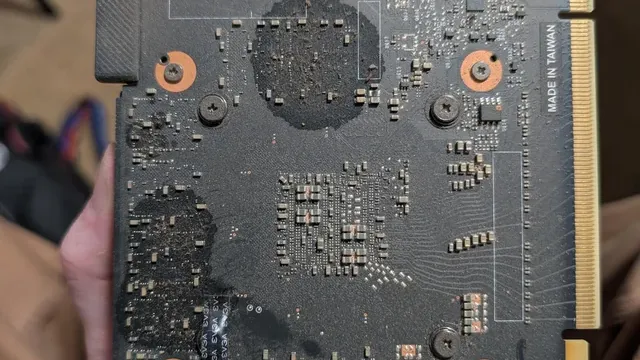
The circuit board on the back of a graphics card Features beyond the spec table
The ASRock RX 9070 XT Challenger: a 256-bit memory bus. The ASUS Prime 9070 XT White: a 2.5-slot design. The ASUS Prime RX 9070 XT: 0dB fan stop.
Budget
Price does little to separate these 4: the ASUS Prime RX 9070 XT through the ASRock RX 9070 XT Steel Legend all landed in the $500 to $1000 tier, which leaves cooler thickness to decide it.
Match the pick to your priority
Buyers who want 64 compute units and can spend more than the ASRock RX 9070 XT Challenger costs: the ASRock RX 9070 XT Steel Legend. Getting quiet/performance BIOS switch for the least money: the ASUS Prime RX 9070 XT.
How to Choose an RX 9070 XT Cards, Premium First
By priority
| Priority | Consider | Why |
|---|---|---|
| Buyers who want 64 compute units and can spend more than the ASRock RX 9070 XT Challenger costs | ASRock RX 9070 XT Steel Legend | The highest-priced pick here at the time of writing, with 64 compute units |
| Buyers who want 64 compute units | ASRock RX 9070 XT Challenger | 64 compute units |
| Buyers who want white finish | ASUS Prime 9070 XT White | A white finish |
| Getting quiet/performance BIOS switch for the least money | ASUS Prime RX 9070 XT | Undercutting the ASUS Prime 9070 XT White on price when we checked |
Scroll sideways to see every column.
Key specs side by side
The ASUS Prime 9070 XT White leads on cooler thickness at 2.5-slot, ahead of the ASUS Prime RX 9070 XT at 2.5-slot. "Not listed" marks cooler thickness where the ASRock RX 9070 XT Challenger leaves the figure out.
| Card | GPU | VRAM | Memory | Thickness |
|---|---|---|---|---|
| ASRock RX 9070 XT Steel Legend | RX 9070 XT | 16GB | GDDR6 | 2.9-slot |
| ASRock RX 9070 XT Challenger | RX 9070 XT | 16GB | GDDR6 | Not listed |
| ASUS Prime 9070 XT White | RX 9070 XT | 16GB | GDDR6 | 2.5-slot |
| ASUS Prime RX 9070 XT | RX 9070 XT | 16GB | GDDR6 | 2.5-slot |
Scroll sideways to see every column.
Frequently Asked Questions
Is the ASRock RX 9070 XT Steel Legend worth paying more than the ASUS Prime RX 9070 XT?
The ASRock RX 9070 XT Steel Legend matches or trails the ASUS Prime RX 9070 XT on cooler thickness. The ASUS Prime RX 9070 XT leads on cooler thickness (2.5-slot). Both sat in the $500 to $1000 tier when we checked, so choose on the features you need.
What makes the ASRock RX 9070 XT Steel Legend the Premium Pick?
It earns the label for the highest-priced pick here at the time of writing, with 64 compute units. It gives up cooler thickness (2.9-slot against 2.5-slot) to the ASUS Prime RX 9070 XT, the cheapest pick. It is aimed at anyone who wants 64 compute units and can spend more than the ASRock RX 9070 XT Challenger costs.
Do the ASRock RX 9070 XT Steel Legend and the ASUS Prime 9070 XT White differ on boost clock?
The ASRock RX 9070 XT Steel Legend and the ASRock RX 9070 XT Challenger use 2970MHz; the ASUS Prime 9070 XT White and the ASUS Prime RX 9070 XT use 3030MHz (OC mode).
What should I check before buying the ASUS Prime RX 9070 XT?
The ASUS Prime RX 9070 XT occupies 2.5 slots, but no length is published, so check the maker's spec page against your case. Its power connector and recommended PSU are not published, so confirm both for the ASUS Prime RX 9070 XT with the maker. In this guide it ranks fourth of 4, as our Lowest Price Here pick, and second of 3 on cooler thickness (2.5-slot).
Beyond the specs, what sets the ASRock RX 9070 XT Steel Legend and the ASRock RX 9070 XT Challenger apart?
The ASRock RX 9070 XT Steel Legend: 64 compute units. The ASRock RX 9070 XT Challenger: 64 compute units. The ASUS Prime 9070 XT White: a white finish.
Bottom Line
Our first pick is the ASRock RX 9070 XT Steel Legend, chosen for the highest-priced pick here at the time of writing, with 64 compute units. Look at the ASRock RX 9070 XT Challenger for 64 compute units, the ASUS Prime 9070 XT White for a white finish and the ASUS Prime RX 9070 XT for undercutting the ASUS Prime 9070 XT White on price when we checked if those matter more to you.
Use a PSU with the three 8-pin leads if the card needs them.
Related Guides
- Related guideThe Best Graphics Cards
- Related guideThe Best Graphics Cards for 1440p Gaming
- Related guideThe Best Budget Graphics Cards
- Similar guideThe Best RX 7800 XT Graphics Cards
- Similar guideThe Best RX 7900 XT Graphics Cards
- ExplainerHow Much VRAM Do You Need?
- ExplainerGPU Power Connectors Explained
- Check compatibility: power supplies12V-2x6 vs 12VHPWR vs 8-Pin PCIe: What Your PSU Needs to Provide
- Similar guideThe Best RX 7600 and RX 7600 XT Graphics Cards
- Topic hubAll graphics cards guides
About the author
PC Hardware Editor
Alex covers PC hardware, monitors, components, upgrades and peripherals for The PC Journal, with a focus on helping readers understand specifications, compatibility and meaningful product trade-offs.
Covers: Monitors, Graphics cards, Processors, PC components, Peripherals, Upgrades and compatibility
View all articles