
Buying Guide
The Best Monitors Under $400
Five monitors ranked on refresh rate and screen size, where the XG27AQMR has the highest refresh rate; the AW2723DF is the cheapest route in.
By The PC Journal editorial team
12 min read5 products evaluated
Between $300 and $400, monitors reach fast 1440p IPS and entry 4K panels. Every pick sits in that range, ordered by refresh rate.
Rankings weigh refresh rate, resolution and size as the makers state them; if a maker skips panel, the guide says so rather than guess, since we have not benched them.
Quick Picks
Our 5 recommendations at a glance. Tap a pick for the full verdict.

Fastest Refresh
ASUS ROG Strix XG27AQMR
The highest refresh rate here (300Hz).
Best for: Esports players with a GPU that can feed high frame rates.
Our take Check price for ASUS ROG Strix XG27AQMR (opens in a new tab)

Lowest Price Here
Alienware AW2723DF
Undercutting the AW3425DWM on price when we checked.
Best for: Keeping the budget tight.
Our take Check price for Alienware AW2723DF (opens in a new tab)
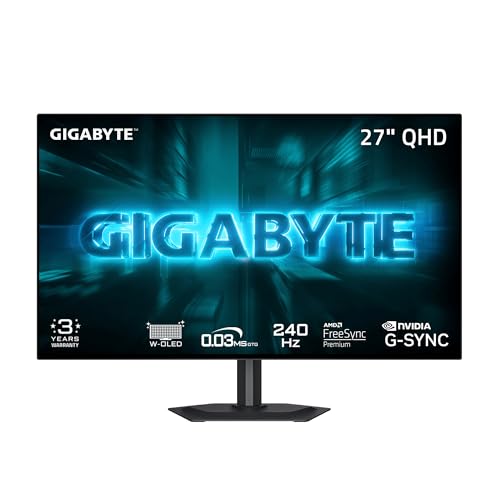
W-OLED Panel
GIGABYTE GO27Q24G
A W-OLED panel.
Best for: Buyers who want a W-OLED panel.
Our take Check price for GIGABYTE GO27Q24G (opens in a new tab)

Premium Pick
AOC Q27GAZDV 27-inch QD-OLED Gaming Monitor
HDMI 2.1 and DisplayPort 1.4 inputs for PC, PS5 and Xbox Series X at the highest price in the group.
Best for: Buyers for whom price is not the deciding factor.
Our take Check price for AOC Q27GAZDV 27-inch QD-OLED Gaming Monitor (opens in a new tab)

Largest Screen Size
Alienware 34 Curved AW3425DWM
The largest screen size here (34 inches).
Best for: Buyers who put screen size first.
Our take Check price for Alienware 34 Curved AW3425DWM (opens in a new tab)
| Pick | Why it’s here | Best for | Price |
|---|---|---|---|
| The highest refresh rate here (300Hz). | Esports players with a GPU that can feed high frame rates. | Check price for ASUS ROG Strix XG27AQMR (opens in a new tab) |
| Undercutting the AW3425DWM on price when we checked. | Keeping the budget tight. | Check price for Alienware AW2723DF (opens in a new tab) |
| A W-OLED panel. | Buyers who want a W-OLED panel. | Check price for GIGABYTE GO27Q24G (opens in a new tab) |
| HDMI 2.1 and DisplayPort 1.4 inputs for PC, PS5 and Xbox Series X at the highest price in the group. | Buyers for whom price is not the deciding factor. | Check price for AOC Q27GAZDV 27-inch QD-OLED Gaming Monitor (opens in a new tab) |
| The largest screen size here (34 inches). | Buyers who put screen size first. | Check price for Alienware 34 Curved AW3425DWM (opens in a new tab) |
Our Picks
Fastest Refresh1 of 5
ASUS ROG Strix XG27AQMR on Amazon (opens in a new tab)
The XG27AQMR runs a Fast IPS panel at 300Hz with DisplayHDR 600, a strong HDR rating for IPS.
Best for
- Esports players with a GPU that can feed high frame rates.
Skip if
- Skip it if price comes first: the AW2723DF cost less when we checked.
Why we like it
It avoids OLED's burn-in concerns for desktop-heavy use. Nothing else here matches its 300Hz refresh rate; the AW2723DF comes closest at 240Hz. It matches the AW2723DF, the GO27Q24G and the Q27GAZDV on screen size (27 inches).
A fast IPS panel is unique to it among these picks, while the AW2723DF uses an IPS panel. It shares a DisplayHDR 600 with the AW2723DF; the AW3425DWM goes with a DisplayHDR 400. It also offers DCI-P3 wide colour coverage.
To see 300Hz at 1440p, connect over DisplayPort or HDMI 2.1; older HDMI 2.0 ports cap the refresh rate lower. G-SYNC Compatible works on NVIDIA cards over DisplayPort, and FreeSync covers AMD cards. When we checked, only the GO27Q24G and cheaper picks cost less, and the Q27GAZDV cost more.
Key dimensions & specs
- Refresh rate: 300Hz
- Resolution: 2560x1440 (1440p)
- Size: 27 inches
- Panel: Fast IPS
- Response: 1ms
- HDR: DisplayHDR 600
- Adaptive sync: G-SYNC Compatible, FreeSync Premium Pro
Pros
- a 300Hz refresh rate for fast motion
- 1440p resolution, sharper than 1080p at 27 inches
- a Fast IPS panel with wide viewing angles
- DisplayHDR 600 certification
Cons
- Costs more than the AW2723DF at the time of writing
Lowest Price Here2 of 5
Alienware AW2723DF on Amazon (opens in a new tab)
The AW2723DF is an IPS monitor with DisplayHDR 600, 95% DCI-P3 and a 280Hz overclock mode, on a fully adjustable stand.
Best for
- Keeping the budget tight.
Skip if
- Worth skipping when refresh rate of 240Hz, behind the XG27AQMR (300Hz is a problem.
Why we like it
It matches the GO27Q24G and the Q27GAZDV on refresh rate (240Hz). On screen size it ties with the XG27AQMR, the GO27Q24G and the Q27GAZDV at 27 inches. No other pick in this guide offers an IPS panel; compare the GO27Q24G, which has a W-OLED panel.
Like the XG27AQMR, it has a DisplayHDR 600, while the AW3425DWM uses a DisplayHDR 400. Like the AW3425DWM, it has a 95% DCI-P3 color gamut, while the Q27GAZDV uses a 110% DCI-P3 color gamut. To see 240Hz at 1440p, connect over DisplayPort or HDMI 2.1; older HDMI 2.0 ports cap the refresh rate lower.
G-SYNC Compatible works on NVIDIA cards over DisplayPort, and FreeSync covers AMD cards. It undercut the AW3425DWM and every other pick on price at the time of writing. The main gap: refresh rate of 240Hz, behind the XG27AQMR (300Hz). If that matters, the XG27AQMR offers 300Hz.
Key dimensions & specs
- Refresh rate: 240Hz
- Resolution: 2560x1440 (1440p)
- Size: 27 inches
- Panel: IPS
- Response: 1ms
- HDR: DisplayHDR 600
- Color gamut: 95% DCI-P3
- Adaptive sync: G-SYNC Compatible
- Stand: height, swivel and pivot adjustment
Pros
- a 240Hz refresh rate for fast motion
- 1440p resolution, sharper than 1080p at 27 inches
- an IPS panel with wide viewing angles
- DisplayHDR 600 certification
Cons
- Refresh rate of 240Hz, behind the XG27AQMR (300Hz)
W-OLED Panel3 of 5
GIGABYTE GO27Q24G on Amazon (opens in a new tab)
The GO27Q24G is the cheapest way to a 240Hz OLED panel here.
Best for
- Buyers who want a W-OLED panel.
Skip if
- Worth skipping when oLED burn-in risk with static desktop element is a problem.
Why we like it
The maker publishes few details on ports and stand. It has a zero-bezel design on all four edges for multi-monitor rows, and a glossy WOLED coating keeps blacks deep in bright rooms. It matches the AW2723DF and the Q27GAZDV on refresh rate (240Hz).
On screen size it ties with the XG27AQMR, the AW2723DF and the Q27GAZDV at 27 inches. It is the only pick here with a W-OLED panel; the XG27AQMR has a fast IPS panel instead. It also comes with a 240Hz OLED panel at an entry-level OLED price at the time of writing.
To see 240Hz at 1440p, connect over DisplayPort or HDMI 2.1; older HDMI 2.0 ports cap the refresh rate lower. Leave the maker's pixel-refresh routines enabled and hide static taskbars to limit burn-in risk. Its price falls between the AW3425DWM and the XG27AQMR, based on our last check.
Key dimensions & specs
- Refresh rate: 240Hz
- Resolution: 2560x1440 (1440p)
- Size: 27 inches
- Panel: W-OLED
- Response: 0.03ms
Pros
- a 240Hz refresh rate for fast motion
- 1440p resolution, sharper than 1080p at 27 inches
- a W-OLED panel with per-pixel contrast
- 240Hz OLED panel at an entry-level OLED price at the time of writing
Cons
- OLED burn-in risk with static desktop elements
- Costs more than the AW2723DF at the time of writing
Premium Pick4 of 5
AOC Q27GAZDV 27-inch QD-OLED Gaming Monitor on Amazon (opens in a new tab)
AOC's Q27GAZDV pairs a 240Hz QD-OLED panel with a 0.03ms response time and a stand that adjusts for height, tilt, swivel and pivot.
Best for
- Buyers for whom price is not the deciding factor.
Skip if
- Worth skipping when oLED burn-in risk with static desktop element is a problem.
Why we like it
HDMI 2.1 and DisplayPort 1.4 inputs cover a PC and a current console on one screen, and a USB 3.2 hub sits in the monitor. On refresh rate it ties with the AW2723DF and the GO27Q24G at 240Hz. It matches the XG27AQMR, the AW2723DF and the GO27Q24G on screen size (27 inches).
You get a QD-OLED panel here, which sets it apart from the AW2723DF and its an IPS panel. You get a 110% DCI-P3 color gamut here, which sets it apart from the AW3425DWM and its a 95% DCI-P3 color gamut. Like the AW2723DF, it has a G-SYNC Compatible, while the AW3425DWM uses a FreeSync Premium.
It also comes with a USB 3.2 hub and VESA mount compatibility. Only the XG27AQMR came close to it on price at the time of writing; it cost the most of the 5 picks. It gives ground on screen size, where the AW3425DWM comes in at 34 inches.
Key dimensions & specs
- Refresh rate: 240Hz
- Resolution: 2560x1440 (1440p)
- Size: 27 inches
- Panel: QD-OLED
- Response: 0.03ms
- Color gamut: 110% DCI-P3
- Adaptive sync: G-SYNC Compatible
- Stand: height, tilt, swivel and pivot
Pros
- a 240Hz refresh rate for fast motion
- 1440p resolution, sharper than 1080p at 27 inches
- a QD-OLED panel with per-pixel contrast
- 110% DCI-P3 colour coverage
Cons
- OLED burn-in risk with static desktop elements
- Screen size trails the AW3425DWM (34 inches)
- Costs more than the AW2723DF at the time of writing
Largest Screen Size5 of 5
Alienware 34 Curved AW3425DWM on Amazon (opens in a new tab)
Alienware's AW3425DWM is a 34-inch ultrawide at 3440x1440 and 180Hz with DisplayHDR 400.
Best for
- Buyers who put screen size first.
Skip if
- Skip it if refresh rate matters most to you; the XG27AQMR offers 300Hz.
Why we like it
It is the lower-priced Alienware ultrawide next to the QD-OLED model. On refresh rate it trails the group at 180Hz, while the XG27AQMR offers 300Hz. Nothing else here matches its 34 inches screen size; the XG27AQMR comes closest at 27 inches.
A 3440x1440 resolution is unique to it among these picks, while the AW2723DF uses a 2560x1440 (1440p) resolution. A DisplayHDR 400 is unique to it among these picks, while the AW2723DF uses a DisplayHDR 600. It shares a 95% DCI-P3 color gamut with the AW2723DF; the Q27GAZDV goes with a 110% DCI-P3 color gamut.
It also offers a 1500R ultrawide curve, a dedicated console mode and hardware low blue light. When we checked, only the AW2723DF cost less, and the GO27Q24G cost more. Refresh rate is its weakest area, and the XG27AQMR covers it better at 300Hz.
Key dimensions & specs
- Refresh rate: 180Hz
- Resolution: 3440x1440
- Size: 34 inches
- Response: 1ms
- HDR: DisplayHDR 400
- Color gamut: 95% DCI-P3
- Adaptive sync: FreeSync Premium
Pros
- 180Hz for smoother motion than a 60Hz office screen
- 95% DCI-P3 colour coverage
- FreeSync Premium to reduce screen tearing
- 1500R ultrawide curve
Cons
- Refresh rate trails the XG27AQMR (300Hz)
- Costs more than the AW2723DF at the time of writing
How We Chose These Monitors Under $400
Each pick was assessed across 4 criteria weighted for real-world use.
- What we compared
- We compared five monitors on refresh rate, resolution, screen size and panel as the makers state them. We did not test them in-house.
- What every pick has in common
- All 5, from the XG27AQMR to the AW3425DWM, state refresh rate, resolution and screen size.
- Where the specs have gaps
- The AW3425DWM gives no panel; the GO27Q24G and the Q27GAZDV give no HDR.
- Price range
- From the AW2723DF to the Q27GAZDV, all sat in the $250 to $500 tier when we checked.
What to Look for in a Monitor Under $400
Key buying criteria so you get the right fit the first time.
Refresh rate
Here refresh rate runs from 180Hz on the AW3425DWM to 300Hz on the XG27AQMR. The AW2723DF comes second for less money.
Screen size across these picks
Here screen size runs from 27 inches on the Q27GAZDV to 34 inches on the AW3425DWM. The AW3425DWM is the pick for screen size.
Panel
The XG27AQMR lists Fast IPS; the AW2723DF lists IPS; the GO27Q24G lists W-OLED; the Q27GAZDV lists QD-OLED. Rule out the mismatches before looking at price.
Response
The XG27AQMR, the AW2723DF and the AW3425DWM list 1ms; the GO27Q24G and the Q27GAZDV list 0.03ms.
What to check at home
To see 300Hz at 1440p, connect over DisplayPort or HDMI 2.1; older HDMI 2.0 ports cap the refresh rate lower.
Pick the panel type
IPS offers wide viewing angles and good colour. VA has higher contrast but slower dark transitions. OLED has perfect blacks and very fast response but carries a burn-in risk with static content.
How to Choose a Monitor Under $400
By priority
| Priority | Consider | Why |
|---|---|---|
| Esports players with a GPU that can feed high frame rates | XG27AQMR | The highest refresh rate here (300Hz) |
| Keeping the budget tight | AW2723DF | Undercutting the AW3425DWM on price when we checked |
| Buyers who want a W-OLED panel | GO27Q24G | A W-OLED panel |
| Buyers for whom price is not the deciding factor | Q27GAZDV | HDMI 2.1 and DisplayPort 1.4 inputs for PC, PS5 and Xbox Series X at the highest price in the group |
| Buyers who put screen size first | AW3425DWM | The largest screen size here (34 inches) |
Scroll sideways to see every column.
Key specs side by side
The XG27AQMR leads on refresh rate at 300Hz, ahead of the AW2723DF at 240Hz. "Not listed" means the maker leaves that figure out.
| Monitor | Refresh rate | Resolution | Size | Panel |
|---|---|---|---|---|
| XG27AQMR | 300Hz | 2560x1440 (1440p) | 27 inches | Fast IPS |
| AW2723DF | 240Hz | 2560x1440 (1440p) | 27 inches | IPS |
| GO27Q24G | 240Hz | 2560x1440 (1440p) | 27 inches | W-OLED |
| Q27GAZDV | 240Hz | 2560x1440 (1440p) | 27 inches | QD-OLED |
| AW3425DWM | 180Hz | 3440x1440 | 34 inches | Not listed |
Scroll sideways to see every column.
Frequently Asked Questions
Which has the highest refresh rate: the XG27AQMR or the AW2723DF?
The XG27AQMR leads at 300Hz, with the AW2723DF at 240Hz. The AW3425DWM is at the other end of this group with 180Hz.
Is the AW3425DWM ahead of the XG27AQMR on screen size?
The AW3425DWM leads at 34 inches, with the XG27AQMR at 27 inches.
Why is the GO27Q24G our W-OLED Panel pick?
It earns the label for a W-OLED panel. It suits anyone who wants a W-OLED panel.
Do the XG27AQMR and the AW3425DWM differ on resolution?
The XG27AQMR, the AW2723DF, the GO27Q24G and the Q27GAZDV use 2560x1440 (1440p); the AW3425DWM uses 3440x1440.
Will the XG27AQMR work with my setup?
To see 300Hz at 1440p, connect over DisplayPort or HDMI 2.1; older HDMI 2.0 ports cap the refresh rate lower. G-SYNC Compatible works on NVIDIA cards over DisplayPort, and FreeSync covers AMD cards. In this guide it ranks first of 5, as our Fastest Refresh pick.
What extras do the XG27AQMR and the AW2723DF include?
The XG27AQMR: DCI-P3 wide colour coverage. The AW2723DF: an overclocked 280Hz mode. The GO27Q24G: a 240Hz OLED panel at an entry-level OLED price at the time of writing.
Bottom Line
Our first pick is the XG27AQMR. Look at the AW2723DF for undercutting the AW3425DWM on price when we checked, the GO27Q24G for a W-OLED panel and the Q27GAZDV for HDMI 2.1 and DisplayPort 1.4 inputs for PC, PS5 and Xbox Series X at the highest price in the group if those matter more to you.
Pick the resolution your GPU can drive at high frame rates.