
Buying Guide
The Best Internal PCIe Capture Cards
Five streaming devices compared, from the HD60 Pro to the 4K Pro, with the trade-offs of each named.
By The PC Journal editorial team
12 min read5 products evaluated
An internal PCIe capture card sits in a desktop's expansion slot, freeing a USB port and cutting cable clutter. Every pick is an internal PCIe card.
Our comparison rests on published figures for type, what it does and connection; where a maker leaves a figure out, we say so, and no figure here comes from our own testing.
Quick Picks
Our 5 recommendations at a glance. Tap a pick for the full verdict.
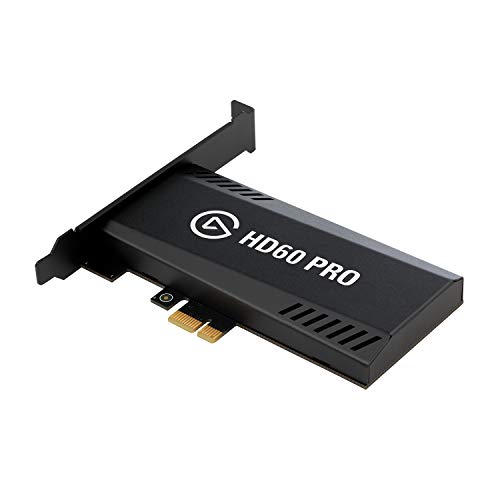
Lowest Price Here
Elgato HD60 Pro PCIe Capture Card
A lower price than the 4K60 Pro MK.2 and the rest when we checked.
Best for: Keeping the budget tight.
Our take Check price for Elgato HD60 Pro PCIe Capture Card (opens in a new tab)
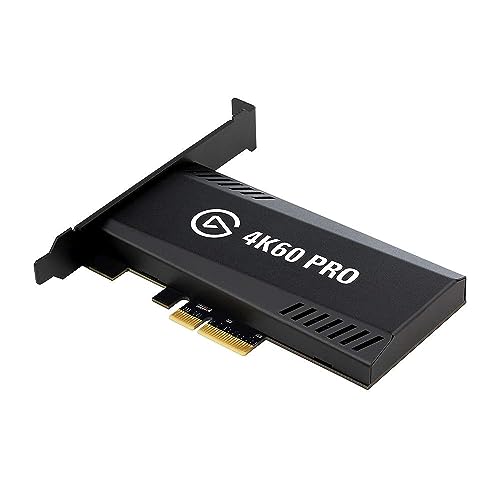
Also Consider
Elgato 4K60 Pro MK.2 Internal Capture Card
HDR10 pass-through and recording.
Best for: Buyers who want HDR10 pass-through and recording.
Our take Check price for Elgato 4K60 Pro MK.2 Internal Capture Card (opens in a new tab)

Strong Alternative
AVerMedia HDMI 2.1 Internal PCIe Capture Card
HDMI 2.1 input.
Best for: Buyers who want HDMI 2.1 input.
Our take Check price for AVerMedia HDMI 2.1 Internal PCIe Capture Card (opens in a new tab)
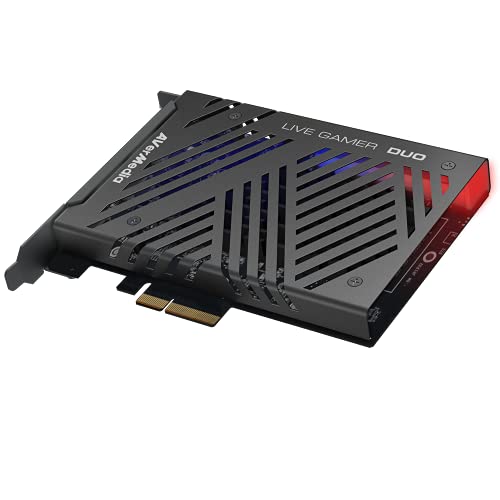
Worth a Look
AVerMedia Live Gamer Duo PCIe Capture Card
Two HDMI inputs in one slot.
Best for: Buyers who want two HDMI inputs in one slot.
Our take Check price for AVerMedia Live Gamer Duo PCIe Capture Card (opens in a new tab)

Premium Pick
Elgato 4K Pro Internal Capture Card
The highest-priced pick here at the time of writing, with HDMI 2.1 input and output.
Best for: Buyers who want the most complete package.
Our take Check price for Elgato 4K Pro Internal Capture Card (opens in a new tab)
Our Picks
Lowest Price Here1 of 5
Elgato HD60 Pro PCIe Capture Card on Amazon (opens in a new tab)
The HD60 Pro is built around 1080p60 capture with passthrough, with Instant Gameview low-latency preview on top.
Best for
- Keeping the budget tight.
Skip if
- Look at the other picks if you need a feature not covered above.
Why we like it
It sits in a PCIe slot and captures 1080p60 with zero-lag passthrough. Flashback recording and unlimited capture length come through Elgato's software. Instant Gameview keeps delay low while recording, and recordings save to your drive with no time limit.
It suits a desktop with a spare PCIe slot. It also comes with an internal card that frees a USB port. A capture card needs the console or second PC's HDMI output and a free USB port on the streaming PC; check which USB version it needs. No other pick here cost less at our last price check, and the 4K60 Pro MK.2 was closest.
Key dimensions & specs
- Type: Internal PCIe capture card
- What it does: Captures a console or second PC
- Connection: PCIe, HDMI in and out
- Key figure: 1080p60 capture
Pros
- 1080p60 capture with passthrough
- Instant Gameview low-latency preview
- Internal card that frees a USB port
- 1080p60 capture key figure, the only one here
Also Consider2 of 5
Elgato 4K60 Pro MK.2 Internal Capture Card on Amazon (opens in a new tab)
The 4K60 Pro MK.2 stands out for HDR10 pass-through and recording, and it adds HEVC and H.264 encoding.
Best for
- Buyers who want HDR10 pass-through and recording.
Skip if
- If budget leads, the HD60 Pro was cheaper at our last price check.
Why we like it
It suits a dedicated streaming PC with a free PCIe slot. It needs an unencrypted HDMI source, so turn off HDCP on the console before capturing. HEVC encoding keeps 4K HDR recordings smaller than H.264 at the same quality, which saves drive space on long sessions.
It is made in Taiwan. It needs a PCIe x4 slot. A capture card needs the console or second PC's HDMI output and a free USB port on the streaming PC; check which USB version it needs. When we checked, only the HD60 Pro cost less, and the AVerMedia HDMI 2.1 cost more.
Key dimensions & specs
- Type: Internal PCIe capture card
- What it does: Captures a console or second PC
- Connection: PCIe, HDMI in and out
- Key figure: 4K60 HDR10 capture and pass-through
Pros
- HDR10 pass-through and recording
- HEVC and H.264 encoding
- Lag-free pass-through up to 2160p60
Cons
- Costs more than the HD60 Pro at the time of writing
Strong Alternative3 of 5
AVerMedia HDMI 2.1 Internal PCIe Capture Card on Amazon (opens in a new tab)
The AVerMedia HDMI 2.1 is built around HDMI 2.1 input, with refresh rates up to 240Hz listed on top.
Best for
- Buyers who want HDMI 2.1 input.
Skip if
- Skip it if price comes first: the HD60 Pro cost less when we checked.
Why we like it
It supports HDMI 2.1 passthrough at refresh rates up to 240Hz, so a high-refresh monitor keeps its full speed while you capture. It suits a streaming PC paired with a 240Hz monitor, where passthrough speed matters more than capture resolution. It also offers support for PS5 and Xbox Series X/S.
A capture card needs the console or second PC's HDMI output and a free USB port on the streaming PC; check which USB version it needs. On price it sat third of 5, between the cheaper 4K60 Pro MK.2 and the pricier Live Gamer Duo, at the time of writing.
Key dimensions & specs
- Type: Internal PCIe capture card
- What it does: Captures a console or second PC
- Connection: PCIe, HDMI 2.1
- Key figure: 4K60 capture, up to 240Hz
Pros
- HDMI 2.1 input
- Refresh rates up to 240Hz listed
- Support for PS5 and Xbox Series X/S
Cons
- Costs more than the HD60 Pro at the time of writing
Worth a Look4 of 5
AVerMedia Live Gamer Duo PCIe Capture Card on Amazon (opens in a new tab)
What the Live Gamer Duo brings to the table is two HDMI inputs in one slot, plus onboard HDR-to-SDR tone mapping.
Best for
- Buyers who want two HDMI inputs in one slot.
Skip if
- Price-first buyers should look at the HD60 Pro, which cost less when we checked.
Why we like it
Two HDMI inputs capture a console and a camera from one PCIe slot. Pass-through handles 4K HDR or 1080p at 240fps, so the game stays lag-free on your screen. Onboard processing tone-maps HDR to SDR before the signal reaches the PC, which saves CPU load, and both inputs record uncompressed.
Two inputs in one slot suit a streamer who wants gameplay and a DSLR feed without a second card. A capture card needs the console or second PC's HDMI output and a free USB port on the streaming PC; check which USB version it needs. When we checked, only the AVerMedia HDMI 2.1 and cheaper picks cost less, and the 4K Pro cost more.
Key dimensions & specs
- Type: Internal PCIe capture card
- What it does: Captures two HDMI sources
- Connection: PCIe, dual HDMI in
- Key figure: Dual 1080p capture, 4K60 HDR or 1080p240 pass-through
Pros
- Two HDMI inputs in one slot
- Onboard HDR-to-SDR tone mapping
- Uncompressed Full HD capture from both inputs
Cons
- Costs more than the HD60 Pro at the time of writing
Premium Pick5 of 5
Elgato 4K Pro Internal Capture Card on Amazon (opens in a new tab)
The 4K Pro stands out for HDMI 2.1 input and output, and it adds variable refresh rate passthrough.
Best for
- Buyers who want the most complete package.
Skip if
- If budget leads, the HD60 Pro was cheaper at our last price check.
Why we like it
It passes up to 8K60 through over HDMI 2.1 while capturing 4K60, so a high-refresh display is not held back. It works with OBS, Streamlabs, Zoom and Teams. It records up to 240fps and passes VRR through, so a G-SYNC or FreeSync display keeps working.
Latency stays low enough to keep stream and play in sync. A capture card needs the console or second PC's HDMI output and a free USB port on the streaming PC; check which USB version it needs. At our last price check it topped the group, with the Live Gamer Duo the nearest cheaper option.
Key dimensions & specs
- Type: Internal PCIe capture card
- What it does: Captures a console or second PC
- Connection: PCIe, HDMI 2.1 in and out
- Key figure: 8K60 passthrough, up to 240fps capture
Pros
- HDMI 2.1 input and output
- Variable refresh rate passthrough
- 8K60 passthrough
- The highest-priced pick here at the time of writing, with HDMI 2.1 input and output
Cons
- Costs more than the HD60 Pro at the time of writing
How We Chose These Internal PCIe Capture Cards
Each pick was assessed across 4 criteria weighted for real-world use.
- Setup needs
- We checked what else each item needs to work.
- Connection
- We recorded HDMI, USB and mounting details.
- Role
- We grouped each item by what it does in a streaming setup.
- Key figures
- We noted resolution, key counts, reach and brightness where listed.
What to Look for in an Internal PCIe Capture Card
Key buying criteria so you get the right fit the first time.
Do you need a capture card
Streaming a PC game from the same PC needs no capture card. A capture card is for consoles, a second PC or a camera.
Audio first
Viewers forgive a soft image sooner than bad audio. A decent mic on an arm is often the best first upgrade.
USB bandwidth
Capture cards and 4K cameras use a lot of USB bandwidth. Give them their own port rather than a shared hub.
Stream controls
A Stream Deck puts scene changes, mute and alerts on physical keys. The number of keys decides how much fits on one page.
Light your face
A key light lets any webcam run a faster shutter and cleaner image. Mount it off to one side of the camera.
Passthrough for consoles
Passthrough lets you play on your TV or monitor without capture delay. Check the refresh rate and HDR support it passes through.
How to Choose an Internal PCIe Capture Card
By priority
| Priority | Consider | Why |
|---|---|---|
| Keeping the budget tight | HD60 Pro | A lower price than the 4K60 Pro MK.2 and the rest when we checked |
| Buyers who want HDR10 pass-through and recording | 4K60 Pro MK.2 | HDR10 pass-through and recording |
| Buyers who want HDMI 2.1 input | AVerMedia HDMI 2.1 | HDMI 2.1 input |
| Buyers who want two HDMI inputs in one slot | Live Gamer Duo | Two HDMI inputs in one slot |
| Buyers who want the most complete package | 4K Pro | The highest-priced pick here at the time of writing, with HDMI 2.1 input and output |
Scroll sideways to see every column.
Key specs side by side
Figures as each maker states them.
| Streaming gear | Type | What it does | Connection | Key figure |
|---|---|---|---|---|
| HD60 Pro | Internal PCIe capture card | Captures a console or second PC | PCIe, HDMI in and out | 1080p60 capture |
| 4K60 Pro MK.2 | Internal PCIe capture card | Captures a console or second PC | PCIe, HDMI in and out | 4K60 HDR10 capture and pass-through |
| AVerMedia HDMI 2.1 | Internal PCIe capture card | Captures a console or second PC | PCIe, HDMI 2.1 | 4K60 capture, up to 240Hz |
| Live Gamer Duo | Internal PCIe capture card | Captures two HDMI sources | PCIe, dual HDMI in | Dual 1080p capture, 4K60 HDR or 1080p240 pass-through |
| 4K Pro | Internal PCIe capture card | Captures a console or second PC | PCIe, HDMI 2.1 in and out | 8K60 passthrough, up to 240fps capture |
Scroll sideways to see every column.
By price at the time of writing
Prices change often; these tiers reflect Amazon prices when this guide was updated.
| Price tier | Streaming gear |
|---|---|
| About $100 to $150 | HD60 Pro |
| About $150 to $250 | 4K60 Pro MK.2, AVerMedia HDMI 2.1, Live Gamer Duo |
| About $250 to $500 | 4K Pro |
Frequently Asked Questions
What is the least I can spend on one of these streaming devices?
The HD60 Pro cost the least when we checked, and the 4K Pro sat at the top of the range. Prices move often, so check the current listing before buying.
Is one PC enough to game and stream?
For most games, yes, especially with hardware encoding on a modern GPU.
Do I need HDR capture?
Only if you record HDR footage. Most live streams are SDR.
Can I stream a console without a capture card?
Consoles can stream directly to some platforms, but a capture card lets you add overlays and a camera on the PC.
What should I buy first for streaming?
Usually a microphone, then lighting, then a better camera. Controllers and capture cards depend on your setup.
Bottom Line
Our first pick is the HD60 Pro, chosen for a lower price than the 4K60 Pro MK.2 and the rest when we checked. Look at the 4K60 Pro MK.2 for HDR10 pass-through and recording, the AVerMedia HDMI 2.1 for HDMI 2.1 input and the Live Gamer Duo for two HDMI inputs in one slot if those matter more to you.
Check for a free PCIe slot that is not blocked by the graphics card.