
Buying Guide
The Best Intel Core Ultra CPUs for Gaming
From the Core Ultra 5 225F to the Core Ultra 9 285K: four processors ranked on L3 cache and boost clock, with who should skip each one.
By Alex Morgan, PC Hardware Editor
11 min read4 products evaluated
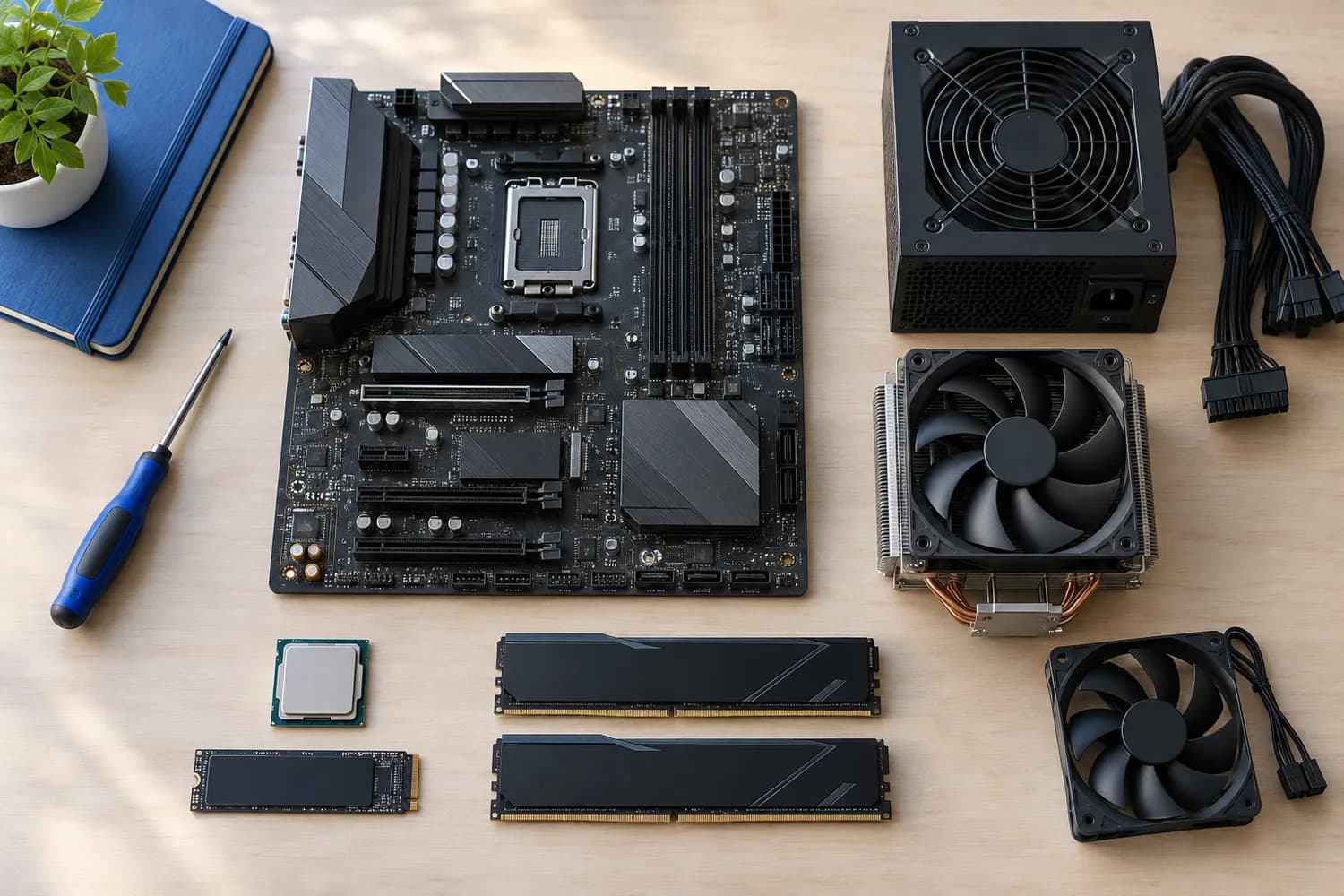
Core Ultra 200S chips moved Intel to the LGA1851 socket and DDR5 only. Every pick is a Core Ultra processor, ordered by core count.
We sorted these picks by L3 cache, max boost and cores / threads, working from the makers' own data; nothing here was tested in-house, and if a maker skips rated power, the guide says so.
Quick Picks
Which of the 4 picks to look at first. Tap a name for the full analysis.

Largest Game Cache
Intel Core Ultra 9 285KThe largest L3 cache here (36MB).
Best for: Players chasing 1% lows in simulation and esports titles.
Check price for Intel Core Ultra 9 285K on Amazon (opens in a new tab)
Also Consider
Intel Core Ultra 7 265KF8 performance and 12 efficient cores.
Best for: Buyers who want 8 performance and 12 efficient cores.
Check price for Intel Core Ultra 7 265KF on Amazon (opens in a new tab)
Strong Alternative
Intel Core Ultra 5 245KF6 performance and 8 efficient cores.
Best for: Buyers who want 6 performance and 8 efficient cores.
Check price for Intel Core Ultra 5 245KF on Amazon (opens in a new tab)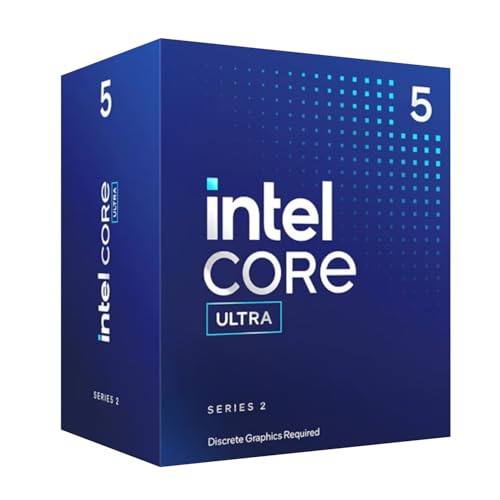
Lowest Price Here
Intel Core Ultra 5 225FThe lowest price among these processors at the time of writing.
Best for: Buyers who would rather put the savings elsewhere than into the Core Ultra 5 245KF.
Check price for Intel Core Ultra 5 225F on Amazon (opens in a new tab)
| Pick | Why it stands out | Best for | Check price |
|---|---|---|---|
| The largest L3 cache here (36MB). | Players chasing 1% lows in simulation and esports titles. | Check price for Intel Core Ultra 9 285K on Amazon (opens in a new tab) |
| 8 performance and 12 efficient cores. | Buyers who want 8 performance and 12 efficient cores. | Check price for Intel Core Ultra 7 265KF on Amazon (opens in a new tab) |
| 6 performance and 8 efficient cores. | Buyers who want 6 performance and 8 efficient cores. | Check price for Intel Core Ultra 5 245KF on Amazon (opens in a new tab) |
| The lowest price among these processors at the time of writing. | Buyers who would rather put the savings elsewhere than into the Core Ultra 5 245KF. | Check price for Intel Core Ultra 5 225F on Amazon (opens in a new tab) |
Our Picks
Largest Game Cache1 of 4
Intel Core Ultra 9 285K
The Core Ultra 9 285K is Intel's flagship on LGA1851, with 24 cores and high single-threaded clocks.
Best for
- Players chasing 1% lows in simulation and esports titles.
Skip if
- Look at the others if this bothers you: no cooler in the box.
Why we like it
It suits competitive players who also stream from the same machine. Nothing else here matches its 36MB L3 cache; the Core Ultra 7 265KF comes closest at 30MB. Its 5.7GHz boost clock is the highest here; the Core Ultra 7 265KF comes next at 5.5GHz.
Its 24 cores core count is the highest here; the Core Ultra 7 265KF comes next at 20 cores. It also comes with 8 performance and 16 efficient cores and a built-in NPU for AI features. It needs an LGA1851 board (Intel 800-series chipset) and DDR5 memory; LGA1700 boards and coolers without an LGA1851 mounting kit will not fit.
Budget for a dual-tower air cooler or a 240mm-plus AIO, since none is included. It was the highest-priced of the 4 picks at the time of writing, so the case for it rests on what it adds over the Core Ultra 7 265KF and the rest.
Key specs
- L3 cache
- 36MB
- Max boost
- 5.7GHz
- Cores / threads
- 24 cores
- Rated power
- 125W
- Threads
- 24
- Socket
- LGA1851
- Memory
- DDR5
- Cooler in box
- No
- Integrated graphics
- Yes
Pros
- 5.7GHz maximum boost
- 24 cores for encoding and background work
- Integrated graphics for display output without a graphics card
- 8 performance and 16 efficient cores
Cons
- No cooler in the box
- Costs more than the Core Ultra 5 225F at the time of writing
Also Consider2 of 4
Intel Core Ultra 7 265KF
The Core Ultra 7 265KF is the 265K without integrated graphics.
Best for
- Buyers who want 8 performance and 12 efficient cores.
Skip if
- Pass on it if no cooler in the box rules it out for your setup.
Why we like it
It costs less and needs a graphics card for any display output. On L3 cache it sits mid-pack at 30MB: the Core Ultra 9 285K offers 36MB, and the Core Ultra 5 225F comes in at 22MB. On boost clock it sits mid-pack at 5.5GHz: the Core Ultra 9 285K offers 5.7GHz, and the Core Ultra 5 225F comes in at 4.9GHz.
Its 20 cores core count ranks second of 4 here, behind the Core Ultra 9 285K (24 cores) and ahead of the Core Ultra 5 225F (10 cores). It also comes with 8 performance and 12 efficient cores and an unlocked multiplier. It needs an LGA1851 board (Intel 800-series chipset) and DDR5 memory; LGA1700 boards and coolers without an LGA1851 mounting kit will not fit. On price it sat third of 4, between the cheaper Core Ultra 5 245KF and the pricier Core Ultra 9 285K, at the time of writing.
Key specs
- L3 cache
- 30MB
- Max boost
- 5.5GHz
- Cores / threads
- 20 cores
- Rated power
- 125W
- Threads
- 20
- Socket
- LGA1851
- Memory
- DDR5
- Cooler in box
- No
- Integrated graphics
- No
Pros
- 5.5GHz maximum boost
- 20 cores for encoding and background work
- 8 performance and 12 efficient cores
- Unlocked multiplier
Cons
- No cooler in the box
- No integrated graphics, so a graphics card is required
- Costs more than the Core Ultra 5 225F at the time of writing
The catch
The main gap: no integrated graphics, unlike the Core Ultra 9 285K. If that matters, the Core Ultra 9 285K has it.
Strong Alternative3 of 4
Intel Core Ultra 5 245KF
The Core Ultra 5 245KF is the entry to LGA1851, with 14 cores and no integrated graphics.
Best for
- Buyers who want 6 performance and 8 efficient cores.
Skip if
- Look at the others if this bothers you: no cooler in the box.
Why we like it
It needs a graphics card to show a picture, which every gaming build has anyway. On L3 cache it sits mid-pack at 24MB: the Core Ultra 9 285K offers 36MB, and the Core Ultra 5 225F comes in at 22MB. On boost clock it sits mid-pack at 5.2GHz: the Core Ultra 9 285K offers 5.7GHz, and the Core Ultra 5 225F comes in at 4.9GHz.
Its 14 cores core count ranks third of 4 here, behind the Core Ultra 9 285K (24 cores) and ahead of the Core Ultra 5 225F (10 cores). It also comes with 6 performance and 8 efficient cores, Intel 800-series chipset support and PCIe 5.0 support. It needs an LGA1851 board (Intel 800-series chipset) and DDR5 memory; LGA1700 boards and coolers without an LGA1851 mounting kit will not fit. Its price falls between the Core Ultra 5 225F and the Core Ultra 7 265KF, based on our last check.
Key specs
- L3 cache
- 24MB
- Max boost
- 5.2GHz
- Cores / threads
- 14 cores
- Rated power
- 125W
- Threads
- 14
- Socket
- LGA1851
- Memory
- DDR5
- Cooler in box
- No
- Integrated graphics
- No
Pros
- 14 cores for encoding and background work
- 6 performance and 8 efficient cores
- Intel 800-series chipset support
- PCIe 5.0 support
Cons
- No cooler in the box
- No integrated graphics, so a graphics card is required
- Costs more than the Core Ultra 5 225F at the time of writing
The catch
If rated power is your priority, the Core Ultra 9 285K (125W) is the stronger choice.
Lowest Price Here4 of 4
Intel Core Ultra 5 225F
The Core Ultra 5 225F is a locked ten-core LGA1851 chip.
Best for
- Buyers who would rather put the savings elsewhere than into the Core Ultra 5 245KF.
Skip if
- Choose another pick if you can't accept this: no integrated graphics, so a graphics card is required.
Why we like it
It suits a budget Intel build that will pair with a B860 board. On L3 cache it trails the group at 22MB, while the Core Ultra 9 285K offers 36MB. On boost clock it trails the group at 4.9GHz, while the Core Ultra 9 285K offers 5.7GHz.
Its 10 cores core count is the lowest in this group; the Core Ultra 9 285K leads at 24 cores. You also get 6 P-cores plus 4 E-cores and PCIe 5.0 and 4.0 support on Intel 800-series boards. It needs an LGA1851 board (Intel 800-series chipset) and DDR5 memory; LGA1700 boards and coolers without an LGA1851 mounting kit will not fit. It undercut the Core Ultra 5 245KF and every other pick on price at the time of writing.
Key specs
- L3 cache
- 22MB
- Max boost
- 4.9GHz
- Cores / threads
- 10 cores
- Socket
- LGA1851
- Integrated graphics
- No
Pros
- 6 P-cores plus 4 E-cores
- PCIe 5.0 and 4.0 support on Intel 800-series boards
- The lowest price among these processors at the time of writing
Cons
- No integrated graphics, so a graphics card is required
- L3 cache trails the Core Ultra 9 285K (36MB)
- Boost clock trails the Core Ultra 9 285K (5.7GHz)
The catch
The trade-off is L3 cache; for more, the Core Ultra 9 285K offers 36MB.
How We Chose
Alex Morgan compared the manufacturer specifications, connectivity, warranty terms and compatibility of every pick. Figures come from the makers unless a third-party source is named; we did not test these products ourselves.
- The figures behind the order
- We set side by side four processors on L3 cache, boost clock, core count and rated power from manufacturer specifications. We did not test them in-house, and rated power and threads are missing for at least one pick.
- The shared baseline
- All 4, from the Core Ultra 9 285K to the Core Ultra 5 225F, state L3 cache, boost clock and core count and share LGA1851 socket.
- Where the specs have gaps
- The Core Ultra 5 225F gives no rated power; the Core Ultra 5 225F gives no threads.
- Price range
- At our last check the picks ran from the Core Ultra 5 225F ($100 to $150) to the Core Ultra 9 285K ($500 to $1000).
What to Look for in an Intel Core Ultra CPUs for Gaming
Key buying criteria so you get the right fit the first time.
L3 cache across these picks
Across these 4 picks L3 cache spans 22MB (the Core Ultra 5 225F) to 36MB (the Core Ultra 9 285K). For less, the Core Ultra 7 265KF is the runner-up at 30MB ($250 to $500 tier).
Boost clock
Here boost clock runs from 4.9GHz on the Core Ultra 5 225F to 5.7GHz on the Core Ultra 9 285K, a 16% spread. The Core Ultra 7 265KF comes second at 5.5GHz, in the $250 to $500 tier against $500 to $1000 for the Core Ultra 9 285K.
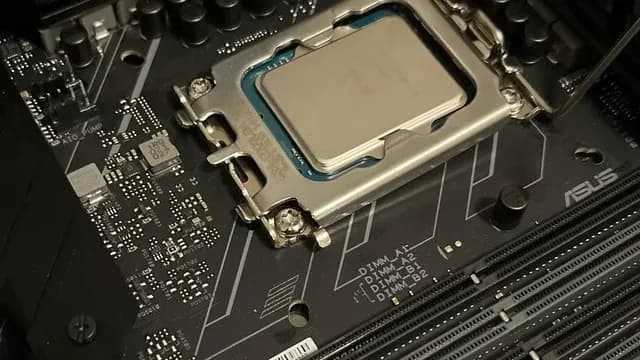
A desktop CPU seated in its motherboard socket with the retention frame open How much core count you need
Here core count runs from 10 cores on the Core Ultra 5 225F to 24 cores on the Core Ultra 9 285K, a 140% spread. For less, the Core Ultra 7 265KF is the runner-up at 20 cores ($250 to $500 tier).
Features beyond the spec table
The Core Ultra 7 265KF: an unlocked multiplier. The Core Ultra 5 245KF: Intel 800-series chipset support. The Core Ultra 5 225F: PCIe 5.0 and 4.0 support on Intel 800-series boards.
Budget
$100 to $150 buys the Core Ultra 5 225F; $150 to $250 buys the Core Ultra 5 245KF; $250 to $500 buys the Core Ultra 7 265KF; $500 to $1000 buys the Core Ultra 9 285K at our last check.
How to Choose an Intel Core Ultra CPUs for Gaming
By priority
| Priority | Consider | Why |
|---|---|---|
| Players chasing 1% lows in simulation and esports titles | Core Ultra 9 285K | The largest L3 cache here (36MB) |
| Buyers who want 8 performance and 12 efficient cores | Core Ultra 7 265KF | 8 performance and 12 efficient cores |
| Buyers who want 6 performance and 8 efficient cores | Core Ultra 5 245KF | 6 performance and 8 efficient cores |
| Buyers who would rather put the savings elsewhere than into the Core Ultra 5 245KF | Core Ultra 5 225F | The lowest price among these processors at the time of writing |
Scroll sideways to see every column.
Key specs side by side
The Core Ultra 9 285K leads on L3 cache at 36MB, ahead of the Core Ultra 7 265KF at 30MB. "Not listed" marks rated power where the Core Ultra 5 225F leaves the figure out.
| Processor | L3 cache | Max boost | Cores / threads | Rated power |
|---|---|---|---|---|
| Core Ultra 9 285K | 36MB | 5.7GHz | 24 cores | 125W |
| Core Ultra 7 265KF | 30MB | 5.5GHz | 20 cores | 125W |
| Core Ultra 5 245KF | 24MB | 5.2GHz | 14 cores | 125W |
| Core Ultra 5 225F | 22MB | 4.9GHz | 10 cores | Not listed |
Scroll sideways to see every column.
By price at the time of writing
At our last check the cheapest pick, the Core Ultra 5 225F, sat in the $100 to $150 tier, 4 tiers in all up to the Core Ultra 9 285K at $500 to $1000; Amazon prices move, so recheck before buying.
| Price tier | Processors |
|---|---|
| About $100 to $150 | Core Ultra 5 225F |
| About $150 to $250 | Core Ultra 5 245KF |
| About $250 to $500 | Core Ultra 7 265KF |
| About $500 to $1000 | Core Ultra 9 285K |
Frequently Asked Questions
Which has the largest L3 cache: the Core Ultra 9 285K or the Core Ultra 7 265KF?
The Core Ultra 9 285K tops L3 cache at 36MB; the Core Ultra 7 265KF follows at 30MB, 20% apart. The Core Ultra 5 225F closes the ranking at 22MB.
How does the Core Ultra 7 265KF compare with the Core Ultra 9 285K on boost clock?
Between the top two, it is 5.7GHz on the Core Ultra 9 285K against 5.5GHz on the Core Ultra 7 265KF, a 4% difference. The spread runs down to the Core Ultra 5 225F at 4.9GHz.
How does the Core Ultra 7 265KF compare with the Core Ultra 9 285K on core count?
Between the top two, it is 24 cores on the Core Ultra 9 285K against 20 cores on the Core Ultra 7 265KF, a 20% difference. The Core Ultra 5 225F is at the other end of this group with 10 cores.
Is the Core Ultra 9 285K worth paying more than the Core Ultra 5 225F?
The spec sheets show L3 cache (36MB against 22MB), boost clock (5.7GHz against 4.9GHz) and core count (24 cores against 10 cores) in its favour. The Core Ultra 5 225F sat in the $100 to $150 tier and the Core Ultra 9 285K in the $500 to $1000 tier when we checked, with 2 other picks between them; pay the difference only if L3 cache and boost clock decide your purchase.
What makes the Core Ultra 9 285K the Largest Game Cache?
The label rests on the largest L3 cache here (36MB). The Core Ultra 7 265KF is next on L3 cache at 30MB, so this pick's 36MB is 20% further out. The Core Ultra 5 225F, the cheapest pick, sat in the $100 to $150 tier against $500 to $1000 here, without out-ranking it on any listed spec. It is aimed at players chasing 1% lows in simulation and esports titles.
Which of these processors have integrated graphics?
The Core Ultra 9 285K has it; the Core Ultra 7 265KF, the Core Ultra 5 245KF and the Core Ultra 5 225F do not.
Bottom Line
Our first pick is the Core Ultra 9 285K. Look at the Core Ultra 7 265KF for 8 performance and 12 efficient cores, the Core Ultra 5 245KF for 6 performance and 8 efficient cores and the Core Ultra 5 225F for the lowest price among these processors at the time of writing if those matter more to you.
Budget for an LGA1851 motherboard; older Intel boards do not fit.
Related Guides
- Related guideThe Best CPUs for Gaming
- Related guideThe Best AMD CPUs for Gaming
- Related guideThe Best Budget CPUs
- Lower budgetThe Best Budget CPUs for a Gaming PC
- Higher budgetThe Best High-End CPUs for Gaming
- ExplainerHow to Choose a CPU for Your PC
- ExplainerCPU Name Suffixes Explained: K, KF, F, X, X3D and G
- Check compatibility: motherboardsHow to Choose a Motherboard for Your PC Build
- Similar guideThe Best Intel Core i9 CPUs for Gaming
- Topic hubAll processors guides
About the author
PC Hardware Editor
Alex covers PC hardware, monitors, components, upgrades and peripherals for The PC Journal, with a focus on helping readers understand specifications, compatibility and meaningful product trade-offs.
Covers: Monitors, Graphics cards, Processors, PC components, Peripherals, Upgrades and compatibility
View all articles