
Buying Guide
The Best Desktop CPUs for Gaming
Six desktop processors across AM4, AM5, LGA1700 and LGA1851, so there is a pick whether you are building fresh or upgrading.
By The PC Journal editorial team
12 min read6 products evaluated
The best desktop gaming CPU depends on whether you are building new or keeping a board. New builds get the most from AM5, while AM4 and LGA1700 owners can upgrade without replacing memory.
We compared cache, cores, rated power and socket from AMD and Intel specifications; we did not benchmark these processors.
Quick Picks
Our 6 recommendations at a glance. Tap a pick for the full verdict.
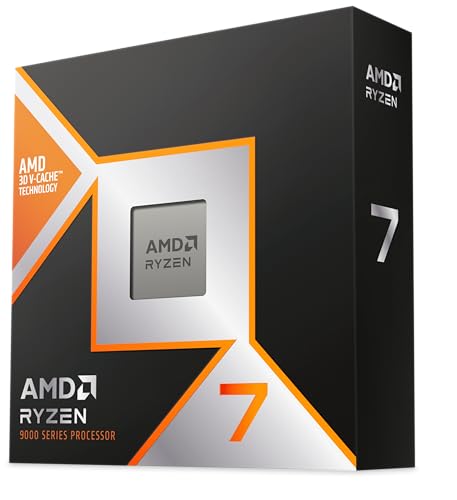
Best New-Build Pick
AMD Ryzen 7 9800X3D
96MB of L3 cache on AM5.
Best for: New high-refresh builds.
Our take Check price for AMD Ryzen 7 9800X3D (opens in a new tab)

Best LGA1851 Pick
Intel Core Ultra 7 265KF
20 cores without integrated graphics.
Best for: New Intel builds.
Our take Check price for Intel Core Ultra 7 265KF (opens in a new tab)

Best Efficient AM5 Chip
AMD Ryzen 7 9700X
Eight cores at a 65W rating.
Best for: Quiet builds with a modest cooler.
Our take Check price for AMD Ryzen 7 9700X (opens in a new tab)

Best LGA1700 Upgrade
Intel Core i5-14600KF
14 cores with DDR4 or DDR5 support.
Best for: Existing 600- and 700-series boards.
Our take Check price for Intel Core i5-14600KF (opens in a new tab)
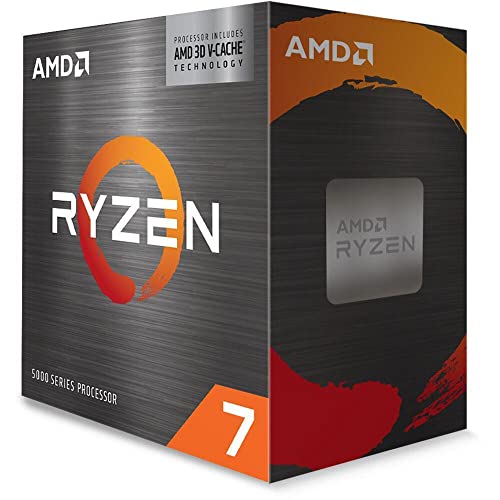
Best AM4 Upgrade
AMD Ryzen 7 5800X3D
96MB of L3 cache on AM4 with DDR4.
Best for: Upgrading an older Ryzen PC.
Our take Check price for AMD Ryzen 7 5800X3D (opens in a new tab)
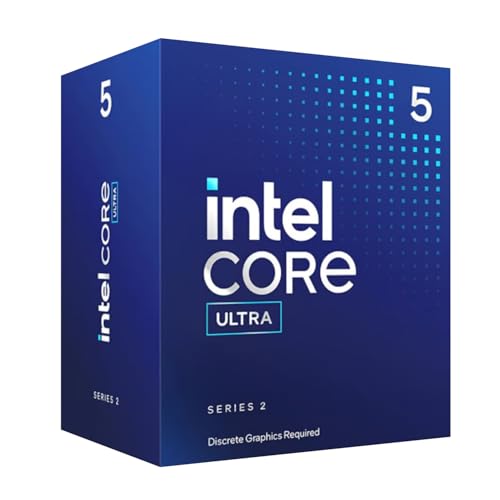
Lowest-Cost LGA1851
Intel Core Ultra 5 225F
Ten cores at a lower price.
Best for: Budget Intel builds.
Our take Check price for Intel Core Ultra 5 225F (opens in a new tab)
| Pick | Why it’s here | Best for | Price |
|---|---|---|---|
| 96MB of L3 cache on AM5. | New high-refresh builds. | Check price for AMD Ryzen 7 9800X3D (opens in a new tab) |
| 20 cores without integrated graphics. | New Intel builds. | Check price for Intel Core Ultra 7 265KF (opens in a new tab) |
| Eight cores at a 65W rating. | Quiet builds with a modest cooler. | Check price for AMD Ryzen 7 9700X (opens in a new tab) |
| 14 cores with DDR4 or DDR5 support. | Existing 600- and 700-series boards. | Check price for Intel Core i5-14600KF (opens in a new tab) |
| 96MB of L3 cache on AM4 with DDR4. | Upgrading an older Ryzen PC. | Check price for AMD Ryzen 7 5800X3D (opens in a new tab) |
| Ten cores at a lower price. | Budget Intel builds. | Check price for Intel Core Ultra 5 225F (opens in a new tab) |
Our Picks
Best New-Build Pick1 of 6
AMD Ryzen 7 9800X3D on Amazon (opens in a new tab)
The Ryzen 7 9800X3D pairs AMD's 3D V-Cache with eight Zen 5 cores, and games that lean on cache respond to it more than to extra cores.
Best for
- New high-refresh builds.
Skip if
- Skip it if this is a deal-breaker for you: no cooler in the box.
Why we like it
It is the chip to pair with a high-end graphics card when the CPU would otherwise hold frame rates back. Its 5.2GHz boost clock ranks fourth of 6 here, behind the Core Ultra 7 265KF (5.5GHz) and ahead of the Ryzen 7 5800X3D (4.5GHz). On core count it ties with the Ryzen 7 9700X and the Ryzen 7 5800X3D at 8 cores.
On rated power it sits mid-pack at 120W: the Ryzen 7 9700X offers 65W, and the Core Ultra 5 225F comes in at 125W. Like the Ryzen 7 9700X, it has an AM5 socket, while the Ryzen 7 5800X3D uses an AM4 socket. It also comes with second-generation 3D V-Cache placed under the cores and an unlocked multiplier, a first for AMD's X3D chips. Only the Ryzen 7 5800X3D came close to it on price at the time of writing; it cost the most of the 6 picks.
Key dimensions & specs
- L3 cache: 96MB
- Max boost: 5.2GHz
- Cores / threads: 8 cores
- Rated power: 120W
- Threads: 16
- Socket: AM5
- Memory: DDR5
- Cooler in box: No
- Integrated graphics: Yes
Pros
- 96MB of L3 cache from 3D V-Cache
- Integrated graphics for display output without a graphics card
- Second-generation 3D V-Cache placed under the cores
- Unlocked multiplier, a first for AMD's X3D chips
Cons
- No cooler in the box
- Costs more than the Core Ultra 5 225F at the time of writing
Best LGA1851 Pick2 of 6
Intel Core Ultra 7 265KF on Amazon (opens in a new tab)
The Core Ultra 7 265KF is the 265K without integrated graphics.
Best for
- New Intel builds.
Skip if
- Skip it if this is a deal-breaker for you: no cooler in the box.
Why we like it
It costs less and needs a graphics card for any display output. Its 30MB L3 cache ranks fourth of 6 here, behind the Ryzen 7 9800X3D (96MB) and ahead of the Core Ultra 5 225F (20MB). It matches the Ryzen 7 9700X on boost clock (5.5GHz).
Nothing else here matches its 20 cores core count; the Core i5-14600KF comes closest at 14 cores. On rated power it ties with the Core i5-14600KF and the Core Ultra 5 225F at 125W. Like the Core Ultra 5 225F, it has an LGA1851 socket, while the Core i5-14600KF uses an LGA1700 socket.
You also get 8 performance and 12 efficient cores and an unlocked multiplier. It was priced above the Core i5-14600KF and below the Ryzen 7 9700X at the time of writing. What it gives up: no integrated graphics, unlike the Ryzen 7 9800X3D; by contrast, the Ryzen 7 9800X3D has it.
Key dimensions & specs
- L3 cache: 30MB
- Max boost: 5.5GHz
- Cores / threads: 20 cores
- Rated power: 125W
- Threads: 20
- Socket: LGA1851
- Memory: DDR5
- Cooler in box: No
- Integrated graphics: No
Pros
- 5.5GHz maximum boost
- 20 cores for encoding and background work
- 8 performance and 12 efficient cores
- Unlocked multiplier
Cons
- No cooler in the box
- No integrated graphics, so a graphics card is required
- Costs more than the Core Ultra 5 225F at the time of writing
Best Efficient AM5 Chip3 of 6
AMD Ryzen 7 9700X on Amazon (opens in a new tab)
The Ryzen 7 9700X gives eight Zen 5 cores at a 65W rating without the X3D cache.
Best for
- Quiet builds with a modest cooler.
Skip if
- Skip it if this is a deal-breaker for you: no cooler in the box.
Why we like it
It is the quieter, cooler-running choice when a build balances games with everyday work. On L3 cache it sits mid-pack at 32MB: the Ryzen 7 9800X3D offers 96MB, and the Core Ultra 5 225F comes in at 20MB. On boost clock it ties with the Core Ultra 7 265KF at 5.5GHz.
Nothing else here matches its 65W rated power; the Ryzen 7 5800X3D comes closest at 105W. It shares an AM5 socket with the Ryzen 7 9800X3D; the Core i5-14600KF goes with an LGA1700 socket. It needs an AM5 board (A620, B650, B850, X670 or X870 series) and DDR5 memory; a 600-series board may need a BIOS update first, so check the maker's CPU support list for the minimum version.
No cooler is included; a single-tower air cooler is enough at its rating. On price it sat fourth of 6, between the cheaper Core Ultra 7 265KF and the pricier Ryzen 7 5800X3D, at the time of writing.
Key dimensions & specs
- L3 cache: 32MB
- Max boost: 5.5GHz
- Cores / threads: 8 cores
- Rated power: 65W
- Threads: 16
- Socket: AM5
- Memory: DDR5
- Cooler in box: No
- Integrated graphics: Yes
Pros
- 5.5GHz maximum boost
- 65W rating suits a modest air cooler
- Integrated graphics for display output without a graphics card
- The Zen 5 architecture
Cons
- No cooler in the box
- Costs more than the Core Ultra 5 225F at the time of writing
Best LGA1700 Upgrade4 of 6
Intel Core i5-14600KF on Amazon (opens in a new tab)
The Core i5-14600KF is the 14600K without integrated graphics.
Best for
- Existing 600- and 700-series boards.
Skip if
- Look at the others if this bothers you: no cooler in the box.
Why we like it
It costs less and needs a graphics card for display output. Its 24MB L3 cache ranks fifth of 6 here, behind the Ryzen 7 9800X3D (96MB) and ahead of the Core Ultra 5 225F (20MB). Its 5.3GHz boost clock ranks third of 6 here, behind the Core Ultra 7 265KF (5.5GHz) and ahead of the Ryzen 7 5800X3D (4.5GHz).
On core count it sits mid-pack at 14 cores: the Core Ultra 7 265KF offers 20 cores, and the Ryzen 7 5800X3D comes in at 8 cores. On rated power it ties with the Core Ultra 7 265KF and the Core Ultra 5 225F at 125W. It is the only pick here with an LGA1700 socket; the Core Ultra 5 225F has an LGA1851 socket instead. What it gives up: no integrated graphics, unlike the Ryzen 7 9800X3D; by contrast, the Ryzen 7 9800X3D has it.
Key dimensions & specs
- L3 cache: 24MB
- Max boost: 5.3GHz
- Cores / threads: 14 cores
- Rated power: 125W
- Threads: 20
- Socket: LGA1700
- Memory: DDR4 or DDR5
- Cooler in box: No
- Integrated graphics: No
Pros
- 14 cores for encoding and background work
- 6 performance and 8 efficient cores
- Unlocked multiplier
- L3 cache of 24MB, ahead of the Core Ultra 5 225F
Cons
- No cooler in the box
- No integrated graphics, so a graphics card is required
- Costs more than the Core Ultra 5 225F at the time of writing
Best AM4 Upgrade5 of 6
AMD Ryzen 7 5800X3D on Amazon (opens in a new tab)
The Ryzen 7 5800X3D is the last X3D chip for AM4.
Best for
- Upgrading an older Ryzen PC.
Skip if
- Pass on it if aM4 is a final-generation platform with no newer CPUs comin rules it out for your setup.
Why we like it
It lets an existing AM4 board take a cache upgrade without a new platform or DDR5. On L3 cache it ties with the Ryzen 7 9800X3D at 96MB. On boost clock it trails the group at 4.5GHz, while the Core Ultra 7 265KF offers 5.5GHz.
It matches the Ryzen 7 9800X3D and the Ryzen 7 9700X on core count (8 cores). Its 105W rated power ranks second of 6 here, behind the Ryzen 7 9700X (65W) and ahead of the Core Ultra 5 225F (125W). You get an AM4 socket here, which sets it apart from the Core i5-14600KF and its an LGA1700 socket.
DDR4 memory is unique to it among these picks, while the Ryzen 7 9800X3D uses DDR5 memory. It also offers a drop-in upgrade for many existing AM4 boards after a BIOS update. Its price falls between the Ryzen 7 9700X and the Ryzen 7 9800X3D, based on our last check.
Key dimensions & specs
- L3 cache: 96MB
- Max boost: 4.5GHz
- Cores / threads: 8 cores
- Rated power: 105W
- Threads: 16
- Socket: AM4
- Memory: DDR4
- Cooler in box: No
- Integrated graphics: No
Pros
- 96MB of L3 cache from 3D V-Cache
- 3D V-Cache on the AM4 platform
- Drop-in upgrade for many existing AM4 boards after a BIOS update
- Rated power of 105W, ahead of the Ryzen 7 9800X3D
Cons
- AM4 is a final-generation platform with no newer CPUs coming
- No cooler in the box
- No integrated graphics, so a graphics card is required
Lowest-Cost LGA18516 of 6
Intel Core Ultra 5 225F on Amazon (opens in a new tab)
The Core Ultra 5 225F is a locked ten-core LGA1851 chip.
Best for
- Budget Intel builds.
Skip if
- Look at the others if this bothers you: no cooler in the box.
Why we like it
It suits a budget Intel build that will pair with a B860 board. Its 20MB L3 cache is the smallest in this group; the Ryzen 7 9800X3D leads at 96MB. Its 4.9GHz boost clock ranks fifth of 6 here, behind the Core Ultra 7 265KF (5.5GHz) and ahead of the Ryzen 7 5800X3D (4.5GHz).
On core count it sits mid-pack at 10 cores: the Core Ultra 7 265KF offers 20 cores, and the Ryzen 7 5800X3D comes in at 8 cores. On rated power it ties with the Core Ultra 7 265KF and the Core i5-14600KF at 125W. Like the Core Ultra 7 265KF, it has an LGA1851 socket, while the Core i5-14600KF uses an LGA1700 socket.
It also comes with 6 performance and 4 efficient cores, PCIe 5.0 support and Intel 800-series chipset support. It cost the least of the 6 picks at the time of writing, with the Core i5-14600KF the next step up.
Key dimensions & specs
- L3 cache: 20MB
- Max boost: 4.9GHz
- Cores / threads: 10 cores
- Rated power: 125W
- Threads: 10
- Socket: LGA1851
- Memory: DDR5
- Cooler in box: No
- Integrated graphics: No
Pros
- 6 performance and 4 efficient cores
- PCIe 5.0 support
- Intel 800-series chipset support
- Boost clock of 4.9GHz, ahead of the Ryzen 7 5800X3D
Cons
- No cooler in the box
- No integrated graphics, so a graphics card is required
- L3 cache trails the Ryzen 7 9800X3D (96MB)
How We Chose
Each pick was assessed across 4 criteria weighted for real-world use.
- Power and cooling
- We recorded each chip's rated power and what cooler class it needs.
- Platform cost
- We noted socket, memory type and whether a cooler is included, since they change the real price.
- Upgrade path
- We considered how long each socket is likely to receive new CPUs.
- Game-relevant specs
- We compared L3 cache, boost clocks and core counts from AMD's and Intel's product pages.
What to Look for in a Desktop Gaming CPUs
Key buying criteria so you get the right fit the first time.
The socket decides your upgrade path
The socket fixes which motherboards and future CPUs you can use. AM5 has had several CPU generations; AM4 has no newer chips coming.
If you plan to upgrade later, a current platform is worth a small premium.
Cache helps games more than clocks
AMD's X3D chips add a large stacked L3 cache that keeps more game data close to the cores. In CPU-limited games that often helps more than a higher boost clock.
The gain shrinks when the graphics card is the limit.
Check BIOS support before buying
Newer CPUs on older boards may need a BIOS update before the system will start. Check the board's CPU support list for the version you need and whether the board can flash without a CPU installed.
Match the CPU to your graphics card and monitor
At 1440p and 4K the graphics card sets most frame rates, so a mid-range CPU is often enough. At 1080p with a high-refresh monitor, the CPU matters much more.
Spend on the part that limits your games, not on the bigger number.
Cores matter for streaming and creation
Six and eight cores cover gaming. Streaming with CPU encoding, video editing and compiling benefit from twelve or sixteen.
If you encode on the graphics card instead, core count matters less.
Integrated graphics are a useful backup
Chips with integrated graphics can drive a display without a graphics card, which helps when troubleshooting or between upgrades. Intel's F and KF models and most AM4 Ryzen chips have none.
How to Choose a Desktop Gaming CPUs
By priority
| Priority | Consider | Why |
|---|---|---|
| New high-refresh builds | Ryzen 7 9800X3D | 96MB of L3 cache on AM5 |
| New Intel builds | Core Ultra 7 265KF | 20 cores without integrated graphics |
| Quiet builds with a modest cooler | Ryzen 7 9700X | Eight cores at a 65W rating |
| Existing 600- and 700-series boards | Core i5-14600KF | 14 cores with DDR4 or DDR5 support |
| Upgrading an older Ryzen PC | Ryzen 7 5800X3D | 96MB of L3 cache on AM4 with DDR4 |
| Budget Intel builds | Core Ultra 5 225F | Ten cores at a lower price |
Scroll sideways to see every column.
Key specs side by side
Figures as each maker states them.
| Processor | L3 cache | Max boost | Cores / threads | Rated power |
|---|---|---|---|---|
| Ryzen 7 9800X3D | 96MB | 5.2GHz | 8 cores | 120W |
| Core Ultra 7 265KF | 30MB | 5.5GHz | 20 cores | 125W |
| Ryzen 7 9700X | 32MB | 5.5GHz | 8 cores | 65W |
| Core i5-14600KF | 24MB | 5.3GHz | 14 cores | 125W |
| Ryzen 7 5800X3D | 96MB | 4.5GHz | 8 cores | 105W |
| Core Ultra 5 225F | 20MB | 4.9GHz | 10 cores | 125W |
Scroll sideways to see every column.
By price at the time of writing
Prices change often; these tiers reflect Amazon prices when this guide was updated.
| Price tier | Processors |
|---|---|
| About $100 to $150 | Core Ultra 5 225F |
| About $150 to $250 | Core i5-14600KF |
| About $250 to $500 | Core Ultra 7 265KF, Ryzen 7 9700X, Ryzen 7 5800X3D, Ryzen 7 9800X3D |
Frequently Asked Questions
What memory should I pair with it?
AM5 and LGA1851 use DDR5; AM4 uses DDR4. For AM5, a 32GB DDR5-6000 kit is a common pairing; check the board's memory support list.
Is AM4 still worth buying into?
For an upgrade to an existing AM4 system, yes. For a new build, AM5 or LGA1851 gives a longer upgrade path.
Will a new CPU work in my current motherboard?
Only if the socket matches and the board's BIOS supports it. Check the maker's CPU support list for the minimum BIOS version.
What does X3D mean on a Ryzen CPU?
It marks AMD's 3D V-Cache chips, which stack extra L3 cache on the processor. Games that are limited by the CPU tend to run faster on them.
What does the rated power figure mean?
It is AMD's default TDP or Intel's base power. Chips can draw more under boost, so size the cooler for sustained loads, not the label alone.
Should I choose Intel or AMD for gaming?
At the high end, AMD's X3D chips lead in many CPU-limited games. Intel's Core Ultra chips offer more cores for work at similar prices. Choose by workload and platform cost.
Bottom Line
The Ryzen 7 9800X3D is the new-build pick, and the Core Ultra 7 265KF is the Intel alternative. The Ryzen 7 9700X runs cool at 65W, the i5-14600KF upgrades LGA1700 boards, the 5800X3D extends AM4, and the Core Ultra 5 225F is the budget Intel chip.