
Buying Guide
The Best CPUs for Gaming and Streaming
Four processors ranked on L3 cache and boost clock, where the Ryzen 9 9950X has the largest L3 cache; the Core Ultra 5 225F is the cheapest route in.
By The PC Journal editorial team
11 min read4 products evaluated
Streaming with software encoding needs extra cores beyond what the game uses. Every pick has ten or more cores and cost $520 or less, ordered by thread count.
Rankings weigh L3 cache, max boost and cores / threads as the makers state them; any figure a maker omits is noted as missing rather than guess, since we have not benched them.
Quick Picks
Our 4 recommendations at a glance. Tap a pick for the full verdict.

Highest Boost Clock
Intel Core i9-14900K
The highest boost clock here (6GHz).
Best for: Buyers who put boost clock first.
Our take Check price for Intel Core i9-14900K (opens in a new tab)

Largest Game Cache
AMD Ryzen 9 9950X
The largest L3 cache here (64MB).
Best for: Games that are limited by the CPU at high frame rates.
Our take Check price for AMD Ryzen 9 9950X (opens in a new tab)

Also Consider
Intel Core i5-14400F
6 performance and 4 efficient cores.
Best for: Buyers who want 6 performance and 4 efficient cores.
Our take Check price for Intel Core i5-14400F (opens in a new tab)
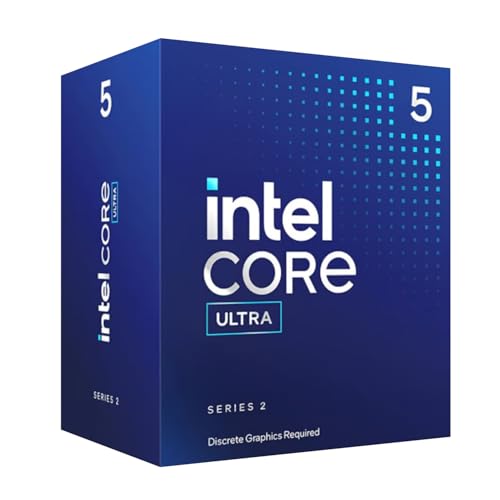
Lowest Price Here
Intel Core Ultra 5 225F
The lowest price among these processors at the time of writing.
Best for: Buyers who would rather put the savings elsewhere in the build.
Our take Check price for Intel Core Ultra 5 225F (opens in a new tab)
| Pick | Why it’s here | Best for | Price |
|---|---|---|---|
| The highest boost clock here (6GHz). | Buyers who put boost clock first. | Check price for Intel Core i9-14900K (opens in a new tab) |
| The largest L3 cache here (64MB). | Games that are limited by the CPU at high frame rates. | Check price for AMD Ryzen 9 9950X (opens in a new tab) |
| 6 performance and 4 efficient cores. | Buyers who want 6 performance and 4 efficient cores. | Check price for Intel Core i5-14400F (opens in a new tab) |
| The lowest price among these processors at the time of writing. | Buyers who would rather put the savings elsewhere in the build. | Check price for Intel Core Ultra 5 225F (opens in a new tab) |
Our Picks
Highest Boost Clock1 of 4
Intel Core i9-14900K on Amazon (opens in a new tab)
The Core i9-14900K is the last LGA1700 flagship with a 6.0GHz boost clock.
Best for
- Buyers who put boost clock first.
Skip if
- Choose another pick if you can't accept this: no cooler in the box.
Why we like it
Check your board has the latest BIOS for Intel's stability microcode. On L3 cache it sits mid-pack at 36MB: the Ryzen 9 9950X offers 64MB, and the Core Ultra 5 225F comes in at 20MB. Its 6GHz boost clock is the highest here; the Ryzen 9 9950X comes next at 5.7GHz.
Nothing else here matches its 24 cores core count; the Ryzen 9 9950X comes closest at 16 cores. It matches the Core i5-14400F and the Core Ultra 5 225F on rated power (125W). It shares an LGA1700 socket with the Core i5-14400F; the Core Ultra 5 225F goes with an LGA1851 socket.
You also get 8 performance and 16 efficient cores. It fits LGA1700 boards (600 and 700 series) with either DDR4 or DDR5, depending on the board; 600-series boards may need a BIOS update for 14th-gen chips. Its price falls between the Core i5-14400F and the Ryzen 9 9950X, based on our last check.
Key dimensions & specs
- L3 cache: 36MB
- Max boost: 6GHz
- Cores / threads: 24 cores
- Rated power: 125W
- Threads: 32
- Socket: LGA1700
- Memory: DDR4 or DDR5
- Cooler in box: No
- Integrated graphics: Yes
Pros
- 6GHz maximum boost
- 24 cores for encoding and background work
- Integrated graphics for display output without a graphics card
- 8 performance and 16 efficient cores
Cons
- No cooler in the box
- Costs more than the Core Ultra 5 225F at the time of writing
Largest Game Cache2 of 4
AMD Ryzen 9 9950X on Amazon (opens in a new tab)
The Ryzen 9 9950X gives 16 cores and 32 threads without the X3D premium.
Best for
- Games that are limited by the CPU at high frame rates.
Skip if
- Skip it if this is a deal-breaker for you: 170W rating calls for a large air cooler or a 280mm-plus AIO.
Why we like it
It is the better buy when CPU encoding and editing matter more than the last few frames per second. Nothing else here matches its 64MB L3 cache; the Core i9-14900K comes closest at 36MB. On boost clock it sits mid-pack at 5.7GHz: the Core i9-14900K offers 6GHz, and the Core i5-14400F comes in at 4.7GHz.
Its 16 cores core count ranks second of 4 here, behind the Core i9-14900K (24 cores) and ahead of the Core Ultra 5 225F (10 cores). Its 170W rated power is the highest in this group; the Core i9-14900K leads at 125W. You get an AM5 socket here, which sets it apart from the Core i9-14900K and its an LGA1700 socket.
It shares DDR5 memory with the Core Ultra 5 225F; the Core i5-14400F goes with DDR4 or DDR5 memory. It was the most expensive pick when we checked, so weigh what it adds over the Core i9-14900K.
Key dimensions & specs
- L3 cache: 64MB
- Max boost: 5.7GHz
- Cores / threads: 16 cores
- Rated power: 170W
- Threads: 32
- Socket: AM5
- Memory: DDR5
- Cooler in box: No
- Integrated graphics: Yes
Pros
- 64MB of L3 cache
- 5.7GHz maximum boost
- 16 cores for encoding and background work
- Integrated graphics for display output without a graphics card
Cons
- 170W rating calls for a large air cooler or a 280mm-plus AIO
- No cooler in the box
- Rated power trails the Core i9-14900K (125W)
Also Consider3 of 4
Intel Core i5-14400F on Amazon (opens in a new tab)
The Core i5-14400F is a locked ten-core LGA1700 chip with no integrated graphics.
Best for
- Buyers who want 6 performance and 4 efficient cores.
Skip if
- Pass on it if no cooler in the bo rules it out for your setup.
Why we like it
It pairs well with a B660 or B760 board and DDR4. It matches the Core Ultra 5 225F on L3 cache (20MB). Its 4.7GHz boost clock is the lowest in this group; the Core i9-14900K leads at 6GHz.
On core count it ties with the Core Ultra 5 225F at 10 cores. On rated power it ties with the Core i9-14900K and the Core Ultra 5 225F at 125W. Like the Core i9-14900K, it has an LGA1700 socket, while the Ryzen 9 9950X uses an AM5 socket.
You also get 6 performance and 4 efficient cores, DDR4 and DDR5 support and PCIe 5.0 and 4.0 support. It fits LGA1700 boards (600 and 700 series) with either DDR4 or DDR5, depending on the board; 600-series boards may need a BIOS update for 14th-gen chips. Budget for a dual-tower air cooler or a 240mm-plus AIO, since none is included.
Key dimensions & specs
- L3 cache: 20MB
- Max boost: 4.7GHz
- Cores / threads: 10 cores
- Rated power: 125W
- Threads: 16
- Socket: LGA1700
- Memory: DDR4 or DDR5
- Cooler in box: No
- Integrated graphics: No
Pros
- 6 performance and 4 efficient cores
- DDR4 and DDR5 support
- PCIe 5.0 and 4.0 support
- Rated power of 125W, ahead of the Ryzen 9 9950X
Cons
- No cooler in the box
- No integrated graphics, so a graphics card is required
- Boost clock trails the Core i9-14900K (6GHz)
Lowest Price Here4 of 4
Intel Core Ultra 5 225F on Amazon (opens in a new tab)
The Core Ultra 5 225F is a locked ten-core LGA1851 chip.
Best for
- Buyers who would rather put the savings elsewhere in the build.
Skip if
- Skip it if this is a deal-breaker for you: no cooler in the box.
Why we like it
It suits a budget Intel build that will pair with a B860 board. It matches the Core i5-14400F on L3 cache (20MB). Its 4.9GHz boost clock ranks third of 4 here, behind the Core i9-14900K (6GHz) and ahead of the Core i5-14400F (4.7GHz).
On core count it ties with the Core i5-14400F at 10 cores. No other pick in this guide offers an LGA1851 socket; compare the Core i9-14900K, which has an LGA1700 socket. Like the Ryzen 9 9950X, it has DDR5 memory, while the Core i9-14900K uses DDR4 or DDR5 memory.
You also get 6 performance and 4 efficient cores, PCIe 5.0 support and Intel 800-series chipset support. It cost the least of the 4 picks at the time of writing, with the Core i5-14400F the next step up. It gives ground on L3 cache, where the Ryzen 9 9950X offers 64MB.
Key dimensions & specs
- L3 cache: 20MB
- Max boost: 4.9GHz
- Cores / threads: 10 cores
- Rated power: 125W
- Threads: 10
- Socket: LGA1851
- Memory: DDR5
- Cooler in box: No
- Integrated graphics: No
Pros
- 6 performance and 4 efficient cores
- PCIe 5.0 support
- Intel 800-series chipset support
- Boost clock of 4.9GHz, ahead of the Core i5-14400F
Cons
- No cooler in the box
- No integrated graphics, so a graphics card is required
- L3 cache trails the Ryzen 9 9950X (64MB)
How We Chose
Each pick was assessed across 4 criteria weighted for real-world use.
- What we compared
- We set side by side four processors on L3 cache, boost clock, core count and rated power, using each maker's published specs. We did not test them in-house.
- What every pick has in common
- All 4, from the Core i9-14900K to the Core Ultra 5 225F, state L3 cache, boost clock and core count.
- Who each pick suits
- The Core i9-14900K for the highest boost clock here (6GHz); the Ryzen 9 9950X for the largest L3 cache here (64MB); the Core i5-14400F for 6 performance and 4 efficient cores.
- Price range
- At our last check the picks ran from the Core Ultra 5 225F ($100 to $150) to the Ryzen 9 9950X ($250 to $500).
What to Look for in a CPUs for Gaming and Streaming
Key buying criteria so you get the right fit the first time.
L3 cache
Here L3 cache runs from 20MB on the Core Ultra 5 225F to 64MB on the Ryzen 9 9950X. The Core i9-14900K comes second for less money.
Boost clock across these picks
Here boost clock runs from 4.7GHz on the Core i5-14400F to 6GHz on the Core i9-14900K. The Core i9-14900K is the pick for boost clock.
Core count across these picks
Here core count runs from 10 cores on the Core Ultra 5 225F to 24 cores on the Core i9-14900K. Start with the Core i9-14900K if core count decides it.
Memory
The Core i9-14900K and the Core i5-14400F list DDR4 or DDR5; the Ryzen 9 9950X and the Core Ultra 5 225F list DDR5. Rule out the mismatches before looking at price.
Cooler in box
The Core i9-14900K, the Ryzen 9 9950X, the Core i5-14400F and the Core Ultra 5 225F go without. Settle this first, then compare prices.
How to Choose a CPUs for Gaming and Streaming
By priority
| Priority | Consider | Why |
|---|---|---|
| Buyers who put boost clock first | Core i9-14900K | The highest boost clock here (6GHz) |
| Games that are limited by the CPU at high frame rates | Ryzen 9 9950X | The largest L3 cache here (64MB) |
| Buyers who want 6 performance and 4 efficient cores | Core i5-14400F | 6 performance and 4 efficient cores |
| Buyers who would rather put the savings elsewhere in the build | Core Ultra 5 225F | The lowest price among these processors at the time of writing |
Scroll sideways to see every column.
Key specs side by side
The Ryzen 9 9950X leads on L3 cache at 64MB, ahead of the Core i9-14900K at 36MB.
| Processor | L3 cache | Max boost | Cores / threads | Rated power |
|---|---|---|---|---|
| Core i9-14900K | 36MB | 6GHz | 24 cores | 125W |
| Ryzen 9 9950X | 64MB | 5.7GHz | 16 cores | 170W |
| Core i5-14400F | 20MB | 4.7GHz | 10 cores | 125W |
| Core Ultra 5 225F | 20MB | 4.9GHz | 10 cores | 125W |
Scroll sideways to see every column.
By price at the time of writing
The Core Ultra 5 225F was the lowest-priced pick and the Ryzen 9 9950X the highest when we checked; tiers move with Amazon pricing.
| Price tier | Processors |
|---|---|
| About $100 to $150 | Core Ultra 5 225F |
| About $150 to $250 | Core i5-14400F |
| About $250 to $500 | Core i9-14900K, Ryzen 9 9950X |
Frequently Asked Questions
Which has the largest L3 cache: the Ryzen 9 9950X or the Core i9-14900K?
The Ryzen 9 9950X leads at 64MB, with the Core i9-14900K at 36MB. The Core Ultra 5 225F is at the other end of this group with 20MB.
Is the Core i9-14900K ahead of the Ryzen 9 9950X on boost clock?
The Core i9-14900K leads at 6GHz, with the Ryzen 9 9950X at 5.7GHz. The Core i5-14400F is at the other end of this group with 4.7GHz.
How does the Ryzen 9 9950X compare with the Core i9-14900K on core count?
The Core i9-14900K leads at 24 cores, with the Ryzen 9 9950X at 16 cores. The Core Ultra 5 225F is at the other end of this group with 10 cores.
What does the Ryzen 9 9950X add over the Core Ultra 5 225F?
On paper it adds L3 cache (64MB against 20MB), boost clock (5.7GHz against 4.9GHz) and core count (16 cores against 10 cores). It does not win everywhere: the Core Ultra 5 225F still leads on rated power (125W). The Core Ultra 5 225F was the lowest-priced pick when we checked, so pay the difference only if those gains matter to you.
Why is the Ryzen 9 9950X our Largest Game Cache pick?
It earns the label for the largest L3 cache here (64MB). It suits games that are limited by the CPU at high frame rates.
Do the Core i9-14900K and the Ryzen 9 9950X differ on socket?
The Core i9-14900K and the Core i5-14400F use LGA1700; the Ryzen 9 9950X uses AM5; the Core Ultra 5 225F uses LGA1851.
Bottom Line
Our first pick is the Core i9-14900K, chosen for the highest boost clock here (6GHz). Look at the Core i5-14400F for 6 performance and 4 efficient cores and the Core Ultra 5 225F for the lowest price among these processors at the time of writing if those matter more to you.
Use the GPU encoder first; software encoding is for when quality matters most.