
Buying Guide
The Best ASUS Motherboards for Intel
Six ASUS boards for Core Ultra and 12th to 14th Gen Core compared on socket, power stages, M.2 slots and Thunderbolt.
By The PC Journal editorial team
12 min read6 products evaluated
ASUS Intel boards split across two sockets: LGA1851 for Core Ultra 200S and LGA1700 for 12th to 14th Gen Core.
We compared six ASUS Intel boards on both sockets. This is a research-based comparison built from maker specifications and retailer listings; we did not test these parts ourselves.
Quick Picks
Our 6 recommendations at a glance. Tap a pick for the full verdict.

Best Value Z890
ASUS TUF Gaming Z890-PLUS WiFi
Four M.2 slots, Wi-Fi 7 and Thunderbolt 4.
Best for: Core Ultra builds.
Our take Check price for ASUS TUF Gaming Z890-PLUS WiFi (opens in a new tab)

Solid Alternative
ASUS ROG Strix Z890-A Gaming WiFi
The Strix Z890-A offers five M.2 slots, Thunderbolt 4 and a white finish.
Best for: Buyers who want 5 m.2 slots for ssd expansion.
Our take Check price for ASUS ROG Strix Z890-A Gaming WiFi (opens in a new tab)
Best LGA1700
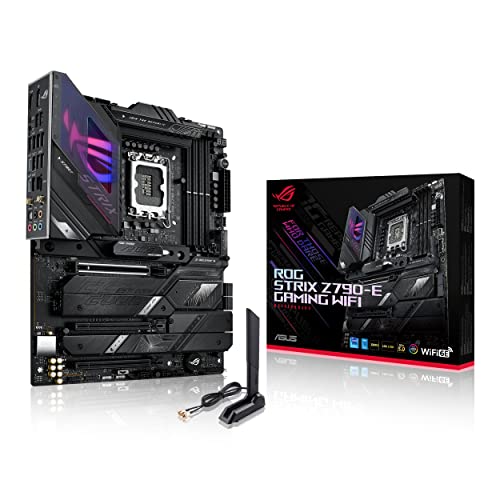
ASUS ROG Strix Z790-E Gaming WiFi
An 18+1 layout, five M.2 slots and Thunderbolt 4 support.
Best for: Core i7 and i9 14th Gen builds.
Our take Check price for ASUS ROG Strix Z790-E Gaming WiFi (opens in a new tab)

Most M.2 Slots
ASUS ROG Strix Z890-E Gaming WiFi
Seven M.2 slots.
Best for: Storage-heavy builds.
Our take Check price for ASUS ROG Strix Z890-E Gaming WiFi (opens in a new tab)

Worth Considering
ASUS Z790 MAX Gaming WIFI7
The Z790 MAX Gaming WIFI7 offers a 14+1 layout, Wi-Fi 7 and a USB 20Gbps port, with 1Gbps Ethernet.
Best for: Buyers who want wi-fi 7 built in.
Our take Check price for ASUS Z790 MAX Gaming WIFI7 (opens in a new tab)

Best Budget
ASUS TUF Gaming B760-PLUS WiFi
Three M.2 slots and 2.5Gbps LAN on B760.
Best for: Core i5 builds.
Our take Check price for ASUS TUF Gaming B760-PLUS WiFi (opens in a new tab)
Our Picks
Best Value Z8901 of 6
ASUS TUF Gaming Z890-PLUS WiFi on Amazon (opens in a new tab)
The TUF Z890-PLUS offers a 16+1+2+1 layout, four M.2 slots, Wi-Fi 7 and Thunderbolt 4.
Best for
- Core Ultra builds.
Skip if
- Skip it if price comes first: the TUF B760-PLUS cost less when we checked.
Why we like it
It covers Core Ultra 200S builds without premium pricing. Its 4 M.2 slot count ranks fourth of 6 here, behind the Strix Z890-E (7) and ahead of the TUF B760-PLUS (3). It matches the Strix Z890-A, the Strix Z790-E and the TUF B760-PLUS on wired network speed (2.5Gbps).
No other pick in this guide offers 16+1+2+1 power stages; compare the Strix Z890-E, which has 18+2+1+2 power stages. Like the Strix Z890-A and Strix Z890-E, it has an LGA1851 socket, while the TUF B760-PLUS uses an LGA1700 socket. It shares a Z890 chipset with the Strix Z890-A and Strix Z890-E; the Z790 MAX Gaming goes with a Z790 chipset.
You also get a Thunderbolt 4 Type-C port and TUF component and cooling design. It uses Intel's LGA1851 socket for Core Ultra 200S processors, not older 12th to 14th Gen chips. It was priced above the Z790 MAX Gaming and below the Strix Z790-E at the time of writing.
Key dimensions & specs
- M.2 slots: 4
- Wired LAN: 2.5Gbps
- Wi-Fi: Wi-Fi 7
- Power stages: 16+1+2+1
- Form factor: ATX
- Socket: LGA1851
- Chipset: Z890
Pros
- 4 M.2 slots for SSD expansion
- Wi-Fi 7 built in
- 16+1+2+1 power stage layout
- Thunderbolt 4 Type-C port
Cons
- Costs more than the TUF B760-PLUS at the time of writing
Solid Alternative2 of 6
ASUS ROG Strix Z890-A Gaming WiFi on Amazon (opens in a new tab)
The Strix Z890-A offers five M.2 slots, Thunderbolt 4 and a white finish.
Best for
- Buyers who want 5 m.2 slots for ssd expansion.
Skip if
- Skip it if price comes first: the TUF B760-PLUS cost less when we checked.
Why we like it
It suits storage-heavy Core Ultra builds. It matches the Strix Z790-E on M.2 slot count (5). It matches the TUF Z890-PLUS, the Strix Z790-E and the TUF B760-PLUS on wired network speed (2.5Gbps).
It is the only pick here with 16+2+1+2 power stages; the TUF Z890-PLUS has 16+1+2+1 power stages instead. Like the TUF Z890-PLUS and Strix Z890-E, it has an LGA1851 socket, while the TUF B760-PLUS uses an LGA1700 socket. It shares a Z890 chipset with the TUF Z890-PLUS and Strix Z890-E; the Z790 MAX Gaming goes with a Z790 chipset.
It also offers AI overclocking tools. It uses Intel's LGA1851 socket for Core Ultra 200S processors, not older 12th to 14th Gen chips. Check the manual for which M.2 slots share lanes with SATA ports or the second PCIe slot before filling them all. When we checked, only the Strix Z790-E and cheaper picks cost less, and the Strix Z890-E cost more.
Key dimensions & specs
- M.2 slots: 5
- Wired LAN: 2.5Gbps
- Wi-Fi: Wi-Fi 7
- Power stages: 16+2+1+2
- Form factor: ATX
- Socket: LGA1851
- Chipset: Z890
Pros
- 5 M.2 slots for SSD expansion
- Wi-Fi 7 built in
- 16+2+1+2 power stage layout
- Thunderbolt 4 ports
Cons
- Costs more than the TUF B760-PLUS at the time of writing
Best LGA17003 of 6
ASUS ROG Strix Z790-E Gaming WiFi on Amazon (opens in a new tab)
The Strix Z790-E offers an 18+1 layout, five M.2 slots and Thunderbolt 4 support.
Best for
- Core i7 and i9 14th Gen builds.
Skip if
- Worth skipping when wi-Fi 6E rather than Wi-Fi is a problem.
Why we like it
It is the premium LGA1700 board here. On M.2 slot count it ties with the Strix Z890-A at 5. On wired network speed it ties with the TUF Z890-PLUS, the Strix Z890-A and the TUF B760-PLUS at 2.5Gbps.
You get a wi-Fi 6E here, which sets it apart from the Strix Z890-E and its a wi-Fi 7. 18+1 power stages is unique to it among these picks, while the Strix Z890-A uses 16+2+1+2 power stages. It shares an LGA1700 socket with the Z790 MAX Gaming and TUF B760-PLUS; the Strix Z890-E goes with an LGA1851 socket.
It also comes with a PCIe 5.0 M.2 slot and a front-panel USB 3.2 port. It uses Intel's LGA1700 socket for 12th, 13th and 14th Gen Core processors; check the CPU support list for the BIOS version your chip needs, since early boards shipped before 14th Gen launched. Its price falls between the TUF Z890-PLUS and the Strix Z890-A, based on our last check.
Key dimensions & specs
- M.2 slots: 5
- Wired LAN: 2.5Gbps
- Wi-Fi: Wi-Fi 6E
- Power stages: 18+1
- Form factor: ATX
- Socket: LGA1700
- Memory type: DDR5
- Chipset: Z790
Pros
- 5 M.2 slots for SSD expansion
- 18+1 power stage layout
- PCIe 5.0 M.2 slot
- Thunderbolt 4 support
Cons
- Wi-Fi 6E rather than Wi-Fi 7
- Costs more than the TUF B760-PLUS at the time of writing
Most M.2 Slots4 of 6
ASUS ROG Strix Z890-E Gaming WiFi on Amazon (opens in a new tab)
The Strix Z890-E lists seven M.2 slots, an 18+2+1+2 layout and Thunderbolt 4.
Best for
- Storage-heavy builds.
Skip if
- The maker gives no wired network speed, so look elsewhere if that figure decides it for you.
Why we like it
It is the most expandable board here. On M.2 slot count it leads this guide at 7, ahead of the Strix Z890-A (5). 18+2+1+2 power stages is unique to it among these picks, while the Strix Z890-A uses 16+2+1+2 power stages.
It shares an LGA1851 socket with the TUF Z890-PLUS and Strix Z890-A; the Z790 MAX Gaming goes with an LGA1700 socket. It also comes with AI overclocking, cooling and networking tools. It uses Intel's LGA1851 socket for Core Ultra 200S processors, not older 12th to 14th Gen chips.
Check the manual for which M.2 slots share lanes with SATA ports or the second PCIe slot before filling them all. It was the most expensive pick when we checked, so weigh what it adds over the Strix Z890-A. Buyers who need a confirmed wired network speed should compare it with the TUF Z890-PLUS, which offers 2.5Gbps.
Key dimensions & specs
- M.2 slots: 7
- Wi-Fi: Wi-Fi 7
- Power stages: 18+2+1+2
- Form factor: ATX
- Socket: LGA1851
- Chipset: Z890
Pros
- 7 M.2 slots for SSD expansion
- Wi-Fi 7 built in
- 18+2+1+2 power stage layout
- Thunderbolt 4 ports
Cons
- No published wired network speed
- Costs more than the TUF B760-PLUS at the time of writing
Worth Considering5 of 6
ASUS Z790 MAX Gaming WIFI7 on Amazon (opens in a new tab)
The Z790 MAX Gaming WIFI7 offers a 14+1 layout, Wi-Fi 7 and a USB 20Gbps port, with 1Gbps Ethernet.
Best for
- Buyers who want wi-fi 7 built in.
Skip if
- Skip it if wired network speed matters most to you; the TUF Z890-PLUS offers 2.5Gbps.
Why we like it
It suits wireless desks. On M.2 slot count it ties with the TUF B760-PLUS at 3. On wired network speed it trails the group at 1Gbps, while the TUF Z890-PLUS offers 2.5Gbps.
14+1 power stages is unique to it among these picks, while the Strix Z890-A uses 16+2+1+2 power stages. It shares an LGA1700 socket with the Strix Z790-E and TUF B760-PLUS; the TUF Z890-PLUS goes with an LGA1851 socket. It also offers a PCIe 5.0 graphics slot.
It uses Intel's LGA1700 socket for 12th, 13th and 14th Gen Core processors; check the CPU support list for the BIOS version your chip needs, since early boards shipped before 14th Gen launched. Check the manual for which M.2 slots share lanes with SATA ports or the second PCIe slot before filling them all. Its price falls between the TUF B760-PLUS and the TUF Z890-PLUS, based on our last check.
Key dimensions & specs
- M.2 slots: 3
- Wired LAN: 1Gbps
- Wi-Fi: Wi-Fi 7
- Power stages: 14+1
- Form factor: ATX
- Socket: LGA1700
- Memory type: DDR5
- Chipset: Z790
Pros
- Wi-Fi 7 built in
- 14+1 power stage layout
- Rear USB 20Gbps Type-C port
- PCIe 5.0 graphics slot
Cons
- Wired network speed trails the TUF Z890-PLUS (2.5Gbps)
- Costs more than the TUF B760-PLUS at the time of writing
Best Budget6 of 6
ASUS TUF Gaming B760-PLUS WiFi on Amazon (opens in a new tab)
The TUF B760-PLUS WiFi offers three M.2 slots and 2.5Gbps LAN on DDR5.
Best for
- Core i5 builds.
Skip if
- Skip it if M.2 slot count matters most to you; the Strix Z890-E offers 7.
Why we like it
Its price is higher than the Gigabyte board with a power layout. It matches the Z790 MAX Gaming on M.2 slot count (3). It matches the TUF Z890-PLUS, the Strix Z890-A and the Strix Z790-E on wired network speed (2.5Gbps).
It is the only pick here with a wi-Fi 6; the Z790 MAX Gaming has a wi-Fi 7 instead. Like the Strix Z790-E and Z790 MAX Gaming, it has an LGA1700 socket, while the TUF Z890-PLUS uses an LGA1851 socket. A B760 chipset is unique to it among these picks, while the Strix Z790-E uses a Z790 chipset.
It also comes with memory support to DDR5-7200 and TUF Protection component design. No other pick here cost less at our last price check, and the Z790 MAX Gaming was closest. M.2 slot count is its weakest area, and the Strix Z890-E covers it better at 7.
Key dimensions & specs
- M.2 slots: 3
- Wired LAN: 2.5Gbps
- Wi-Fi: Wi-Fi 6
- Form factor: ATX
- Socket: LGA1700
- Memory type: DDR5
- Chipset: B760
Pros
- Memory support to DDR5-7200
- TUF Protection component design
- Three M.2 slots
- Wired network speed of 2.5Gbps, ahead of the Z790 MAX Gaming
Cons
- M.2 slot count trails the Strix Z890-E (7)
How We Chose These ASUS Intel Motherboards
Each pick was assessed across 4 criteria weighted for real-world use.
- Connectivity
- We compared Wi-Fi, wired LAN speed and USB4.
- Power delivery
- We noted power stage layouts where the maker lists them.
- Storage
- We counted listed M.2 slots and PCIe 5.0 support.
- Platform
- We checked socket, chipset and form factor from each listing.
What to Look for in an ASUS Intel Motherboard
Key buying criteria so you get the right fit the first time.
Z-series for K chips, B-series for the rest
Z790 and Z890 boards let you overclock an unlocked K processor and usually carry stronger power delivery. B760 boards run the same chips at stock settings for less money.
A Core i5-13400F or 14400F loses nothing on a B760 board.
Power delivery for Core i7 and i9
Core i7 and i9 chips draw far more power under all-core load than a Core i5. Boards with more and stronger power stages hold boost clocks with less heat; check the power stage layout before pairing one with a budget board.
Check the rear and front I/O
Count USB ports you use every day and confirm a front USB-C header if your case has a USB-C port. Thunderbolt ports matter only for Thunderbolt docks and drives.
Networking matters for daily use
Wi-Fi 7 and 5Gbps Ethernet help only if your router supports them, but built-in Wi-Fi saves a PCIe card.
Count M.2 slots
Most games now install to NVMe drives. Count how many M.2 slots you need now and later, and check which ones share lanes with other ports.
Check DDR4 or DDR5 before you buy
LGA1700 boards come in DDR4 and DDR5 versions that look alike; the model name usually carries D4 for DDR4. Buy the board that matches the memory you plan to use.
How to Choose an ASUS Intel Motherboard
By priority
| Priority | Consider | Why |
|---|---|---|
| Core Ultra builds | TUF Z890-PLUS | Four M.2 slots, Wi-Fi 7 and Thunderbolt 4 |
| Core i7 and i9 14th Gen builds | Strix Z790-E | An 18+1 layout, five M.2 slots and Thunderbolt 4 support |
| Storage-heavy builds | Strix Z890-E | Seven M.2 slots |
| Core i5 builds | TUF B760-PLUS | Three M.2 slots and 2.5Gbps LAN on B760 |
Scroll sideways to see every column.
Key specs side by side
Figures as each maker states them.
| Board | M.2 slots | Wired LAN | Wi-Fi | Power stages |
|---|---|---|---|---|
| TUF Z890-PLUS | 4 | 2.5Gbps | Wi-Fi 7 | 16+1+2+1 |
| Strix Z890-A | 5 | 2.5Gbps | Wi-Fi 7 | 16+2+1+2 |
| Strix Z790-E | 5 | 2.5Gbps | Wi-Fi 6E | 18+1 |
| Strix Z890-E | 7 | Not listed | Wi-Fi 7 | 18+2+1+2 |
| Z790 MAX Gaming | 3 | 1Gbps | Wi-Fi 7 | 14+1 |
| TUF B760-PLUS | 3 | 2.5Gbps | Wi-Fi 6 | Not listed |
Scroll sideways to see every column.
By price at the time of writing
Prices change often; these tiers reflect Amazon prices when this guide was updated.
| Price tier | Boards |
|---|---|
| About $150 to $250 | TUF B760-PLUS, Z790 MAX Gaming, TUF Z890-PLUS |
| About $250 to $500 | Strix Z790-E, Strix Z890-A, Strix Z890-E |
Frequently Asked Questions
Can I use DDR4 on an LGA1700 board?
Only on a DDR4 version of the board. DDR4 and DDR5 slots are keyed differently, so a board takes one type or the other.
Should I fill all four memory slots?
Two sticks usually run faster and more reliably on DDR5. Buy a two-stick kit with the capacity you need.
Is built-in Wi-Fi worth it?
Yes if you cannot run a cable. Otherwise wired Ethernet is more consistent.
What size motherboard should I buy?
ATX fits most mid-towers and has the most slots. Micro-ATX suits smaller cases with fewer expansion needs.
Do I need a Z790 board for a Core i7-14700K?
Only to overclock it or to get stronger power delivery. A good B760 board runs a 14700K at stock settings, though the cheapest boards may lower its sustained boost.
Will a 13th Gen board run a 14th Gen CPU?
Yes on the same LGA1700 socket, after a BIOS update if the board shipped before 14th Gen launched. Check the board's CPU support list.
Bottom Line
The TUF Z890-PLUS suits Core Ultra builds. On LGA1700, the Strix Z790-E is the high-end pick and the TUF B760-PLUS is the budget one.