
Buying Guide
The Best ASUS 4K Monitors
Five monitors compared, from the XG27UCSR to the PG32UCDM, with the trade-offs of each named.
By The PC Journal editorial team
12 min read5 products evaluated
Within ASUS's line-up, panel and refresh rate vary more than the badge suggests. Every monitor here is made by ASUS and is 4K, ordered by refresh rate.
This is a research roundup, not a lab test: refresh rate, resolution and size come from each maker's published specs; a missing HDR is flagged, not filled in, and no figure here comes from our own testing.
Quick Picks
Our 5 recommendations at a glance. Tap a pick for the full verdict.

Fastest Refresh
ASUS ROG Swift PG32UCDM
The highest refresh rate here (240Hz).
Best for: Competitive shooters where motion clarity matters most.
Our take Check price for ASUS ROG Swift PG32UCDM (opens in a new tab)
Lowest Price Here
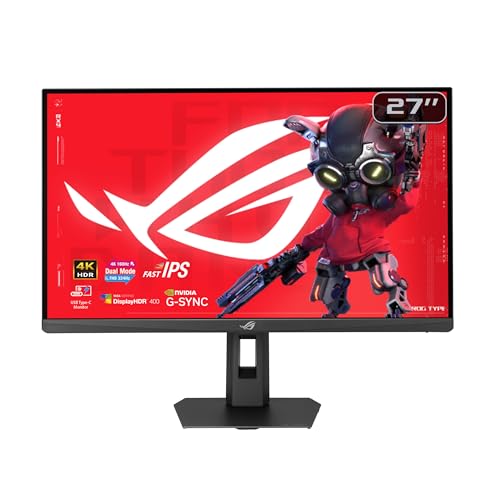
ASUS ROG Strix XG27UCSR
Undercutting the VG27UQ1A on price when we checked.
Best for: Spending as little as possible.
Our take Check price for ASUS ROG Strix XG27UCSR (opens in a new tab)

Fast IPS Panel
ASUS TUF Gaming VG27UQ1A
A fast IPS panel.
Best for: Buyers who want a fast IPS panel.
Our take Check price for ASUS TUF Gaming VG27UQ1A (opens in a new tab)

Also Consider
ASUS ROG Strix XG27UCG
A dual mode that switches to 1080p at 320Hz.
Best for: Buyers who want dual mode that switches to 1080p at 320Hz.
Our take Check price for ASUS ROG Strix XG27UCG (opens in a new tab)

Strong Alternative
ASUS ProArt PA279CDV
Calman Verified with Delta E below 1.5.
Best for: Buyers who want Calman Verified with Delta E below 1.5.
Our take Check price for ASUS ProArt PA279CDV (opens in a new tab)
| Pick | Why it’s here | Best for | Price |
|---|---|---|---|
| The highest refresh rate here (240Hz). | Competitive shooters where motion clarity matters most. | Check price for ASUS ROG Swift PG32UCDM (opens in a new tab) |
| Undercutting the VG27UQ1A on price when we checked. | Spending as little as possible. | Check price for ASUS ROG Strix XG27UCSR (opens in a new tab) |
| A fast IPS panel. | Buyers who want a fast IPS panel. | Check price for ASUS TUF Gaming VG27UQ1A (opens in a new tab) |
| A dual mode that switches to 1080p at 320Hz. | Buyers who want dual mode that switches to 1080p at 320Hz. | Check price for ASUS ROG Strix XG27UCG (opens in a new tab) |
| Calman Verified with Delta E below 1.5. | Buyers who want Calman Verified with Delta E below 1.5. | Check price for ASUS ProArt PA279CDV (opens in a new tab) |
Our Picks
Fastest Refresh1 of 5
ASUS ROG Swift PG32UCDM on Amazon (opens in a new tab)
The ASUS ROG Swift PG32UCDM pairs a 32-inch 4K QD-OLED panel at 240Hz with a 3-year warranty that lists burn-in coverage.
Best for
- Competitive shooters where motion clarity matters most.
Skip if
- Skip it if this is a deal-breaker for you: oLED burn-in risk with static desktop elements.
Why we like it
It also carries 90W USB-C power delivery for a laptop. Nothing else here matches its 240Hz refresh rate; the XG27UCSR comes closest at 160Hz. Its 32 inches screen size is the largest here; the XG27UCSR comes next at 27 inches.
Like the PA279CDV, it has a QD-OLED panel, while the XG27UCG uses an IPS panel. Like the PA279CDV, it has a DisplayHDR True Black 400, while the VG27UQ1A uses an HDR. Like the PA279CDV, it has a 99% DCI-P3 color gamut, while the XG27UCG uses a 95% DCI-P3 color gamut.
Reaching 240Hz at 4K needs DisplayPort 1.4 with DSC or HDMI 2.1 on your graphics card, and a GPU able to render well above 100fps at 4K. Leave the maker's pixel-refresh routines enabled and hide static taskbars to limit burn-in risk. It was the most expensive pick when we checked, so weigh what it adds over the PA279CDV.
Key dimensions & specs
- Refresh rate: 240Hz
- Resolution: 3840x2160 (4K)
- Size: 32 inches
- Panel: QD-OLED
- Response: 0.03ms
- HDR: DisplayHDR True Black 400
- Color gamut: 99% DCI-P3
- Adaptive sync: G-SYNC Compatible
- USB-C: Yes
- Warranty: 3-year
Pros
- a 240Hz refresh rate for fast motion
- 4K resolution for sharp text and detail
- a QD-OLED panel with per-pixel contrast
- DisplayHDR True Black 400 certification
Cons
- OLED burn-in risk with static desktop elements
- Costs more than the XG27UCSR at the time of writing
Lowest Price Here2 of 5
ASUS ROG Strix XG27UCSR on Amazon (opens in a new tab)
The XG27UCSR adds USB-C and a dual mode at 1080p 324Hz, with ASUS's 3-year warranty.
Best for
- Spending as little as possible.
Skip if
- Skip it if this is a deal-breaker for you: refresh rate of 160Hz, behind the PG32UCDM (240Hz).
Why we like it
On refresh rate it ties with the VG27UQ1A and the XG27UCG at 160Hz. It matches the VG27UQ1A and the XG27UCG on screen size (27 inches). It shares an IPS panel with the XG27UCG; the PG32UCDM goes with a QD-OLED panel.
It shares a 95% DCI-P3 color gamut with the VG27UQ1A and XG27UCG; the PA279CDV goes with a 99% DCI-P3 color gamut. Reaching 160Hz at 4K needs DisplayPort 1.4 with DSC or HDMI 2.1 on your graphics card, and a GPU able to render well above 100fps at 4K. No other pick here cost less at our last price check, and the VG27UQ1A was closest. What it gives up: refresh rate of 160Hz, behind the PG32UCDM (240Hz); by contrast, the PG32UCDM offers 240Hz.
Key dimensions & specs
- Refresh rate: 160Hz
- Resolution: 3840x2160 (4K)
- Size: 27 inches
- Panel: IPS
- Response: 0.3ms
- Color gamut: 95% DCI-P3
- USB-C: Yes
- Warranty: 3-year
Pros
- 160Hz for smoother motion than a 60Hz office screen
- 4K resolution for sharp text and detail
- an IPS panel with wide viewing angles
- 95% DCI-P3 colour coverage
Cons
- Refresh rate of 160Hz, behind the PG32UCDM (240Hz)
Fast IPS Panel3 of 5
ASUS TUF Gaming VG27UQ1A on Amazon (opens in a new tab)
The VG27UQ1A brings TUF to 4K at 160Hz with 95% DCI-P3 coverage and a three-year warranty.
Best for
- Buyers who want a fast IPS panel.
Skip if
- Price-first buyers should look at the XG27UCSR, which cost less when we checked.
Why we like it
It needs a strong graphics card to use its refresh rate at 4K. It matches the XG27UCSR and the XG27UCG on refresh rate (160Hz). On screen size it ties with the XG27UCSR and the XG27UCG at 27 inches.
It is the only pick here with a fast IPS panel; the PG32UCDM has a QD-OLED panel instead. Like the XG27UCSR and XG27UCG, it has a 95% DCI-P3 color gamut, while the PG32UCDM uses a 99% DCI-P3 color gamut. It also comes with 4K at 120Hz for consoles over HDMI.
Reaching 160Hz at 4K needs DisplayPort 1.4 with DSC or HDMI 2.1 on your graphics card, and a GPU able to render well above 100fps at 4K. G-SYNC Compatible works on NVIDIA cards over DisplayPort, and FreeSync covers AMD cards. Its price falls between the XG27UCSR and the XG27UCG, based on our last check.
Key dimensions & specs
- Refresh rate: 160Hz
- Resolution: 3840x2160 (4K)
- Size: 27 inches
- Panel: Fast IPS
- Response: 1ms
- HDR: HDR
- Color gamut: 95% DCI-P3
- Adaptive sync: G-SYNC Compatible, FreeSync Premium
- Warranty: 3-year
Pros
- 160Hz for smoother motion than a 60Hz office screen
- 4K resolution for sharp text and detail
- a Fast IPS panel with wide viewing angles
- 95% DCI-P3 colour coverage
Cons
- Costs more than the XG27UCSR at the time of writing
Also Consider4 of 5
ASUS ROG Strix XG27UCG on Amazon (opens in a new tab)
The XG27UCG is a 4K 160Hz monitor that can switch to 1080p at 320Hz for shooters, and adds USB-C for a laptop.
Best for
- Buyers who want dual mode that switches to 1080p at 320Hz.
Skip if
- Price-first buyers should look at the XG27UCSR, which cost less when we checked.
Why we like it
On refresh rate it ties with the XG27UCSR and the VG27UQ1A at 160Hz. It matches the XG27UCSR and the VG27UQ1A on screen size (27 inches). It shares an IPS panel with the XG27UCSR; the PA279CDV goes with a QD-OLED panel.
It shares a 95% DCI-P3 color gamut with the XG27UCSR and VG27UQ1A; the PA279CDV goes with a 99% DCI-P3 color gamut. Reaching 160Hz at 4K needs DisplayPort 1.4 with DSC or HDMI 2.1 on your graphics card, and a GPU able to render well above 100fps at 4K. G-SYNC Compatible works on NVIDIA cards over DisplayPort, and FreeSync covers AMD cards. When we checked, only the VG27UQ1A and cheaper picks cost less, and the PA279CDV cost more.
Key dimensions & specs
- Refresh rate: 160Hz
- Resolution: 3840x2160 (4K)
- Size: 27 inches
- Panel: IPS
- Response: 1ms
- Color gamut: 95% DCI-P3
- Adaptive sync: G-SYNC Compatible
- USB-C: Yes
- Warranty: 3-year
Pros
- 160Hz for smoother motion than a 60Hz office screen
- 4K resolution for sharp text and detail
- an IPS panel with wide viewing angles
- 95% DCI-P3 colour coverage
Cons
- Costs more than the XG27UCSR at the time of writing
Strong Alternative5 of 5
ASUS ProArt PA279CDV on Amazon (opens in a new tab)
The ProArt PA279CDV moves the ProArt line to a 26.5-inch 4K QD-OLED panel at 120Hz, calibrated to Delta E below 1.5.
Best for
- Buyers who want Calman Verified with Delta E below 1.5.
Skip if
- Worth skipping when oLED burn-in risk with static desktop element is a problem.
Why we like it
It adds 96W USB-C and a KVM for two computers. On refresh rate it trails the group at 120Hz, while the PG32UCDM offers 240Hz. Its 26.5 inches screen size is the smallest in this group; the PG32UCDM leads at 32 inches.
It shares a QD-OLED panel with the PG32UCDM; the XG27UCG goes with an IPS panel. It shares a DisplayHDR True Black 400 with the PG32UCDM; the VG27UQ1A goes with an HDR. It shares a 99% DCI-P3 color gamut with the PG32UCDM; the XG27UCG goes with a 95% DCI-P3 color gamut.
It also comes with Calman Verified with Delta E below 1.5 and 96W USB-C power delivery. At 4K, check that your graphics card and cable support 4K at the refresh rate you want before you buy. Leave the maker's pixel-refresh routines enabled and hide static taskbars to limit burn-in risk. It was priced above the XG27UCG and below the PG32UCDM at the time of writing.
Key dimensions & specs
- Refresh rate: 120Hz
- Resolution: 3840x2160 (4K)
- Size: 26.5 inches
- Panel: QD-OLED
- Response: 0.1ms
- HDR: DisplayHDR True Black 400
- Color gamut: 99% DCI-P3
- Stand: tilt, swivel, pivot and height adjustment
- USB-C: Yes
- Warranty: 3-year
Pros
- 4K resolution for sharp text and detail
- a QD-OLED panel with per-pixel contrast
- DisplayHDR True Black 400 certification
- 99% DCI-P3 colour coverage
Cons
- OLED burn-in risk with static desktop elements
- Refresh rate trails the PG32UCDM (240Hz)
- Screen size trails the PG32UCDM (32 inches)
How We Chose These ASUS 4K Monitors
Each pick was assessed across 4 criteria weighted for real-world use.
- The figures behind the order
- We compared five monitors on refresh rate, resolution, screen size and panel as the makers state them. We did not test them in-house.
- The shared baseline
- All 5, from the PG32UCDM to the PA279CDV, state refresh rate, resolution and screen size and share 3840x2160 (4K) resolution and 3-year warranty.
- Where the specs have gaps
- The XG27UCSR and the XG27UCG give no HDR; the XG27UCSR and the PA279CDV give no adaptive sync.
- Price range
- At our last check the picks ran from the XG27UCSR ($250 to $500) to the PG32UCDM ($500 to $1000).
What to Look for in an ASUS 4K Monitor
Key buying criteria so you get the right fit the first time.
Refresh rate
Here refresh rate runs from 120Hz on the PA279CDV to 240Hz on the PG32UCDM. For less, the XG27UCSR is the runner-up at 160Hz.
How much screen size you need
Here screen size runs from 26.5 inches on the PA279CDV to 32 inches on the PG32UCDM. The XG27UCSR comes second for less money.
Response
The PG32UCDM lists 0.03ms; the XG27UCSR lists 0.3ms; the VG27UQ1A and the XG27UCG list 1ms; the PA279CDV lists 0.1ms. Settle this first, then compare prices.
Features beyond the spec table
The VG27UQ1A: a 3-year warranty with advance replacement. The XG27UCG: a dual mode that switches to 1080p at 320Hz. The PA279CDV: 96W USB-C power delivery.
How much to spend
$250 to $500 buys the XG27UCSR, the VG27UQ1A and the XG27UCG; $500 to $1000 buys the PA279CDV and the PG32UCDM at our last check.
How to Choose an ASUS 4K Monitor
By priority
| Priority | Consider | Why |
|---|---|---|
| Competitive shooters where motion clarity matters most | PG32UCDM | The highest refresh rate here (240Hz) |
| Spending as little as possible | XG27UCSR | Undercutting the VG27UQ1A on price when we checked |
| Buyers who want a fast IPS panel | VG27UQ1A | A fast IPS panel |
| Buyers who want dual mode that switches to 1080p at 320Hz | XG27UCG | A dual mode that switches to 1080p at 320Hz |
| Buyers who want Calman Verified with Delta E below 1.5 | PA279CDV | Calman Verified with Delta E below 1.5 |
Scroll sideways to see every column.
Key specs side by side
The PG32UCDM leads on refresh rate at 240Hz, ahead of the XG27UCSR at 160Hz.
| Monitor | Refresh rate | Resolution | Size | Panel |
|---|---|---|---|---|
| PG32UCDM | 240Hz | 3840x2160 (4K) | 32 inches | QD-OLED |
| XG27UCSR | 160Hz | 3840x2160 (4K) | 27 inches | IPS |
| VG27UQ1A | 160Hz | 3840x2160 (4K) | 27 inches | Fast IPS |
| XG27UCG | 160Hz | 3840x2160 (4K) | 27 inches | IPS |
| PA279CDV | 120Hz | 3840x2160 (4K) | 26.5 inches | QD-OLED |
Scroll sideways to see every column.
By price at the time of writing
The XG27UCSR was the lowest-priced pick and the PG32UCDM the highest when we checked; tiers move with Amazon pricing.
| Price tier | Monitors |
|---|---|
| About $250 to $500 | XG27UCSR, VG27UQ1A, XG27UCG |
| About $500 to $1000 | PA279CDV, PG32UCDM |
Frequently Asked Questions
Which has the highest refresh rate: the PG32UCDM or the XG27UCSR?
The PG32UCDM leads at 240Hz, with the XG27UCSR at 160Hz. The PA279CDV is at the other end of this group with 120Hz.
How does the XG27UCSR compare with the PG32UCDM on screen size?
The PG32UCDM leads at 32 inches, with the XG27UCSR at 27 inches. The PA279CDV is at the other end of this group with 26.5 inches.
Is the PG32UCDM worth paying more than the XG27UCSR?
On paper it adds refresh rate (240Hz against 160Hz) and screen size (32 inches against 27 inches). The XG27UCSR was the lowest-priced pick when we checked, so pay the difference only if those gains matter to you.
What makes the PG32UCDM the Fastest Refresh?
It earns the label for the highest refresh rate here (240Hz). It suits competitive shooters where motion clarity matters most.
Do the PG32UCDM and the XG27UCSR differ on panel?
The PG32UCDM and the PA279CDV use QD-OLED; the XG27UCSR and the XG27UCG use IPS; the VG27UQ1A uses Fast IPS.
Beyond the specs, what sets the PG32UCDM and the XG27UCSR apart?
The PG32UCDM: a 3-year warranty that lists burn-in coverage. The XG27UCSR: a dual mode that switches to 1080p at 324Hz. The VG27UQ1A: 4K at 120Hz for consoles over HDMI.
Bottom Line
Our first pick is the PG32UCDM. Look at the XG27UCSR for undercutting the VG27UQ1A on price when we checked, the VG27UQ1A for a fast IPS panel and the XG27UCG for a dual mode that switches to 1080p at 320Hz if those matter more to you.
Check that your GPU has the port the monitor needs for its full refresh rate.