
Buying Guide
The Best 144Hz Curved 4K Monitors
We weighed three monitors on refresh rate and screen size; the Odyssey G7 37 has the largest screen size, and the CRUA 32 4K costs the least.
By The PC Journal editorial team
11 min read3 products evaluated
144Hz is the line where motion starts to look noticeably smoother for this kind of setup. Every monitor here refreshes at 144Hz or more, is 4K and is curved, ordered from the lowest price.
Rankings weigh refresh rate, resolution and size as the makers state them; we did not test these monitors ourselves, and if a maker skips response, the guide says so.
Quick Picks
Our 3 recommendations at a glance. Tap a pick for the full verdict.

Lowest Price Here
CRUA 32-inch 4K 160Hz Curved
The cheapest way into this group, below the Odyssey G7 37.
Best for: Buyers who would rather put the savings elsewhere in the build.
Our take Check price for CRUA 32-inch 4K 160Hz Curved (opens in a new tab)
Largest Screen Size
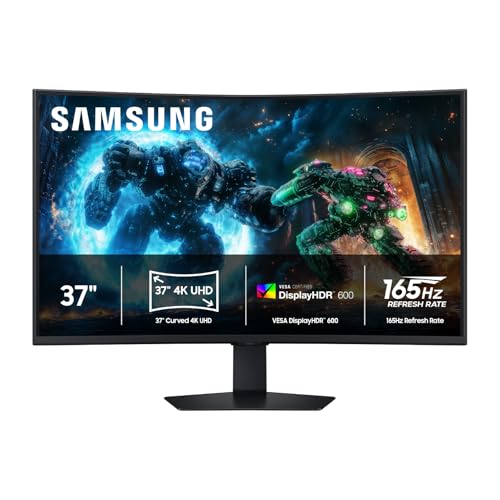
Samsung Odyssey G7 (G75F) 37-inch
The largest screen size here (37 inches).
Best for: Buyers who put screen size first.
Our take Check price for Samsung Odyssey G7 (G75F) 37-inch (opens in a new tab)

Premium Pick
Samsung Odyssey Neo G7 32-inch
A Mini LED backlight Samsung calls Quantum Matrix at the highest price in the group.
Best for: Buyers for whom price is not the deciding factor.
Our take Check price for Samsung Odyssey Neo G7 32-inch (opens in a new tab)
| Pick | Why it’s here | Best for | Price |
|---|---|---|---|
| The cheapest way into this group, below the Odyssey G7 37. | Buyers who would rather put the savings elsewhere in the build. | Check price for CRUA 32-inch 4K 160Hz Curved (opens in a new tab) |
| The largest screen size here (37 inches). | Buyers who put screen size first. | Check price for Samsung Odyssey G7 (G75F) 37-inch (opens in a new tab) |
| A Mini LED backlight Samsung calls Quantum Matrix at the highest price in the group. | Buyers for whom price is not the deciding factor. | Check price for Samsung Odyssey Neo G7 32-inch (opens in a new tab) |
Our Picks
Lowest Price Here1 of 3
CRUA 32-inch 4K 160Hz Curved on Amazon (opens in a new tab)
CRUA's 32-inch 4K screen curves at 1500R and runs at 160Hz with built-in speakers.
Best for
- Buyers who would rather put the savings elsewhere in the build.
Skip if
- Skip it if refresh rate matters most to you; the Odyssey G7 37 offers 165Hz.
Why we like it
The maker specifies an HDMI 2.1 input. On refresh rate it trails the group at 160Hz, while the Odyssey G7 37 offers 165Hz. It matches the Odyssey Neo G7 on screen size (32 inches).
Reaching 160Hz at 4K needs DisplayPort 1.4 with DSC or HDMI 2.1 on your graphics card, and a GPU able to render well above 100fps at 4K. It also brings 160Hz for smoother motion than a 60Hz office screen. Another plus is 120% sRGB colour coverage. It cost the least of the 3 picks at the time of writing, with the Odyssey G7 37 the next step up.
Key dimensions & specs
- Refresh rate: 160Hz
- Resolution: 3840x2160 (4K)
- Size: 32 inches
- Color gamut: 120% sRGB
- Adaptive sync: FreeSync
Pros
- 160Hz for smoother motion than a 60Hz office screen
- 4K resolution for sharp text and detail
- 120% sRGB colour coverage
- FreeSync to reduce screen tearing
Cons
- Refresh rate trails the Odyssey G7 37 (165Hz)
Largest Screen Size2 of 3
Samsung Odyssey G7 (G75F) 37-inch on Amazon (opens in a new tab)
Samsung's Odyssey G7 37 is a 37-inch 4K screen at 165Hz with DisplayHDR 600.
Best for
- Buyers who put screen size first.
Skip if
- If budget leads, the CRUA 32 4K was cheaper at our last price check.
Why we like it
It sits between a 32-inch monitor and a TV in size. On refresh rate it ties with the Odyssey Neo G7 at 165Hz. On screen size it leads this guide at 37 inches, ahead of the CRUA 32 4K (32 inches).
It also offers a 37-inch 1000R curve. Reaching 165Hz at 4K needs DisplayPort 1.4 with DSC or HDMI 2.1 on your graphics card, and a GPU able to render well above 100fps at 4K. It also brings 165Hz for smoother motion than a 60Hz office screen. When we checked, only the CRUA 32 4K cost less, and the Odyssey Neo G7 cost more.
Key dimensions & specs
- Refresh rate: 165Hz
- Resolution: 3840x2160 (4K)
- Size: 37 inches
- Response: 1ms
- HDR: DisplayHDR 600
Pros
- 165Hz for smoother motion than a 60Hz office screen
- 4K resolution for sharp text and detail
- DisplayHDR 600 certification
- 37-inch 1000R curve
Cons
- Costs more than the CRUA 32 4K at the time of writing
Premium Pick3 of 3
Samsung Odyssey Neo G7 32-inch on Amazon (opens in a new tab)
Samsung's Odyssey Neo G7 uses a Mini LED backlight behind a 32-inch 4K screen at 165Hz.
Best for
- Buyers for whom price is not the deciding factor.
Skip if
- Skip it if screen size matters most to you; the Odyssey G7 37 offers 37 inches.
Why we like it
The 1000R curve is steep for a 16:9 monitor, and its Quantum HDR2000 label is Samsung's own rating rather than a VESA tier. It reaches 2,000 nits peak with Quantum HDR 2000, and CoreSync lighting on the back matches on-screen colours. The 1000R curve fills your view.
It matches the Odyssey G7 37 on refresh rate (165Hz). Reaching 165Hz at 4K needs DisplayPort 1.4 with DSC or HDMI 2.1 on your graphics card, and a GPU able to render well above 100fps at 4K. G-SYNC Compatible works on NVIDIA cards over DisplayPort, and FreeSync covers AMD cards.
It was the highest-priced of the 3 picks at the time of writing, so the case for it rests on what it adds over the Odyssey G7 37 and the rest. The trade-off is screen size; for more, the Odyssey G7 37 comes in at 37 inches.
Key dimensions & specs
- Refresh rate: 165Hz
- Resolution: 3840x2160 (4K)
- Size: 32 inches
- Response: 1ms
- Adaptive sync: G-SYNC Compatible, FreeSync Premium Pro
Pros
- 165Hz for smoother motion than a 60Hz office screen
- 4K resolution for sharp text and detail
- G-SYNC Compatible, FreeSync Premium Pro to reduce screen tearing
- Mini LED backlight Samsung calls Quantum Matrix
Cons
- Screen size trails the Odyssey G7 37 (37 inches)
- Costs more than the CRUA 32 4K at the time of writing
How We Chose These 144Hz Curved 4K Monitors
Each pick was assessed across 4 criteria weighted for real-world use.
- What we compared
- We lined up three monitors on refresh rate, resolution, screen size and response as the makers state them. We did not test them in-house.
- What every pick has in common
- All 3, from the CRUA 32 4K to the Odyssey Neo G7, state refresh rate, resolution and screen size and share 3840x2160 (4K) resolution.
- Where the specs have gaps
- The CRUA 32 4K gives no response; the Odyssey G7 37 gives no adaptive sync.
- Price range
- At our last check the picks ran from the CRUA 32 4K ($250 to $500) to the Odyssey Neo G7 ($500 to $1000).
What to Look for in a 144Hz Curved 4K Monitor
Key buying criteria so you get the right fit the first time.
Refresh rate across these picks
Here refresh rate runs from 160Hz on the CRUA 32 4K to 165Hz on the Odyssey G7 37. Start with the Odyssey G7 37 if refresh rate decides it.
How much screen size you need
Here screen size runs from 32 inches on the Odyssey Neo G7 to 37 inches on the Odyssey G7 37. The Odyssey G7 37 is the pick for screen size.
Extras that separate them
The CRUA 32 4K: built-in speakers. The Odyssey G7 37: 4K at 165Hz. The Odyssey Neo G7: a 1000R curved screen.
How much to spend
$250 to $500 buys the CRUA 32 4K; $500 to $1000 buys the Odyssey G7 37 and the Odyssey Neo G7 at our last check.
Start from what matters most
Buyers who would rather put the savings elsewhere in the build: the CRUA 32 4K. Buyers who put screen size first: the Odyssey G7 37. Buyers for whom price is not the deciding factor: the Odyssey Neo G7.
How to Choose a 144Hz Curved 4K Monitor
By priority
| Priority | Consider | Why |
|---|---|---|
| Buyers who would rather put the savings elsewhere in the build | CRUA 32 4K | The cheapest way into this group, below the Odyssey G7 37 |
| Buyers who put screen size first | Odyssey G7 37 | The largest screen size here (37 inches) |
| Buyers for whom price is not the deciding factor | Odyssey Neo G7 | A Mini LED backlight Samsung calls Quantum Matrix at the highest price in the group |
Scroll sideways to see every column.
Key specs side by side
The Odyssey G7 37 leads on refresh rate at 165Hz, ahead of the Odyssey Neo G7 at 165Hz. "Not listed" means the maker leaves that figure out.
| Monitor | Refresh rate | Resolution | Size | Response |
|---|---|---|---|---|
| CRUA 32 4K | 160Hz | 3840x2160 (4K) | 32 inches | Not listed |
| Odyssey G7 37 | 165Hz | 3840x2160 (4K) | 37 inches | 1ms |
| Odyssey Neo G7 | 165Hz | 3840x2160 (4K) | 32 inches | 1ms |
Scroll sideways to see every column.
By price at the time of writing
The CRUA 32 4K was the lowest-priced pick and the Odyssey Neo G7 the highest when we checked; tiers move with Amazon pricing.
| Price tier | Monitors |
|---|---|
| About $250 to $500 | CRUA 32 4K |
| About $500 to $1000 | Odyssey G7 37, Odyssey Neo G7 |
Frequently Asked Questions
Is the Odyssey G7 37 ahead of the CRUA 32 4K on screen size?
The Odyssey G7 37 leads at 37 inches, with the CRUA 32 4K at 32 inches.
What does the Odyssey Neo G7 add over the CRUA 32 4K?
On paper it adds refresh rate (165Hz against 160Hz). The CRUA 32 4K was the lowest-priced pick when we checked, so pay the difference only if those gains matter to you.
Why is the Odyssey G7 37 our Largest Screen Size pick?
It earns the label for the largest screen size here (37 inches). It suits anyone who put screen size first.
What extras do the CRUA 32 4K and the Odyssey G7 37 include?
The CRUA 32 4K: a 1500R curve. The Odyssey G7 37: a 37-inch 1000R curve. The Odyssey Neo G7: a Mini LED backlight Samsung calls Quantum Matrix.
Who should choose the CRUA 32 4K?
The CRUA 32 4K carries our Lowest Price Here label for the cheapest way into this group, below the Odyssey G7 37. It ranks first of 3 here.
Bottom Line
Our first pick is the CRUA 32 4K, chosen for the cheapest way into this group, below the Odyssey G7 37. Look at the Odyssey G7 37 for the largest screen size here (37 inches) and the Odyssey Neo G7 for a Mini LED backlight Samsung calls Quantum Matrix at the highest price in the group if those matter more to you.
Set the refresh rate in Windows display settings; many screens start at 60Hz.